Ashoka — Ayurvedic Herb Guide

Overview

Ashoka (Sanskrit: अशोक; Hindi: अशोक) represents one of the most revered medicinal plants in classical Ayurvedic literature, occupying a central position in the traditional materia medica of the Indian subcontinent. Botanically identified as Saraca asoca (Roxb.) Wilde, also spelled Ashoka, commonly known in English as the Ashoka tree or Saraca tree, this species belongs to the family Fabaceae (the legume or pea family). The plant is also referred to as Ashoka, Ashok, Ashokapushpa, and Tamala in various Sanskrit texts, with regional variations across Hindi-speaking regions of India.

The Ashoka tree holds profound significance in Ayurvedic philosophy, particularly within the context of gynaecological and reproductive health traditions. Indigenous to the Indian subcontinent, particularly the deciduous forests of central and southern India, this small to medium-sized tree has been systematically documented across the classical Ayurvedic canon since the earliest periods of Ayurvedic medical literature. The plant’s integration into traditional formulations and its multifaceted applications in classical therapeutics underscore its enduring importance in contemporary Ayurvedic practice.

In the classical Ayurvedic framework, Ashoka is traditionally described as possessing properties that make it particularly valuable for addressing various constitutional imbalances, especially those manifesting in the female reproductive system. The bark, flowers, and seeds have each been ascribed distinct therapeutic characteristics, contributing to the plant’s comprehensive medicinal profile. Modern Ayurvedic practice continues to incorporate Ashoka-containing formulations, reflecting the unbroken transmission of knowledge regarding this botanical from ancient texts to contemporary clinical contexts.

Classical References

The Ashoka tree appears with notable frequency across the foundational texts of classical Ayurveda, demonstrating the antiquity and consistency of its therapeutic applications. In the Charaka Samhita, one of the oldest and most authoritative Ayurvedic texts traditionally dated to approximately the first centuries of the Common Era, Ashoka is referenced within multiple contexts. Though not extensively elaborated in single comprehensive passages, Ashoka appears in discussions of plant-derived therapeutics relevant to reproductive function and constitutional balance.

The Sushruta Samhita, traditionally attributed to the surgeon-physician Sushruta and representing a crucial compilation of Ayurvedic surgical and pharmaceutical knowledge, provides specific references to Ashoka bark in its Sutra Sthana (foundational principles section) and Uttara Tantra (final comprehensive section). Sushruta specifically discusses Ashoka’s applications in contexts of female reproductive health and certain constitutional imbalances affecting the blood tissue-dhatu (rakta dhatu).

In the Ashtanga Hridayam, authored by Vagbhata and representing a comprehensive synthesis of earlier Ayurvedic knowledge structures, Ashoka receives explicit mention in the context of formulations addressing specific constitutional patterns. The text’s emphasis on practical therapeutics and formulary preparations ensures detailed attention to Ashoka’s inclusion in several key medicinal combinations.

The Bhavaprakasha Nighantu, a renowned Ayurvedic medicinal plant compendium authored by Bhava Misra during the sixteenth century, dedicates substantial attention to Ashoka. This text provides the etymology, synonyms (paryayas), therapeutic properties (dravyaguna), and traditional applications with considerable specificity. The Bhavaprakasha emphasizes Ashoka’s particular affinity for the female reproductive system and its role in maintaining constitutional balance across multiple tissue-systems.

The Dhanvantari Nighantu, another classical plant-encyclopedia, similarly acknowledges Ashoka’s therapeutic significance, categorizing it within broader groups of therapeutically active plants and noting its relationships to other medicinal materials within the classical system.

These textual references establish Ashoka not as a peripheral therapeutic agent but as a central medicinal substance integrated into the comprehensive theoretical and practical frameworks of classical Ayurveda. The consistency of its references across multiple independent textual traditions—spanning different geographical regions, centuries of composition, and varying authorial approaches—testifies to the durability and reliability of the traditional knowledge surrounding this plant.

Botanical Description

Saraca asoca presents as a medium-sized, deciduous tree typically reaching heights of 7-15 meters under cultivation, though wild specimens may achieve greater dimensions. The plant’s overall morphology reflects its adaptation to the deciduous forest ecosystems of the Indian subcontinent. The bark exhibits a characteristic appearance: relatively smooth in younger growth phases, becoming increasingly fissured and deeply grooved with advancing age, with coloration ranging from grey-brown to dark brown.

The leaves of Ashoka are compound and pinnate, typically arranged alternatively along the stem. Each leaf measures approximately 25-45 centimeters in length, comprising multiple opposite leaflets. Individual leaflets are oblong to lanceolate, measuring 5-10 centimeters in length and 2.5-5 centimeters in width, with a distinctly smooth texture and slightly undulating margins. The leaflets display a prominent midvein with secondary venation clearly visible on examination.

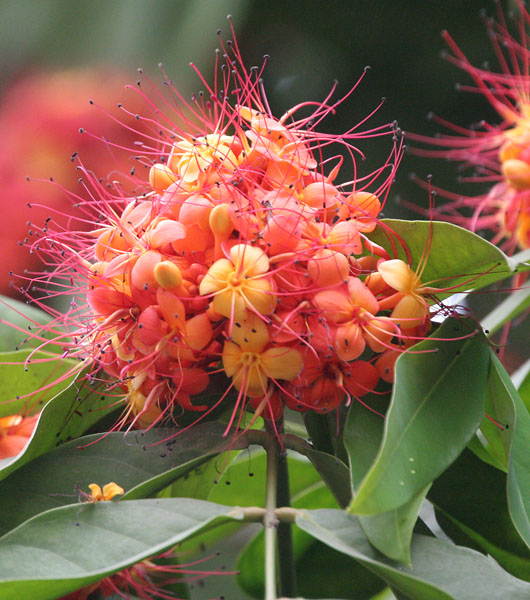
The flowers of Ashoka are among its most distinctive features, appearing as bright orange-red or deep orange clusters known as corymbs or compound racemes. These flowers emerge directly from the trunk and older branches—a phenomenon termed cauliflory—creating visually striking displays. Individual flowers are small, measuring approximately 1-1.5 centimeters across, with a four-lobed calyx and four petals in the characteristic arrangement of the legume family. The flowers possess a subtle fragrance and bloom particularly in spring months.

The fruit develops as a flat, elongated pod (legume) containing multiple seeds. Pods measure approximately 5-8 centimeters in length and 1.5-2 centimeters in width, with a brownish coloration at maturity. Seeds within the pods are oblong and brownish, each surrounded by a fleshy aril in some botanical descriptions.

Geographical Distribution: Ashoka naturally inhabits the deciduous forests of central and southern India, particularly in regions of Madhya Pradesh, Chhattisgarh, and the Western Ghats. The plant demonstrates preference for areas with moderate rainfall and seasonal temperature variations characteristic of deciduous forest ecosystems. Currently, it is cultivated extensively throughout India in temple gardens, parks, and medicinal plant cultivation regions, with some specimens established in botanical gardens and traditional Ayurvedic institution grounds across the subcontinent.

Officinal Parts: Classical Ayurvedic texts reference multiple parts of the Ashoka tree as therapeutically active: the bark (twak), flowers (pushpa), seeds (bija), and to a lesser extent, the leaves. The bark represents the most commonly utilized part in traditional practice, though flower preparations hold particular significance in specific therapeutic contexts. Harvesting traditionally follows seasonal cycles aligned with classical lunar calendars, though contemporary commercial harvesting operates according to practical availability.

Pharmacological Properties (Dravyaguna)

Within the classical Ayurvedic system of pharmacological analysis, Ashoka possesses a distinctive profile of fundamental properties that define its therapeutic action:

Rasa (Taste)

Ashoka is traditionally described as possessing predominantly Tikta (bitter) and Kashaya (astringent) rasas, with secondary Katu (pungent) elements. This combination of tastes reflects the plant’s pharmacological character and establishes its initial interaction with digestive and systemic processes.

Guna (Qualities)

The plant is characterized by Laghu (light) and Ruksha (dry) gunas. These qualities contribute to its capacity to support desiccation processes and prevent accumulation of excess moisture within tissue systems. The combination of astringency and dryness contributes to its traditionally recognized applications.

Virya (Potency)

Ashoka operates with a Sheeta (cooling) virya, establishing its capacity to moderate excessive heat within constitutional systems and tissue-organs. This cooling nature distinguishes it from heating medicinal substances and defines its particular utility in contexts of heat-related constitutional imbalances.

Vipaka (Post-Digestive Taste): Following metabolic processing, Ashoka produces a Katu (pungent) vipaka, indicating its ultimate systemic effects operate within this taste category. This property influences the long-term impact of sustained consumption on systemic functioning.

Prabhava (Specific Action): Beyond its constituent properties, Ashoka is ascribed a specific prabhava, a unique and characteristic action that transcends simple combination of its basic properties. This prabhava relates to its particular affinity for the female reproductive system and its capacity to support normal function of the uterus and associated tissue-systems.

Karma (Actions): Classical texts ascribe multiple karmas (therapeutic actions) to Ashoka. These traditionally include Stambhaka (astringent/stabilizing), Shothaghna (supporting normal inflammation response), Kandu-ghna (supporting normal skin integrity), and particularly Yoniroga-ghna and Artava-vardhaka (actions specifically related to female reproductive health). The plant is also traditionally described as Vranashodhana (supportive of tissue cleansing and wound management) and Raktasodhaka (blood-purifying).

Mahakashaya Groups: While the Charaka Samhita does not explicitly categorize Ashoka within its formally defined Mahakashaya groups, the plant’s dravyaguna profile aligns it closely with groups classified as Shothaghna Mahakashaya (substances supporting normal inflammatory response) and potentially with Varnya Mahakashaya (substances supporting skin health and complexion). Classical practitioners traditionally recognize Ashoka’s association with Yoni-Roga-Ghna Mahakashaya, an informal classification of substances particularly beneficial for female reproductive health.

Traditional Uses and Indications

The classical Ayurvedic literature documents diverse traditional applications of Ashoka across multiple constitutional and tissue-system contexts. These indications represent the accumulated observational knowledge of classical practitioners and should be understood within the framework of traditional theoretical systems rather than as direct disease-specific applications.

Female Reproductive Health Context: Ashoka occupies a pre-eminent position within classical therapeutics addressing the female reproductive system. The plant is traditionally indicated for supporting normal menstrual function (Artava Sambhrama), addressing excessive uterine bleeding (Raktapradar), and supporting overall health of the uterine tissue (Yoni Roga). Classical texts describe its use in contexts of menstrual irregularity, discomfort during menstrual cycles, and supporting normal hormonal balance. The plant’s specific therapeutic action (prabhava) specifically targets this tissue-system, making it a foundational substance in classical gynecological preparations.

Blood Tissue Support: The astringent and cooling properties of Ashoka establish its traditional application in supporting normal blood tissue (Rakta Dhatu) function. Classical practitioners traditionally employed Ashoka in contexts of excessive bleeding, hemorrhagic conditions, and imbalances manifest in blood tissue, reflecting the herb’s historical categorization within blood-purifying (Raktasodhaka) substance groups.

Inflammation and Tissue Integrity: The astringent and cooling dravyaguna of Ashoka inform its traditional use in supporting normal inflammatory response and maintaining tissue integrity. Classical applications extended to skin conditions (Kustha), persistent wounds (Dushta Vrana), and various manifestations of constitutional heat affecting dermatological systems. The herb’s inclusion in classical formulations for skin health reflects this traditional understanding.

Digestive System Support: The bitter and astringent rasas of Ashoka establish its traditional application in supporting healthy digestive function, particularly in contexts where excessive heat or moisture accumulation affected digestive processes. Classical practitioners traditionally employed Ashoka to support normal liver function and healthy bile processing, reflecting its integration into digestive support formulations.

Reproductive System Balance (Male): While Ashoka achieved prominence for female reproductive support, classical texts also reference its application in supporting male reproductive health, particularly in contexts of excessive heat affecting this system. The cooling virya and astringent properties established its inclusion in formulations addressing male reproductive constitutional balance.

Fever Management: The cooling nature of Ashoka established its inclusion in classical formulations addressing fever management (Jvara), particularly in contexts of chronic fever with tissue depletion. Its inclusion in fever-support formulations reflects this traditional understanding.

Bone Tissue Support: The astringent and drying properties of Ashoka informed its traditional inclusion in formulations supporting bone tissue (Asthi Dhatu) health, particularly addressing constitutional imbalances affecting bone density and integrity.

Classical Formulations

Ashoka appears as a central ingredient in numerous formulations documented across classical Ayurvedic pharmaceutical texts. The following represent major traditional combinations in which Ashoka maintains significance:

1. Ashokarishta: One of the most extensively documented classical fermented preparations (arishta), Ashokarishta represents a liquid formulation where Ashoka bark serves as the primary botanical ingredient, combined with jaggery (guda), water, and various spice adjuncts to facilitate fermentation. This preparation is traditionally described as supporting female reproductive health through its integrated formulation of bitter, astringent, and mineral-based components.

2. Ashoka Churna: A classical powder preparation in which Ashoka bark is dried, processed, and powdered, often in combination with other supportive substances including Lodhra bark (Symplocos racemosa), Utpala (water lily), and Priyangu (Callicarpa macrophylla). This churna represents one of the simplest and most direct applications of Ashoka in traditional therapeutics.

3. Ashoka Kvatha (Decoction): The classical decoction preparation of Ashoka bark, traditionally prepared through extended boiling processes to extract water-soluble components. This preparation maintains prominence in traditional clinical practice for its bioavailability and rapid action.

4. Dashmoola Tailam: While not exclusively containing Ashoka, this classical oil preparation frequently incorporates Ashoka bark within its complement of ten botanical roots (dashmoola), establishing Ashoka’s integration into broader systemic support formulations addressing musculoskeletal and tissue-based constitutional imbalances.

5. Lodhrasava: Though Lodhra represents the primary botanical, this classical fermented preparation frequently includes Ashoka as a supporting ingredient, combining their complementary dravyaguna profiles for enhanced female reproductive health support.

6. Sphatika Bhairava Rasa with Ashoka: Classical mineral-based formulations sometimes incorporate Ashoka as a botanical modifier and bioavailability enhancer, reflecting the traditional understanding that mineral and botanical combinations provide superior therapeutic effects compared to isolated components.

7. Yoni Tailam (various classical formulations): Traditional oil preparations specifically formulated for reproductive health support regularly incorporate Ashoka as a primary botanical ingredient, with base oils selected according to constitutional considerations. These preparations represent the direct application of Ashoka’s traditional reproductive health affinity.

8. Ashoka and Shatavari Combination: A classical pairing combining Ashoka with Shatavari (Asparagus racemosus), representing complementary dravyaguna profiles optimized for female reproductive health. This combination appears in both traditional textual references and contemporary Ayurvedic formulations.

9. Kasturi Bhairava Rasa with Ashoka: Classical formulations integrating Ashoka with traditional mineral and aromatic components, reflecting the sophisticated pharmaceutical approaches characteristic of classical Ayurvedic practice.

10. Ashoka Ghana (Concentrated Extract): A classical concentrated extract preparation where Ashoka bark undergoes extensive processing to yield a highly concentrated medicinal substance, providing enhanced potency compared to simple decoctions or powders.

Methods of Administration

Classical Ayurvedic practice recognizes multiple modalities for administering Ashoka therapeutically, each selected according to constitutional factors, the specific condition being addressed, and the patient’s overall capacity for medicinal substance assimilation:

Swarasa (Fresh Juice): The fresh juice of Ashoka flowers or young bark, when available, represents one of the most bioavailable administration forms. Classical texts suggest dosing of 10-15 milliliters once or twice daily, often combined with clarified butter (ghrita) or honey to enhance palatability and therapeutic efficacy. This form is traditionally employed for acute manifestations requiring rapid therapeutic action.

Kalka (Paste): The fresh or dried botanical material reduced to a fine paste through grinding, traditionally combined with appropriate liquids (milk, water, or medicated oils) for administration. Classical dosing ranges from 3-5 grams twice daily, typically taken with warm milk or water depending on constitutional considerations. This preparation maintains particular value for female reproductive health support.

Kashaya (Decoction): The classical decoction of Ashoka bark represents one of the most extensively documented administration methods. Traditional preparation involves simmering 5-10 grams of dried bark in approximately 200 milliliters of water until one-quarter of the original liquid remains, yielding a concentrated decoction. Dosing typically follows the classical standard of 40-80 milliliters once or twice daily, administered warm. The kashaya is frequently combined with jaggery, honey, or sesame oil depending on therapeutic objectives.

Churna (Powder): Dried Ashoka bark ground to a fine powder, often administered as 3-6 grams twice daily mixed with warm water, milk, or honey depending on constitutional factors. This represents the most convenient form for extended therapeutic use and permits flexible dosing adjustments according to clinical response.

Arishtam (Fermented Liquid): The Ashokarishta preparation, administered at a classical dosage of 15-30 milliliters twice daily with equal parts warm water following meals. The fermentation process enhances bioavailability and extends shelf-life stability compared to fresh decoctions, establishing this form’s particular utility in clinical practice.

Ghana (Concentrated Extract): The classical concentrated extract of Ashoka, administered at reduced dosages of 500 milligrams to 1 gram twice daily due to the concentration of active principles. This form permits convenient administration and enhanced therapeutic potency compared to equivalent weights of powder or decoction.

Taila (Oil): Ashoka-infused oils, prepared through traditional methods of maceration or heating, are administered internally at 10-15 milliliters once or twice daily depending on constitutional factors, or applied externally as described in classical therapeutic protocols. Oil-based preparations enhance assimilation by certain body tissues and establish particular utility for systemic integration.

Anupana (Adjuncts): Classical therapeutics emphasizes the selection of appropriate anupana—vehicles enhancing bioavailability and directing therapeutic action to specific tissue-systems. For Ashoka, traditional anupana selections include: warm cow’s milk for female reproductive health support, honey for blood tissue support, sesame oil for Vata-predominant constitutional imbalances, and clarified butter for general systemic integration. The anupana represents an essential component of the classical prescribing approach rather than an ancillary consideration.

Timing and Context: Classical texts recommend administering Ashoka preparations according to specific timing protocols: morning administration for upward and outward-moving therapeutic directives, evening administration for nourishing and grounding effects. Therapeutic courses traditionally extended over monthly cycles synchronized with menstrual rhythms in female reproductive health applications, or across seasonal cycles for broader constitutional support.

Frequently Asked Questions

Q1: What is the traditional Sanskrit name for Ashoka, and are there regional variations?

A: The primary Sanskrit designation is Ashoka (अशोक), derived from etymological roots indicating “without sorrow.” Regional variations include Ashok (Hindi), Tamala (alternative Sanskrit), and various local vernacular names throughout the Indian subcontinent. The botanical nomenclature Saraca asoca distinguishes this species from the historically referenced Mauryan emperor of the same name, though the plant itself held symbolic significance in classical Indian culture predating the historical emperor.

Q2: How does Ashoka differ from other female reproductive health support herbs like Shatavari?

A: While both Ashoka and Shatavari are traditionally employed for female reproductive health, their dravyaguna profiles differ substantially. Shatavari demonstrates predominantly sweet (Madhura) rasa, warm (Ushna) virya, and sweet (Madhura) vipaka, with strong nourishing (Brihana) and tissue-building qualities. Ashoka, conversely, presents bitter and astringent rasas, cooling virya, and pungent vipaka, with drying and astringent characteristics. Classical practitioners traditionally selected between them based on constitutional considerations: Shatavari for conditions involving tissue depletion or vata predominance, Ashoka for conditions involving excessive bleeding or Pitta-predominant heat manifestations.

Q3: Is Ashoka safe for extended use, and are there any traditional contraindications?

A: Classical texts do not document serious contraindications for Ashoka in appropriately prescribed dosages. However, traditional wisdom suggests that individuals with pronounced vata predominance or those predisposed to dryness should employ Ashoka with appropriate anupana selections—traditionally clarified butter or sesame oil—to balance its drying qualities. Extended use should occur under knowledgeable guidance, particularly in cases of pronounced constitutional imbalance. Pregnant women should seek qualified Ayurvedic practitioner guidance before employing Ashoka therapeutically.

Q4: How is traditional Ashokarishta prepared, and does fermentation affect its therapeutic profile?

A: Classical Ashokarishta preparation involves steeping Ashoka bark in jaggery-sweetened water with adjunctive spices (frequently including Dhataki flowers, which facilitate natural fermentation) for an extended fermentation period—traditionally 30-45 days—allowing natural yeasts and bacteria to generate the characteristic fermented liquid. The fermentation process enhances bioavailability, extends shelf-life stability, and creates new pharmacologically active compounds through microbial transformation. The fermented product presents enhanced digestibility compared to non-fermented preparations, though the fundamental dravyaguna profile remains consistent with unfermented Ashoka.

Q5: Can Ashoka preparations be combined with modern pharmaceutical medications?

A: As with any traditional medicinal substance, individuals employing pharmaceutical medications should consult qualified healthcare providers before introducing Ashoka-containing formulations. The classical Ayurvedic system developed independently of modern pharmacology, and specific interactions have not been systematically studied. This represents a clinical decision requiring personalized evaluation rather than categorical restriction, but professional guidance remains essential.

Q6: What is the botanical source of authentic Ashoka, and how can adulteration be identified?

A: Authentic Ashoka derives from Saraca asoca (Roxb.) Wilde, native to Indian deciduous forests. In commerce, adulterations occasionally occur with related species or even botanically unrelated substances. Authentic Ashoka bark presents characteristic features: deeply fissured grey-brown bark with visible lenticels, bitter and astringent taste, and the distinctive morphology of fractured pieces. Powder preparations should present appropriate color and bitter taste when sampled. Procurement from established Ayurvedic pharmaceutical companies with transparent sourcing practices provides the most reliable assurance of authenticity.

Q7: How does the choice between Ashoka bark, flowers, and seeds affect therapeutic application?

A: Classical texts emphasize distinctions between different botanical parts. Ashoka bark (twak) represents the most extensively documented and therapeutically potent form, employed across the broadest spectrum of applications. The flowers (pushpa) are traditionally emphasized for their particular beauty and subtle energetic properties, sometimes incorporated into specialized formulations. The seeds are less extensively documented in classical sources, with limited traditional applications. Contemporary practice predominantly emphasizes the bark, which maintains superior documentation and proven therapeutic consistency across traditional literature.

Q8: What is the traditional dosing context for Ashoka preparations, and how does this inform contemporary practice?

A: Classical texts provided dosing guidance within the framework of the Parimana system—a traditional dosing methodology based on individual factors including age, constitutional type, digestive capacity, disease chronicity, and the specific preparation employed. A single “dose” might range from the weight of a grain of rice (approximately 65 milligrams) for highly concentrated extracts to several grams for decoctions or powders. Contemporary practice typically employs dosing standards of 3-6 grams of powder twice daily or 40-80 milliliters of decoction twice daily for general female reproductive health support, though individual adjustment based on response remains essential to classical therapeutic methodology.

Q9: Are there seasonal considerations for Ashoka administration, and does classical timing remain relevant?

A: Classical Ayurvedic tradition emphasizes seasonal (ritucharya) and circadian (dinacharya) variations in therapeutic application. Ashoka, with its cooling virya, was traditionally emphasized during warmer seasons when excess heat predominated in constitutional systems. For female reproductive health support specifically, classical practitioners synchronized administration with menstrual cycles rather than rigidly maintaining identical dosing year-round. Contemporary practice occasionally deemphasizes these considerations, yet the classical wisdom regarding seasonal and circadian timing remains physiologically sound and clinically applicable for those seeking optimal therapeutic benefit.

Q10: How has the traditional understanding of Ashoka in classical texts translated into contemporary Ayurvedic pharmaceutical formulations?

A: Classical knowledge regarding Ashoka has maintained remarkable continuity into contemporary pharmaceutical practice. Modern Ayurvedic pharmaceutical companies continue producing Ashokarishta, Ashoka Churna, and Ashoka-containing combination formulations following classical protocols. The integration of Ashoka into contemporary Ayurvedic practice reflects the stability of traditional knowledge and the enduring clinical validation of classical formulations through centuries of continuous practice. However, contemporary practice has expanded Ashoka’s applications beyond the strictly documented classical indications, employing it in formulations addressing modern health concerns interpreted through classical theoretical frameworks.

References

Classical Ayurvedic Texts:

Charaka Samhita, Sutra Sthana, various chapters on dravyavigyana (pharmaceutical principles)

Sushruta Samhita, Uttara Tantra, chapters addressing female reproductive health applications

Ashtanga Hridayam, Uttara Tantra, formulations incorporating Ashoka

Bhavaprakasha Nighantu, Haritakyadi Varga, comprehensive monograph on Ashoka

Dhanvantari Nighantu, plant classifications including Ashoka

Kaidava Nighantu, traditional plant enumeration

Raj Nighantu, botanical classifications

Contemporary References:

Sharma, P. V. (2013). Classical Uses of Medicinal Plants in India. Chaukhambha Orientalia.

Gopal, V. (2006). Bhavaprakasha Nighantu with English Translation. Chaukhambha Bharati Academy.

Indian Herbal Pharmacopoeia (2002). Indian Drug Manufacturers Association, New Delhi.

Additional Resources:

For comprehensive information on traditional Ayurvedic oil formulations incorporating Ashoka and related herbs, interested readers are directed to the Ayurvedic Thailams Collection, which maintains preparations grounded in classical pharmaceutical principles. The Art of Vedas website provides additional context regarding traditional formulation approaches and the integration of classical knowledge into contemporary practice. The Thailams collection offers practical resources for those seeking to understand how classical herbs like Ashoka are integrated into traditional oil-based therapeutic vehicles.

This monograph represents an encyclopaedic summary of traditional knowledge regarding Ashoka and should not be construed as providing medical diagnosis, treatment recommendations, or therapeutic claims. All therapeutic applications of Ashoka-containing preparations should occur under the guidance of qualified Ayurvedic practitioners. The information presented herein reflects traditional knowledge systems and does not constitute validation of therapeutic efficacy by contemporary scientific standards. Individuals employing Ashoka preparations should maintain appropriate medical oversight and disclose all herbal substance use to their healthcare providers.


Related Articles on Ayurvedapedia