Overview
Chandana, scientifically identified as Santalum album Linn., is a traditionally valued herb in Ayurvedic practice, known for its cooling properties. Belonging to the family Santalaceae, Chandana has occupied a central position in Ayurvedic medicine for millennia, valued not merely for its cooling and antipyretic properties but for its traditional capacity to help pacify Pitta dosha and has traditionally been used in Ayurvedic practice to support cooling and skin-related wellness within classical protocols.
In Sanskrit, Chandana carries multiple names, each reflecting distinct aspects of its nature and application: Chandana (the cool one), Malayaja (born of the Malaya mountains), Gopada (having an aroma like cow urine, referring to its characteristic fragrance), Shreyaska, and Harichandana (when referring to the red variety). In Hindi, the herb is known as Chandan or Safed Chandan (white sandalwood), while English nomenclature commonly refers to it as Indian sandalwood, East Indian sandalwood, or white sandalwood. The botanical name Santalum album Linn. distinguishes it from other sandalwood species, particularly Santalum spicatum (Australian sandalwood) and other regional varieties.
Native to the Deccan Plateau and the Western Ghats of India, particularly the Malaya Mountains region (from which its Sanskrit name derives), Chandana has historically been cultivated extensively in Karnataka and other Indian states. The plant is semi-parasitic, deriving partial nutrition from host trees, and thrives in tropical to subtropical climates with moderate rainfall. Its remarkable versatility in traditional medicine, combined with its aromatic and cosmetic applications, has made it one of India’s most economically important medicinal plants, though contemporary conservation concerns reflect the historical over-harvesting of wild populations.
Significance in Classical Ayurveda
The importance of Chandana in classical Ayurveda is extensively documented. It appears prominently in the earliest medical texts, is enumerated among the essential cooling agents in the materia medica, and has traditionally been included in classical formulations traditionally associated with inflammatory conditions, skin disorders, fever, and mental restlessness. Its integration into daily life through ritualistic, medicinal, and cosmetic applications reflects the comprehensive understanding of health maintenance within the Ayurvedic tradition.
Classical References
Charaka Samhita
Chandana’s medical significance is extensively documented throughout the classical Ayurvedic corpus. In the Charaka Samhita, one of the two primary foundational texts of Ayurveda, Chandana appears prominently in the Pittahar Dravyas (Pitta-pacifying substances) in multiple contexts. Within the Sutra Sthana (section on fundamental principles), Chandana is enumerated among the Pittahar Dravyas (Pitta-pacifying substances) and features in the discussion of cooling herbs essential for managing excessive heat in the body. The text specifically references Chandana in its exposition of Anupana (vehicle substances), noting its suitability as a cooling medium for administering other medicines.
Sushruta Samhita
The Sushruta Samhita, the classical surgical and pharmaceutical text attributed to Sushruta, provides detailed descriptions of Chandana’s application in dermatological conditions and wound management. In the Sutra Sthana and Uttara Tantra (final section), Chandana is recommended for various skin afflictions, including inflammatory eruptions and conditions characterized by excessive heat. Sushruta emphasizes the herb’s particular utility in managing conditions arising from Pitta imbalance, noting its cooling potency and affinity for the skin tissues (Twak Dhatu).
Ashtanga Hridayam
The Ashtanga Hridayam, Vagbhata’s comprehensive synthesis of Ayurvedic knowledge, includes detailed monographs on Chandana in its materia medica section. Vagbhata emphasizes Chandana’s cooling nature and its effectiveness in conditions characterized by burning sensations, excessive perspiration, and febrile conditions. The text particularly highlights its traditional use in managing Pitta-related disturbances affecting both physical and mental domains.
Bhavaprakasha Nighantu
In the Bhavaprakasha Nighantu, one of the most important Ayurvedic medicinal plant classifications compiled by Bhava Mishra in the sixteenth century, Chandana receives extensive discussion within the Chandanadi Varga (group of cooling woods). The text delineates between Shveta Chandana (white sandalwood, Santalum album) and Raktachandan (red sandalwood, Pterocarpus santalinus), providing detailed descriptions of their properties, preparations, and traditional applications. The Bhavaprakasha discusses Chandana’s traditional use in Raktapitta (bleeding disorders), skin conditions, and fever management.
The Dhanvantari Nighantu, another classical medicinal plant classification, similarly emphasizes Chandana’s cooling properties and its relevance to Pitta management. This text reinforces the traditional understanding of Chandana’s particular affinity for inflammatory skin conditions and its role as a cooling agent when systemic heat disturbance is present.
Additional references appear in the Kaiyadeva Nighantu and Raja Nighantu, further confirming Chandana’s consistent positioning as a primary cooling herb across the entire span of classical Ayurvedic literature. These texts collectively establish Chandana not as a peripheral therapeutic agent but as a foundational element of Ayurvedic pharmaceutical practice.
Botanical Description
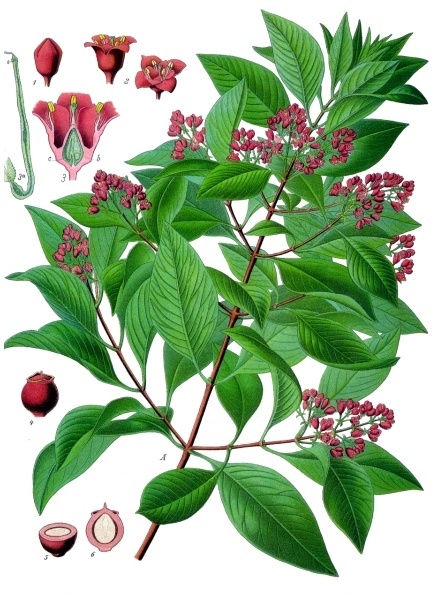
Chandana (Santalum album Linn.) is a small to medium-sized tree, typically reaching heights of 4-9 meters under cultivation, though wild specimens may grow taller. The plant exhibits a characteristic woody structure with a straight, cylindrical trunk and spreading branches forming a somewhat rounded crown. The bark is distinctly rough and deeply fissured, displaying a greyish-brown coloration that darkens with age.
The leaves of Chandana are opposite, lanceolate to linear-lanceolate in shape, measuring approximately 2.5-5 cm in length and 0.8-1.2 cm in width. They exhibit a characteristic smooth texture with prominent veining and a slightly waxy appearance. The leaf margins are entire, and the petioles are short and slightly pubescent. During vegetative growth, the foliage presents a dark green coloration, which may become slightly yellowish-green in nutrient-poor soils.
The flowers of Chandana are small, bisexual, and arranged in cymose inflorescences. They are typically pale yellow to reddish in color, measuring approximately 4-5 mm in diameter. The calyx is four-lobed, and the corolla consists of four petals arranged in a characteristic pattern. The flowers emerge during late spring and early summer (May-June in Indian contexts), emitting a characteristically pleasant fragrance that intensifies as the flowers mature.
The fruit of Santalum album is a small drupe, dark purple to nearly black when fully mature, measuring approximately 0.8-1 cm in diameter. The fruit contains a single seed and develops over a period of several months following successful pollination. The wood itself—the primary therapeutic component—is characterized by its pale, cream-colored heartwood, which gradually develops a golden or slightly reddish tinge with exposure to air. The wood is extremely dense and fine-grained, with exceptional aromacity that persists for extended periods.
Chandana exhibits a semi-parasitic growth habit, deriving a portion of its nutritional requirements through haustorial connections with the roots of host trees. This characteristic has significant implications for cultivation, as the species requires appropriate host trees for optimal growth and development. In traditional growing regions, Neem (Azadirachta indica), Acacia species, and various other woody plants serve as suitable hosts.
The distribution of Santalum album historically encompassed the Western Ghats region of India, particularly the Malaya Mountains (Malaya Parvata) region in Karnataka and adjacent areas. The plant thrives in tropical to subtropical climates with annual rainfall between 60-150 cm and temperatures ranging from 15-45°C. Contemporary cultivation extends across several Indian states, including Karnataka, Tamil Nadu, Telangana, and Andhra Pradesh, though wild populations have become significantly depleted due to historical over-harvesting.
The officinal parts of Chandana include the heartwood (Daru) and the essential oil derived from the wood (Chandana Taila). The heartwood, which possesses the characteristic aromatic and therapeutic properties emphasized in classical texts, is obtained through the felling and processing of mature trees, typically harvested when the tree reaches approximately 15-20 years of age. The wood is traditionally aged before use in medicines, allowing for proper maturation and enhancement of therapeutic potency. Modern quality assessment emphasizes the importance of mature heartwood with high santalol content (the primary active aromatic compound), as opposed to sapwood, which possesses minimal therapeutic value. Harvesting practices require careful attention to sustainable procurement methods, as wild populations are protected under Indian forestry regulations, and most contemporary sourcing derives from cultivated plantations.
Pharmacological Properties (Dravyaguna)
According to the classical Ayurvedic understanding of medicinal substances, Chandana possesses a characteristic pharmacological profile that determines its therapeutic applications and limitations.
Rasa (Taste)
Chandana is traditionally described as possessing a predominant Tikta (bitter) Rasa, with secondary manifestation of Kashaya (astringent) taste qualities. Some classical texts note a faint sweet (Madhura) component, particularly in freshly processed preparations. The bitter taste quality reflects the presence of alkaloid and phenolic compounds within the wood, while the astringent component indicates the presence of tannin-like substances.
Guna (Qualities): Chandana exhibits predominantly Laghu (light) and Snigdha (unctuous/oily) qualities, balanced by Sukshma (subtle/penetrating) properties. These qualities facilitate rapid absorption and distribution throughout bodily tissues, enabling deep penetration into affected areas. The combination of Laghu and Snigdha qualities creates a unique balance—light enough for rapid circulation yet unctuous enough to support tissue nourishment without creating heaviness or congestion.
Virya (Potency/Thermal Quality): The defining characteristic of Chandana’s pharmacological profile is its Sheeta Virya (cooling potency). This cooling quality represents the most consistently emphasized attribute across the entire classical literature. The cooling potency operates at multiple levels—reducing fever temperatures, pacifying burning sensations, and moderating excessive metabolic heat. This quality is particularly significant in contexts of Pitta aggravation, where heat-reducing interventions are therapeutically necessary.
Vipaka (Post-digestive Effect): Chandana demonstrates a Katu (pungent) Vipaka, meaning that following complete digestion and metabolism, it exerts a warming effect. This apparent paradox—cooling in initial action yet warming in final metabolic effect—reflects the nuanced pharmacological complexity that classical Ayurveda recognizes. The initial cooling effect predominates in acute applications, while the warming Vipaka becomes more apparent in long-term usage patterns.
Prabhava (Special Quality/Action): Beyond the standard pharmacological parameters, Chandana possesses a recognized Prabhava (special inherent property) that manifests as a unique affinity for inflammatory skin conditions and a capacity to support mental clarity and spiritual states of consciousness. This special property—recognized across multiple classical sources—suggests the presence of pharmacologically active compounds beyond those explained through standard taste and quality analysis.
Karma (Actions/Therapeutic Effects): Chandana is traditionally described as possessing the following primary therapeutic actions:
- Pittahara: Pitta-pacifying action, addressing all manifestations of excessive heat in the body
- Jwaraghna: Fever-reducing action, particularly relevant in Pitta-predominant febrile conditions
- Kandughna: Anti-pruritic action, addressing burning sensations and itching
- Raktashodhaka: Blood-purifying action, supporting healthy blood composition
- Twakdoshaghna: Skin condition-alleviating action, addressing inflammatory dermatological manifestations
- Manovaijayavaha: Mind-clarifying action, traditionally described as supporting mental stability and spiritual awareness
- Swedajanaka: Mild perspiration-promoting action, supporting natural detoxification through appropriate sweating
- Raktastambhaka: Blood-staunching action in contexts of bleeding disorders
Mahakashaya Classification: In the Charaka Samhita’s Sutra Sthana (Chapter 4), Chandana is enumerated among the Pittahara Dravyas Mahakashaya (group of 10 Pitta-pacifying substances). This classification places it in direct therapeutic equivalence with similarly cooling and Pitta-pacifying herbs such as Neem, Nimba, Amalaki, and others. Chandana is also traditionally included in the Tvakdoshaghna Mahakashaya (group of herbs addressing skin conditions) and the Swedahara Mahakashaya (group of herbs moderating excessive perspiration).
Traditional Uses and Indications
Throughout the classical Ayurvedic literature, Chandana appears as a therapeutic agent for numerous conditions characterized by Pitta imbalance and excessive heat manifestations. The traditional uses documented in foundational texts reflect centuries of empirical observation and refinement within the Ayurvedic therapeutic tradition.
Jvara (Fever): Chandana holds a prominent position in the management of fever conditions, particularly those associated with Pitta imbalance or characterized by excessive heat, burning sensations, and inflammation. The classical texts specifically recommend Chandana for fevers with the following characteristics: high temperature, burning sensation in the body, excessive thirst, perspiration, and inflammatory manifestations. The cooling Virya of Chandana addresses the underlying heat aggravation while supporting the body’s natural fever-resolution mechanisms.
Raktapitta (Bleeding Disorders): Chandana is traditionally described as particularly valuable in managing bleeding disorders characterized by the vitiation of both Rakta Dhatu (blood tissue) and Pitta Dosha. Classical texts recommend its use in hemoptysis (blood in sputum), hematuria (blood in urine), and other conditions involving abnormal bleeding. The cooling and staunching properties work synergistically to normalize blood circulation and tissue integrity.
Twak Vikaras (Skin Conditions): Among the most significant traditional applications of Chandana are inflammatory skin conditions. The classical texts document its use in:
- Visarpa (inflammatory skin eruptions, similar to erysipelas)
- Eczema and various forms of dermatitis
- Pruritus and burning skin sensations
- Systemic conditions manifesting through skin alterations
- Post-inflammatory skin complications
- Supportive applications in acne and inflammatory papular conditions
The particular affinity of Chandana for skin conditions derives from its capacity to penetrate deeply into dermal layers while simultaneously cooling excessive heat and inflammation at tissue levels.
Daha (Burning Sensations): Any condition characterized by abnormal burning—whether localized (as in inflammatory skin conditions) or systemic (as in fevers or inflammatory metabolic states)—traditionally calls for Chandana’s therapeutic intervention. The cooling Virya directly addresses the pathophysiological heat aggravation underlying burning sensations.
Mutrakrichra (Dysuria and Urinary Disorders): Chandana is traditionally recommended for urinary disorders characterized by burning sensations during micturition, excessive urinary frequency in Pitta-aggravated states, and general urinary system inflammation. Its cooling properties directly address the heat disturbance underlying such conditions.
Manovikaras (Mental Disturbances): The classical texts emphasize Chandana’s traditional use in addressing mental agitation, excessive emotional reactivity, and sleep disturbances arising from Pitta imbalance. The cooling properties and recognized Prabhava for mental clarity support these applications. Chandana is particularly valued in contexts where excessive heat manifests as irritability, anger, or restless mental states.
Rakta Dusht (Blood Vitiation): As a blood-purifying herb, Chandana is traditionally employed to support healthy blood composition when vitiated by Pitta-aggravating factors. The herb’s capacity to cool and clarify makes it valuable in conditions arising from inflammatory blood conditions.
Daha Pradosa (Heat-related Complications): Chandana is employed preventatively and therapeutically in the management of conditions arising from excessive exposure to heat—whether climatic heat, digestive fire aggravation, or inflammatory heat from other sources. Its inclusion in seasonal protocols during hot seasons reflects this preventative application.
Ama Pachana with Pitta Consideration: While not primarily an Ama-digesting herb, Chandana is sometimes included in formulations addressing the accumulation of undigested metabolic byproducts when Pitta aggravation complicates the condition. Its cooling properties prevent digestive fire from becoming excessively aggravated during Ama-elimination protocols.
Classical Formulations
Chandana appears as a primary or important constituent ingredient in numerous classical Ayurvedic formulations. The following represent some of the most significant traditional preparations in which Chandana plays a therapeutic role:
1. Chandanasava – An alcoholic fermented preparation (Asava) in which Chandana functions as the primary cooling agent combined with other herbs addressing fever, skin conditions, and Pitta-related blood disorders. This preparation is traditionally indicated for chronic febrile conditions, skin eruptions, and general heat-related constitutional imbalances. The fermentation process enhances bioavailability while the alcohol medium aids absorption and preservation.
2. Chandanadi Taila – A traditional oil preparation in which Chandana is infused with a base of sesame or coconut oil alongside other cooling and skin-nourishing herbs. This medicated oil is extensively used for external application on inflammatory skin conditions and for general cooling massage therapy. Ayurvedic Thailams collections often feature similar traditional oil preparations combining Chandana with complementary herbs.
3. Jatyadi Taila – A classical formulation specifically for skin conditions, containing Chandana as a major ingredient combined with Jasminum sambac, Neem, and other skin-healing herbs. This preparation is traditionally applied topically for inflammatory skin eruptions, wounds, and dermatological conditions characterized by excessive heat and inflammation.
4. Chandana Churna – A powder preparation of Chandana, often combined with other cooling herbs and aromatic substances such as Rose petals and Vetiver. This simple yet effective formulation can be administered internally suspended in cooling vehicles or applied externally as a paste for various applications.
5. Pittakarahara Churna – A comprehensive powder formulation emphasizing Pitta pacification, in which Chandana functions as a primary constituent alongside herbs such as Guduchi, Neem, Bhumyamalaki, and others. This preparation is traditionally employed for chronic Pitta-aggravated conditions affecting multiple bodily systems.
6. Chandanadi Ghrita – A clarified butter-based preparation in which Chandana infuses ghrita along with other cooling and nourishing herbs. The ghrita medium provides superior bioavailability while the cooling properties of Chandana balance any potential heating effects of the ghrita base itself.
7. Raktashodhaka Kashaya – A decoction-based formula emphasizing blood purification and cooling, with Chandana as a significant constituent. This preparation is traditionally administered for conditions involving blood vitiation with heat manifestations, including certain types of skin conditions and bleeding disorders.
8. Varnya Taila (Complexion-Enhancing Oil) – A specialized oil preparation designed to enhance skin complexion and radiance, in which Chandana combines with other complexion-supporting herbs such as Manjistha, Lodhra, and others. This preparation reflects the integration of aesthetic and therapeutic objectives within Ayurvedic cosmetic applications.
9. Chandanadi Lepam (Paste) – A topical paste formulation traditionally prepared fresh, combining powdered Chandana with cooling vehicle substances such as rose water, sandalwood water, or other aqueous media. This simple application is used for acute inflammatory skin conditions, burns, and localized heat manifestations.
10. Pitta-Shamaka Vati (Pitta-Pacifying Tablets) – Compressed tablet formulations incorporating Chandana powder as a primary ingredient, combined with other Pitta-pacifying substances and binders. These preparations facilitate convenient administration while maintaining therapeutic efficacy across contexts where powder or liquid preparations may prove less practical.
Methods of Administration
Classical Ayurvedic practice recognizes multiple methods for the administration of Chandana, each suited to specific therapeutic contexts and constitutional considerations. The selection of administration method reflects the principle that the vehicle and method of delivery significantly influence therapeutic outcomes.
Churna (Powder): Chandana powder represents one of the most straightforward and versatile administration methods. The fine powder is traditionally prepared through drying and grinding processes that preserve the volatile aromatic compounds. Classical texts recommend dosages ranging from 3-6 grams per administration, typically divided into two daily doses taken with appropriate vehicles. For Pitta-aggravated conditions, Chandana powder is traditionally suspended in cooling liquids such as rose water, coconut water, or light herbal decoctions. The powder can be taken before or after meals, depending on digestive capacity and the condition being addressed. External application of Chandana powder mixed with rose water or other cooling vehicles produces a cooling paste for topical application.
Kashaya (Decoction): While Chandana’s volatile aromatic compounds are partially compromised by prolonged heating, traditional Kashaya preparations employ measured heating to extract water-soluble therapeutic principles while minimizing degradation of essential oils. The classical procedure involves steeping dried Chandana wood pieces (approximately 1-2 grams) in water for extended periods (6-12 hours) with mild warming, rather than vigorous boiling. This gentle extraction method preserves aromatic compounds while extracting cooling and astringent properties. Traditional dosages of Chandana Kashaya range from 15-45 ml per administration, taken once or twice daily with appropriate timing relative to meals.
Taila (Oil): Medicated oil preparations constitute perhaps the most significant delivery method for Chandana’s therapeutic effects on skin conditions and systemic inflammation. The oil medium facilitates penetration into dermal layers while the unctuous quality of the vehicle supports tissue nourishment. Traditional Chandana Tailams employ coconut oil or sesame oil as the base medium, with Chandana and complementary herbs infused through classical extraction methods. Oil preparations are applied externally through massage (Abhyanga) onto affected areas or the entire body according to condition-specific protocols. The dosage and frequency of application vary based on constitutional type and specific condition, with applications typically administered 2-3 times weekly for maintenance and daily or more frequently for acute conditions. Art of Vedas Ayurveda Thailams collection provides access to traditionally prepared medicated oil formulations incorporating Chandana and complementary herbs.
Ghrita (Clarified Butter): Ghrita-based preparations of Chandana offer unique advantages for internal administration, combining the therapeutic properties of Chandana with the bioavailability-enhancing and tissue-nourishing qualities of ghrita. Chandanadi Ghrita is typically administered in doses of 5-10 grams, typically taken in the morning on an empty stomach with warm milk or other appropriate vehicles. The ghrita medium facilitates the transport of Chandana’s therapeutic principles to deep tissues while supporting overall tissue nourishment and maintaining digestive capacity.
Swarasa (Fresh Juice): While less commonly employed than other methods due to the difficulty in extracting juice from heartwood, traditional preparations employing fresh Chandana plant parts (particularly from young stems and bark) may yield therapeutic juice preparations. Fresh Swarasa captures volatile aromatic compounds in their most potent form, though the preparation requires access to fresh Chandana plants and immediate administration. Dosages typically range from 10-20 ml per administration.
Arishta (Fermented Preparation): Chandanasava and similar fermented preparations employ traditional fermentation processes to enhance bioavailability and create alcohol-preserved formulations with extended shelf stability. Fermented preparations are typically administered in doses of 15-30 ml, twice daily, diluted with equal parts water. The fermentation process renders the therapeutic principles more readily available for absorption while the alcohol medium facilitates preservation and tissue penetration.
Lepam (Paste): Topical paste applications represent a traditional method for direct application to affected skin areas. Chandana powder mixed with rose water, coconut water, or other cooling vehicles creates a cooling paste traditionally applied to inflammatory skin conditions. Fresh preparations are preferred, with application maintained until the paste dries naturally and can be washed away. Multiple daily applications are permissible for acute conditions.
Anupana (Vehicle Substances): Classical texts emphasize the importance of appropriate vehicle substances for Chandana administration. Recommended vehicles include:
- Rose water – Particularly synergistic with Chandana’s cooling properties
- Coconut water – Cooling and naturally hydrating
- Warm milk – For ghrita-based preparations, providing nutrient balance
- Light herbal decoctions – Of cooling herbs such as Coriander or Fennel
- Honey – For specific conditions requiring additional therapeutic actions
- Sesame or Coconut oil – For external applications
Timing and Duration: Classical texts recommend varying administration frequencies based on condition acuity and constitution. Acute inflammatory conditions may call for twice-daily administration, while chronic constitutional support typically employs single daily doses. Therapeutic courses typically range from 4-8 weeks for acute conditions, with longer-term administration for chronic constitutional imbalances following practitioner guidance.
Frequently Asked Questions
What is the difference between white sandalwood (Chandana) and red sandalwood (Raktachandan)?
While both herbs share Sanskrit nomenclature referencing sandalwood and are employed in Ayurvedic practice, Santalum album (white sandalwood/Chandana) and Pterocarpus santalinus (red sandalwood/Raktachandan) represent distinct botanical species with different pharmacological profiles and traditional applications. White sandalwood (Santalum album) is predominantly cooling with affinity for skin conditions and general Pitta pacification. Red sandalwood is traditionally emphasized for blood-related conditions (hence the name Raktachandan—blood sandalwood) and possesses warming properties that distinguish it pharmacologically from its white counterpart. Classical texts treat these as separate medicinal entities with overlapping yet distinct therapeutic domains. White sandalwood (Chandana) represents the more commonly encountered and more extensively detailed herb across the primary classical texts.
Is Chandana suitable for long-term daily use, or is it intended only for acute conditions?
Classical Ayurvedic literature suggests that Chandana possesses sufficient safety for extended use in constitutional applications, particularly for individuals with Pitta-predominant constitutions or those prone to heat-related imbalances. However, the principle of constitutional appropriateness applies—those with Vata or Kapha predominance should employ Chandana within formulations containing warming or stimulating counterbalances. Long-term use without professional guidance may, over extended periods, create conditions of excessive cooling that could aggravate other constitutional imbalances. Traditional protocols recommend periodic reassessment of continued need and adjustment of administration based on seasonal variations and constitutional changes.
Can Chandana be used during pregnancy and lactation?
Classical Ayurvedic texts do not identify Chandana as contraindicated during pregnancy or lactation, though specific applications should be guided by qualified practitioners familiar with constitutional assessment during these sensitive periods. The cooling properties and absence of toxic constituents align with the general principle of employing mild, nutritive approaches during pregnancy. However, pregnancy and lactation represent specialized contexts requiring individualized professional assessment beyond the scope of general monographic information. Individuals considering Chandana use during these periods should seek guidance from experienced Ayurvedic practitioners.
How should Chandana be stored to maintain its therapeutic potency?
Chandana’s volatile aromatic compounds—which contribute significantly to its therapeutic effects—are vulnerable to degradation through exposure to light, heat, and moisture. Classical texts emphasize storage in cool, dark environments within well-sealed containers. Whole wood pieces retain potency longer than powdered forms, which should be stored in airtight containers away from direct sunlight and significant temperature fluctuations. The characteristic aromatic scent of quality Chandana powder serves as a sensory indicator of preservation—fading aroma suggests degradation of volatile compounds. Properly stored Chandana powder maintains therapeutic viability for approximately 6-12 months, while whole heartwood pieces may retain potency for several years when appropriately protected from environmental degradation.
Does Chandana interact with other Ayurvedic herbs or conventional medications?
Within the Ayurvedic tradition, Chandana combines synergistically with numerous cooling and skin-supporting herbs, creating balanced formulations that enhance therapeutic effects through complementary actions. The cooling properties of Chandana render it particularly compatible with other Pitta-pacifying substances and warrant careful combination with warming herbs, necessitating balanced formulation ratios to prevent excessive cooling or thermal disharmony. Regarding interactions with conventional pharmaceutical agents, no well-documented contraindications appear in available literature, though the cooling properties of Chandana theoretically could modulate the activity of certain temperature-sensitive medications. Individuals taking pharmaceutical medications should consult qualified practitioners familiar with both systems before incorporating Chandana into their regimens.
What quality indicators distinguish high-quality Chandana from lower-grade material?
Authentic therapeutic-grade Chandana should exhibit several defining characteristics. The wood color should be pale cream to light golden, becoming deeper golden with age and air exposure. Fresh Chandana powder should emit a characteristically pleasant, aromatic fragrance that persists distinctly—fading or absent aroma indicates poor quality or improper storage. The wood should display a fine, smooth grain structure characteristic of mature heartwood rather than the pale, spongy appearance of sapwood. Authentic Chandana typically shows higher density and weight compared to inferior materials or adulterated preparations. The traditional test of rubbing freshly ground powder with water to create a smooth, sweet-smelling paste remains valid for assessing quality. Contemporary analysis of santalol content (the primary aromatic and therapeutic constituent) provides objective quality verification, with therapeutic-grade Chandana typically containing santalol percentages exceeding 50% of the essential oil fraction.
How does Chandana’s cooling effect compare to other cooling Ayurvedic herbs?
While multiple Ayurvedic herbs possess cooling properties, Chandana distinguishes itself through its balanced combination of profound cooling with retained warmth in final metabolic effect (Katu Vipaka), its particular affinity for skin conditions and inflammation, and its recognized special quality (Prabhava) supporting mental clarity. Herbs such as Amalaki and Neem share some cooling characteristics but possess different specific therapeutic domains—Amalaki emphasizes nutritive cooling and digestive support, while Neem emphasizes infection-fighting properties within its cooling framework. Guduchi provides cooling with immune-system-modulating properties distinct from Chandana’s more purely cooling thermal action. Brahmi and Shankhapushpi offer cooling with greater emphasis on nervous system support. The selection among cooling herbs reflects the specific therapeutic intention and the particular manifestation of Pitta imbalance requiring intervention. Chandana’s particular suitability for skin conditions and systemic inflammatory heat distinguishes it from other cooling options in many contexts.
Are there any documented adverse effects or toxicity concerns associated with Chandana use?
Classical Ayurvedic texts and contemporary safety literature identify no significant toxicity concerns associated with Chandana at recommended therapeutic dosages. The herb’s long history of use across multiple centuries and cultures, combined with its inclusion in daily cosmetic applications and food preparations in certain regions, suggests excellent safety at conventional dosages. Some individuals with significant constitutional cold (Kapha excess or Vata aggravation with cold manifestations) may experience excessive cooling if Chandana is employed without appropriate warming