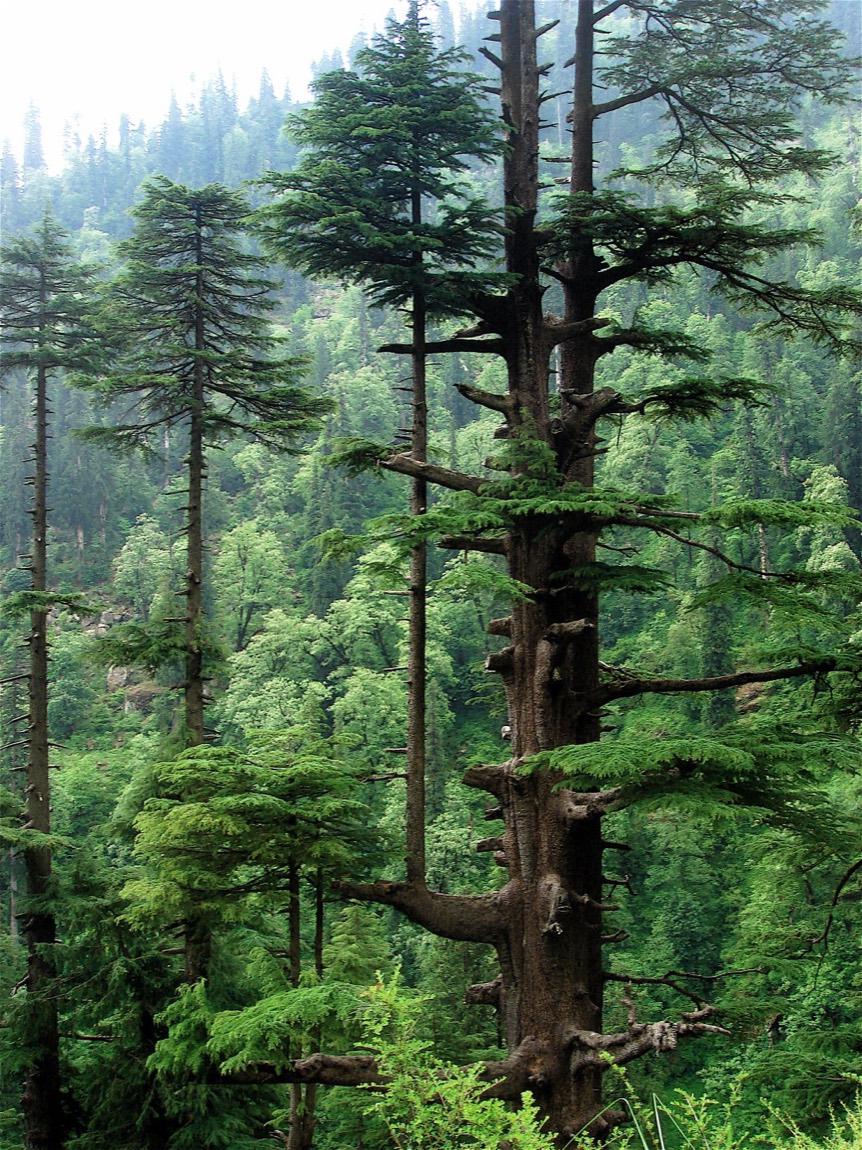
Overview
Devadaru, botanically identified as Cedrus deodara (Roxb.) G. Don (Himalayan Cedar), is traditionally regarded as one of the most significant herbs in classical Ayurvedic medicine. The name "Devadaru" itself—derived from Sanskrit "Deva" (divine) and "Daru" (wood)—reflects its esteemed status in traditional systems of knowledge, where it has been honoured as “the wood of the gods” for millennia. This majestic coniferous tree belongs to the family Pinaceae and is native to the western Himalayan mountains, where it flourishes at elevations between 1,500 and 3,200 meters above sea level.
In classical Ayurvedic literature, Devadaru is traditionally valued for its bitter, astringent, and warming properties. Known by various regional nomenclatures—including Devdar (Hindi), Deodar Cedar (English), and Himalayan Cedar (common name)—this herb has been systematically documented in the principal Ayurvedic compendia dating back more than two thousand years. The heartwood and essential oil extracted from Devadaru constitute the primary therapeutic materials, though traditional practitioners also utilise the bark, resin, and needles for specific indications. Key officinal parts include: heartwood, essential oil, bark, and resin.
The significance of Devadaru in Ayurvedic practice extends beyond its pharmacological actions to encompass spiritual and ritualistic dimensions, reflecting the holistic nature of traditional knowledge systems. In traditional Ayurvedic practice, Devadaru is traditionally valued for supporting respiratory function, promoting healthy digestion, and maintaining natural immune response.* The herb’s aromatic properties and characteristic bitter taste make it distinctive among Himalayan medicinal plants, and its durability against decay has historically made it valuable in traditional construction and incense preparation.
Classical References
The historical documentation of Devadaru in Ayurvedic scholarship reveals a remarkable continuity of knowledge across multiple generations of practitioners and scholars. The following classical references establish the herb’s foundational position in traditional Ayurvedic practice and demonstrate its consistent integration into sophisticated therapeutic frameworks:
Charaka Samhita
The Charaka Samhita, one of the two principal foundational texts of Ayurveda, Devadaru is referenced in the context of the Tiktarasa Skanda (group of bitter-tasting substances) and is specifically mentioned in the Krimighna Varga (substances with anti-parasitic properties). The text describes Devadaru’s particular utility in conditions characterised by excess Kapha and Pitta doshas, particularly in the context of persistent skin conditions and respiratory disturbances. Charaka’s references establish the herb’s traditional use in formulations designed to support the body’s natural elimination processes.
Sushruta Samhita
The Sushruta Samhita provides extensive documentation of Devadaru within its Padartha Vigyaniya Adhyaya (section on substance classification). Sushruta emphasises Devadaru’s particular affinity for conditions of the skin, blood tissue (Rakta Dhatu), and muscle tissue (Mamsa Dhatu). The text specifically mentions Devadaru in the context of Kustha (a broad category of skin conditions characterised by abnormal discolouration and textural changes) and advocates for its inclusion in medicated oils and decoctions intended for topical and internal application. Sushruta’s detailed exposition establishes Devadaru as a substance of significant therapeutic range, worthy of consideration in complex clinical presentations.
Ashtanga Hridayam
Vagbhata, the author of the Ashtanga Hridayam—a comprehensive synthesis of Ayurvedic knowledge composed in the seventh century—incorporates Devadaru into his discussion of Raktapradoshaja Vikaras (disorders arising from blood tissue vitiation). The text specifically references Devadaru’s traditional application in supporting healthy complexion and promoting the clarity of skin tissue. Additionally, Vagbhata includes Devadaru in formulations described as beneficial for maintaining healthy digestive fire and supporting respiratory wellness, thereby establishing the herb’s broad utility across multiple physiological systems.
Bhavaprakasha Nighantu
The Bhavaprakasha Nighantu, compiled by Bhava Mishra in the sixteenth century, provides one of the most detailed classical monographs of Devadaru. In the Haritakyadi Varga (section on medicinal plants), Bhava Mishra extensively documents Devadaru’s properties, traditional uses, and appropriate applications across various health conditions. The text emphasises Devadaru’s warming potency, its affinity for clearing obstructions, and its particular value in formulations addressing conditions characterised by cold, stagnation, and microbial imbalance. Bhava Mishra’s scholarship demonstrates the herb’s integration into the sophisticated theoretical framework of classical Ayurveda.
Dhanvantari Nighantu
The Dhanvantari Nighantu, an authoritative materia medica attributed to the legendary physician Dhanvantari, positions Devadaru among the superior therapeutic substances worthy of detailed study. The text corroborates the findings of earlier scholars while adding nuanced observations regarding the herb’s particular utility in conditions affecting the deeper tissues and in formulations intended for extended therapeutic courses. The Dhanvantari Nighantu’s classification of Devadaru within specific therapeutic groupings provides valuable guidance for practitioners regarding appropriate pairing with complementary substances.
Botanical Description
Devadaru, or Cedrus deodara, presents distinctive botanical characteristics that make it readily identifiable in its natural habitat and throughout its cultivated range. Understanding the morphological features of this species provides foundation for proper identification and quality assurance in Ayurvedic practice.
Morphological Features
Cedrus deodara is a large evergreen coniferous tree that may reach heights of 40 to 50 meters in optimal conditions, with exceptional specimens occasionally exceeding 60 meters. The tree develops a pyramidal crown with gracefully drooping lateral branches, a characteristic growth pattern that distinguishes it from related Cedrus species. The bark exhibits a distinctive dark grey-brown coloration with shallow furrows and a somewhat scaly texture, becoming increasingly fissured with age.
The needles of Devadaru are distinctive, measuring 2 to 4 centimeters in length, with a soft, blue-green to grey-green appearance that intensifies in colour with age and sun exposure. These needles grow in fascicles (clusters) of thirty to forty elements arising from short, woody shoots, and they persist on the tree for three to four years before naturally shedding. The needle-bearing shoots produce a characteristically pleasant, resinous aromatic quality particularly evident when foliage is crushed or handled.
The reproductive structures of Devadaru include both male and female cones. The male cones are oblong, yellowish structures measuring approximately 5 centimeters in length, which produce abundant pollen during the flowering season. The female cones are considerably larger, measuring 7 to 13 centimeters in length, with an initially upright orientation that becomes increasingly pendulous as they mature. These female cones exhibit a pale brown to reddish-brown coloration and contain winged seeds adapted for wind dispersal.
Habitat and Distribution
In its native range, Devadaru occurs exclusively in the western Himalayan mountains, extending from eastern Afghanistan through northern Pakistan, northern India (particularly in the states of Himachal Pradesh, Uttarakhand, and Jammu and Kashmir), to western Nepal. The tree demonstrates a distinct preference for elevations between 1,500 and 3,200 meters above sea level, though exceptional specimens may occur at slightly lower or higher elevations depending on local microclimatic conditions and soil characteristics.
Devadaru typically grows in association with other Himalayan conifers, including Picea smithiana (Himalayan Spruce), Abies pindrow (Himalayan Fir), and various deciduous broad-leaved species such as oak and walnut. The tree demonstrates a remarkable capacity for adaptation to diverse soil types, ranging from deep, well-drained soils to rocky, nutrient-limited substrates. It exhibits considerable tolerance for relatively cold temperatures and moderate precipitation patterns characteristic of montane Himalayan ecosystems.
Beyond its native habitat, Devadaru has been successfully cultivated in various temperate and subtropical regions worldwide, including parts of Europe, North America, and other mountainous zones where climate conditions approximate those of its native range. However, the most therapeutically valued specimens continue to originate from the pristine Himalayan forests, where environmental conditions are considered optimal for the development of superior medicinal properties.
Officinal Parts and Harvesting
Traditional Ayurvedic practice employs multiple parts of the Devadaru tree, each possessing distinct therapeutic characteristics and appropriate applications. The heartwood represents the primary therapeutic material, valued for its aromatic properties, essential oil content, and traditional efficacy. The heartwood exhibits a pale yellow to warm brown coloration and possesses a distinctly pleasant, resinous aroma that intensifies when the wood is freshly cut or subjected to heat.
The essential oil of Devadaru, obtained through steam distillation of wood chips and sawdust, constitutes another highly valued preparation. This oil concentrates the volatile aromatic principles and is traditionally employed in formulations designed for inhalation therapy, topical application in medicated oils, and internal administration in appropriate dilutions.
The bark of Devadaru, while less frequently employed than the heartwood, possesses traditional applications particularly in decoctions and powdered preparations. The bark contains various active principles including tannins and resins that contribute to the herb’s traditional astringent and antimicrobial properties.
Harvesting of Devadaru heartwood traditionally follows sustainable forestry practices, with mature trees typically selected for timber extraction. Wood chips and sawdust generated during timber processing are collected for essential oil distillation and herbal preparation manufacture. In contemporary practice, ethical sourcing from certified sustainable forests is increasingly important to preserve these magnificent ecosystems.
Modern Applications and Quality Considerations
Today, Devadaru remains a cornerstone herb in Ayurvedic formulations, available in multiple forms including essential oils, powders, medicated oils, and traditional decoctions. When selecting Devadaru products, sourcing from pristine Himalayan regions ensures superior therapeutic properties and authenticity. Art of Vedas sources premium-grade Devadaru materials following traditional Ayurvedic standards.
Conclusion
Devadaru represents one of Ayurveda’s most treasured botanical medicines, bridging ancient wisdom with contemporary wellness practices. Its documented use across multiple classical texts, combined with its distinctive aromatic and warming properties, makes it a valuable addition to comprehensive herbal protocols. Whether incorporated into medicated oils for topical application, taken as a decoction for internal support, or inhaled as an essential oil, Devadaru continues to honour its divine heritage as ‘the wood of the gods.’
cing and sustainable harvesting protocols are essential considerations, reflecting both environmental stewardship principles and the quality standards expected in authentic Ayurvedic medicine.
Pharmacological Properties (Dravyaguna)
Classical Ayurvedic analysis of Devadaru’s therapeutic properties employs the system of Dravyaguna (pharmacological properties), which systematically categorises substances according to their fundamental energetic and functional characteristics. This framework provides the theoretical foundation for understanding how Devadaru produces its documented effects within the body.
Rasa (Taste)
Devadaru is traditionally classified as possessing predominantly Tikta Rasa (bitter taste), with secondary Katu Rasa (pungent taste) components. The bitter taste indicates the presence of alkaloids, glycosides, and other bitter principles that traditionally support digestive function and promote healthy elimination. The pungent undertones reflect the presence of volatile aromatic compounds and essential oils, which contribute to the herb’s warming and stimulating qualities.
Guna (Qualities)
In terms of Guna (physical and energetic qualities), Devadaru is classified as Laghu (light), Ruksha (dry), and Tikshna (penetrating). These qualities indicate that Devadaru is readily absorbed and distributed throughout bodily tissues, with particular affinity for deeper structures. The light and dry qualities suggest traditional efficacy in conditions characterised by excess moisture, heaviness, or stagnation—conditions classically associated with Kapha vitiation.
Virya (Potency)
The Virya (fundamental energetic potency) of Devadaru is traditionally classified as Ushna (warming). This warming potency indicates that Devadaru generates heat and stimulates metabolic processes when introduced into the body. The warming quality contributes to the herb’s traditional applications in conditions characterised by cold, sluggish digestion, and poor tissue circulation.
Vipaka (Post-digestive Effect)
Following the classical framework, Devadaru demonstrates Katu Vipaka (pungent post-digestive effect), meaning that after complete digestion and absorption, the herb generates pungent qualities that continue to support elimination and tissue transformation. This post-digestive action contributes to Devadaru’s reputation as a substance that promotes thorough purification processes.
Prabhava (Unique Potency)
Beyond the predictable effects of its constituent Gunas and Rasas, Devadaru possesses specific Prabhava (unique potencies) that classical texts attribute to its inherent nature. Particularly noteworthy is its traditional reputation for supporting healthy immune function and promoting the body’s natural resistance to unwanted microbial colonisation—properties that exceed what might be predicted by its basic qualities alone.
Karma (Therapeutic Actions)
Classical Ayurvedic texts describe Devadaru as possessing the following primary Karmas (therapeutic actions):
Krimighna: Traditionally supporting the body’s natural resistance to parasitic organisms and unwanted microbial colonisation.
Raktashodhaka: Traditionally described as supporting healthy blood tissue function and promoting the purification of blood.
Kaphahara: Traditionally effective in conditions characterised by excess Kapha dosha, particularly those affecting the respiratory system and skin tissue.
Pittashamaka: While Devadaru’s warming quality might suggest otherwise, classical texts indicate that its particular therapeutic actions moderate certain Pitta manifestations, particularly those involving inflammation and infection.
Dipana and Pachana: Traditionally supporting healthy digestive fire and the proper digestion and assimilation of nutrients.
Swedajanana: Traditionally promoting healthy perspiration and supporting natural detoxification processes through the skin.
Mahakashaya Classification
In the Charaka Samhita’s systematic classification of medicinal substances into therapeutic groups (Mahakashayas), Devadaru is specifically included within multiple therapeutic categories. Most prominently, it belongs to the Krimighna Mahakashaya (the group of substances traditionally supporting resistance to parasitic organisms) and the Kushthagna Mahakashaya (the group of substances traditionally beneficial for skin conditions). These classifications reflect the classical understanding of Devadaru’s particular therapeutic range and primary applications.
Traditional Uses and Indications
The classical Ayurvedic literature documents an extensive range of health conditions and physiological imbalances for which Devadaru has traditionally been recommended. These documented indications reflect centuries of observational practice and provide guidance for contemporary practitioners regarding appropriate applications of this valuable herb.
Skin Conditions
Devadaru holds particular significance in the Ayurvedic approach to skin health, with classical texts recommending it specifically for conditions characterised by abnormal pigmentation, textural changes, excessive secretion, or inflammatory responses. The herb is traditionally included in formulations designed to support clear, healthy complexion and to promote the healing of compromised skin tissue. Its combination of bitter, astringent, and warming properties makes it particularly suited to Kapha-predominant skin conditions.
Respiratory Wellness
The warming, drying, and Kapha-reducing qualities of Devadaru establish it as a valued substance in traditional formulations supporting respiratory health. Classical texts particularly recommend Devadaru for conditions characterised by excessive mucus production, sluggish circulation in the respiratory passages, and general respiratory stagnation. The herb’s aromatic properties and volatile compounds are traditionally recognised as particularly beneficial when inhaled as an essential oil.
Digestive Support
Devadaru’s bitter taste and Dipana-Pachana properties establish it as a traditional support for healthy digestive function. Classical practitioners employed Devadaru in formulations designed to enhance digestive fire, promote the proper breakdown of food elements, and support healthy elimination of digestive waste. The herb is particularly recommended in cases of sluggish digestion characterised by reduced appetite or incomplete assimilation of nutrients.
Microbial Balance
The Krimighna designation reflects the classical understanding that Devadaru supports the body’s natural mechanisms for maintaining healthy microbial balance. While contemporary scientific investigation may frame this function differently, the classical texts document extensive applications of Devadaru in conditions traditionally attributed to parasitic or unwanted microbial overgrowth.
Immune Support
Beyond its specific therapeutic applications, Devadaru is traditionally recognised as a substance that promotes overall immune function and supports the body’s natural resistance to environmental challenges. This general tonifying action reflects its inclusion in various rejuvenating formulations designed for long-term use in maintaining health and vitality.
Circulatory Function
The warming and penetrating qualities of Devadaru establish it as traditionally beneficial for conditions characterised by poor tissue circulation or stagnation. Classical texts recommend Devadaru in formulations designed to promote healthy blood flow and to support the circulation of therapeutic substances throughout the body.
Classical Formulations
Devadaru appears in numerous classical and contemporary Ayurvedic formulations, often in combination with complementary herbs that enhance its therapeutic potential or moderate its warming qualities. The following represent major formulations featuring Devadaru as a significant component:
Chandanasava
This classical fermented preparation (Asava) traditionally combines cooling and warming substances in a sophisticated formulation that addresses inflammatory conditions while supporting healthy circulation. Devadaru’s warming quality balances the cooling properties of sandalwood and other ingredients, creating a formula traditionally employed in conditions affecting skin and blood tissue.
Mahamarichyadi Taila
A sophisticated medicated oil traditionally employed for therapeutic massage and topical application, Mahamarichyadi Taila incorporates Devadaru among its primary therapeutic ingredients. The oil is traditionally recommended for conditions characterised by Kapha excess and poor tissue circulation, with particular application to musculoskeletal and respiratory health support.
Khadiradi Gutika
This classical tablet formulation traditionally combines Devadaru with astringent and bitter herbs including Khadira (Acacia catechu) and other substances designed to address inflammatory conditions and support oral health. The formula represents a traditional approach to concentrated herbal therapy through the tablet format.
Manjishthadi Taila
A prominent medicated oil in classical Ayurvedic practice, Manjishthadi Taila includes Devadaru as a complementary ingredient to the primary blood-purifying herbs. This formulation is traditionally employed for skin conditions and inflammatory manifestations affecting the skin and underlying tissues.
Sariba Taila
This traditional medicated oil incorporates Devadaru along with Sariva (Hemidesmus indicus) and other cooling and warming herbs in a formulation traditionally recommended for skin health and systemic purification.
Vasantakusumakara Rasa
A complex herbo-mineral formulation from classical tradition, Vasantakusumakara Rasa includes Devadaru among its herbal components in a formula traditionally employed for addressing systemic conditions and supporting general vitality and resistance.
Triphala Guggulu
While Devadaru is not always included in all variations of this classical formula, certain traditional preparations incorporate it to enhance the formula’s traditional applications in conditions characterised by Kapha excess and impaired circulation.
Medohar Guggulu
Some classical variations of this traditional formulation include Devadaru as a complementary ingredient supporting the formula’s traditional application in conditions of excess tissue accumulation and metabolic sluggishness.
Methods of Administration
Classical Ayurvedic practice employs various pharmaceutical formulations and preparation methods to deliver the therapeutic properties of Devadaru. The selection of appropriate preparation method depends on the specific health condition being addressed, the desired intensity of therapeutic action, and individual constitutional factors.
Swarasa (Fresh Juice)
The fresh juice extracted from Devadaru is less commonly employed than other preparation methods due to the herb’s wood nature, though fresh juice from Devadaru leaves or young shoots may occasionally be prepared. Traditional dosing would follow established protocols for potent herbal juices, typically ranging from 10 to 30 millilitres administered in divided doses with appropriate anupana (carrier substances).
Kashaya (Decoction)
Decoction represents one of the primary preparation methods for Devadaru heartwood. Traditional preparation typically involves simmering 3 to 6 grams of Devadaru wood chips in approximately 240 millilitres of water until the volume reduces to approximately 60 millilitres. This concentrated decoction is traditionally filtered and administered in divided doses, often twice daily with meals. Classical texts suggest that decoctions of Devadaru may be prepared as monotherapy or in combination with complementary herbs.
Churna (Powder)
Finely powdered Devadaru heartwood constitutes a readily administered form suitable for combination with other powdered herbs. Traditional dosing typically ranges from 3 to 6 grams of Devadaru Churna, administered two to three times daily with appropriate carrier substances such as warm water, ghee, or honey. The light and penetrating qualities of Devadaru Churna make it particularly suitable for conditions affecting the deeper tissues.
Taila (Medicated Oil)
Devadaru’s integration into classical medicated oils provides a sophisticated delivery system particularly suited to topical application and systemic absorption through the skin. These oils traditionally employ sesame oil as the base substance and incorporate Devadaru heartwood, essential oil, or decoction along with complementary herbs. Medicated oils containing Devadaru are traditionally employed for therapeutic massage (Abhyanga) and are particularly indicated for musculoskeletal conditions and skin health support.
Ghrita (Medicated Ghee)
Though less commonly prepared than medicated oils, Devadaru may be incorporated into traditional medicated ghees (Ghrita) formulations. These preparations employ clarified butter as the vehicle substance and combine it with Devadaru decoction or powder along with complementary herbs. Medicated ghees containing Devadaru are traditionally employed for internal administration and may be particularly beneficial for individuals with constitutional types that benefit from the warming and nutritive qualities of ghee.
Asava and Arishta (Fermented Preparations)
Devadaru frequently appears in classical fermented preparations that employ self-generated alcohol as a preservative and extraction medium. These formulations typically involve steeping Devadaru decoction or powder in sugar solutions along with other herbs and allowing the mixture to undergo natural fermentation. Classical fermented preparations containing Devadaru are traditionally administered in divided doses, typically 15 to 30 millilitres, preferably following meals.
Essential Oil
The steam-distilled essential oil of Devadaru concentrates the volatile aromatic principles of the herb. Traditional applications include inhalation therapy, dilution in carrier oils for topical application, and incorporation into formulated preparations. Due to the potency of essential oils, dosing must be carefully controlled, and such preparations are typically employed under the guidance of experienced practitioners. Traditional inhalation therapy typically involves diffusing a few drops of the essential oil or inhaling vapours from hot water infused with the oil.
Guggulu (Resin-Based Formulations)
Classical Guggulu formulations incorporating Devadaru combine the herb with Guggulu resin (from Commiphora wightii) and various complementary herbs. These preparations are traditionally employed in conditions characterised by poor tissue circulation, inflammatory manifestations, and metabolic sluggishness. Guggulu formulations are typically administered in tablet or powder form, with traditional dosing ranging from 500 milligrams to 2 grams divided into doses taken with warm water or appropriate carrier substances.
Frequently Asked Questions
Q: What is the relationship between Devadaru and Deodar Cedar, and are they the same plant?
A: Yes, Devadaru and Deodar Cedar refer to the same botanical species, Cedrus deodara. The Sanskrit name “Devadaru” literally means “the wood of the gods,” reflecting its sacred and medicinal significance in Ayurvedic tradition. “Deodar” represents an anglicised version of this Sanskrit nomenclature, while “Cedar” refers to its botanical classification within the Cedrus genus of the Pinaceae family. In Ayurvedic contexts, the Sanskrit designation Devadaru is preferred for precision, while Western botanical literature employs “Cedrus deodara” or “Deodar Cedar.”
Q: What parts of the Devadaru tree are used in Ayurvedic medicine?
A: While the heartwood represents the primary therapeutic material employed in classical and contemporary Ayurvedic practice, multiple parts of the Devadaru tree possess therapeutic applications. The heartwood is valued for its aromatic properties, essential oil content, and documented traditional efficacy. The essential oil obtained through steam distillation concentrates the volatile aromatic principles and is employed in various formulations. The bark, though less commonly used than the heartwood, possesses traditional applications in decoctions and powdered preparations due to its astringent and antimicrobial properties. The needles and resin also possess traditional uses in specific formulations, though these are less extensively documented than the primary heartwood applications.
Q: How does the warming quality of Devadaru benefit individuals with Pitta constitutional predominance?
A: This apparent paradox reflects the sophistication of Ayurvedic pharmacology, which recognises that therapeutic actions extend beyond simple qualities. While Devadaru possesses a warming (Ushna) Virya, its specific therapeutic actions (Karma) and unique potencies (Prabhava) enable it to address certain Pitta manifestations despite its warming nature. Specifically, Devadaru’s bitter taste, astringent properties, and traditional actions in supporting healthy immune function and microbial balance address inflammatory and infectious manifestations often associated with Pitta excess. Additionally, the herb’s inclusion in formulations alongside cooling substances creates balanced preparations suited to complex presentations. Practitioners employ Devadaru selectively in Pitta-predominant constitutions when the specific condition requires its particular therapeutic actions, rather than as a primary constitutional support.
Q: What is the traditional difference between employing Devadaru as a monotherapy versus as a component of complex formulations?
A: Classical Ayurvedic texts recognise that single herbs possess distinct therapeutic applications, while complex formulations enable practitioners to address multifactorial conditions and to moderate potential unwanted effects through synergistic combinations. When Devadaru is employed as a monotherapy—whether in the form of a decoction, powder, or oil—its direct warming, drying, and Kapha-reducing actions predominate. This approach is traditionally recommended for conditions primarily characterised by Kapha excess, such as certain respiratory conditions or specific skin manifestations. Conversely, in complex formulations, Devadaru often functions as a complementary ingredient alongside herbs possessing different properties. For example, in formulations combining Devadaru with cooling substances, the warming intensity is moderated while specific therapeutic actions such as immune support and microbial balance are retained. This flexibility enables practitioners to employ Devadaru therapeutically across a broader range of constitutional types and health presentations.
Q: How should Devadaru preparations be stored, and how long do they maintain therapeutic integrity?
A: The storage requirements for Devadaru preparations vary according to the specific formulation type. Powdered Devadaru (Churna) should be stored in airtight containers away from direct sunlight, heat sources, and excess moisture. Under proper storage conditions, Devadaru Churna maintains therapeutic integrity for approximately one year. Medicated oils and ghees containing Devadaru should similarly be stored in cool, dark conditions in tightly sealed containers, preferably in glass vessels. These preparations typically maintain quality for six months to one year depending on storage conditions and whether preservative measures such as the addition of vitamin E or other antioxidants have been employed. Decoctions should be freshly prepared and consumed shortly after preparation. Fermented preparations (Asava and Arishta) possess extended shelf life due to the preservative action of self-generated alcohol and may maintain therapeutic properties for several years when stored appropriately. Essential oils of Devadaru should be stored in dark glass bottles in cool conditions and maintain therapeutic integrity for approximately two to three years. Individual preparation manufacturers may provide specific storage guidance and shelf-life recommendations that should be followed for optimal therapeutic quality.
Q: Are there any known contraindications or cautions associated with the use of Devadaru?
A: Devadaru is generally regarded as a safe substance when employed according to classical dosing protocols and appropriate indications. However, classical texts note several considerations for practitioners. Individuals with pronounced Pitta excess or those with hypersensitivity to warming substances should employ Devadaru cautiously and preferably in combination with cooling and moderating herbs rather than as monotherapy. During pregnancy and lactation, Devadaru should be employed only under qualified supervision due to its warming and potentially uterine-stimulating properties. Individuals with sensitive digestive systems may experience increased digestive heat or mild digestive disturbance if Devadaru is employed in excess or without appropriate carrier substances. As with all herbal preparations, individuals taking pharmaceutical medications should seek guidance from qualified practitioners regarding potential interactions. The essential oil of Devadaru should never be ingested undiluted and should be employed in appropriate dilutions under professional guidance.
Q: How does Devadaru compare to related Himalayan cedar species in terms of therapeutic efficacy?
A: While other Cedrus species exist (including Cedrus libani, the Cedar of Lebanon, and Cedrus atlantica, the Atlas Cedar), classical Ayurvedic texts specifically reference Cedrus deodara (Devadaru) as the medicinal species of traditional importance. This specificity reflects both the geographical availability of Devadaru in the Himalayan region where Ayurvedic medicine developed and the superior therapeutic qualities traditionally attributed to this particular species. The historical and classical documentation of Devadaru establishes it as the authoritative botanical choice for Ayurvedic practitioners. While related cedar species may possess broadly similar chemical compositions, classical texts emphasise the importance of employing botanically correct species to ensure traditional efficacy and therapeutic integrity.
Q: What contemporary research exists regarding the chemical composition and biological activities of Devadaru?
A: Contemporary phytochemical analysis has identified various constituents in Devadaru heartwood and essential oil, including cedrol, α-cedrene, β-cedrene, thujopsene, and various sesquiterpenes, alongside various tannins, resins, and other organic compounds. These identified constituents provide biochemical correlates to the herb’s documented traditional properties and therapeutic applications. However, Ayurvedapedia maintains the distinction between traditional knowledge categories (such as Rasa, Guna, and Virya) and contemporary biochemical analysis, recognising that these represent different knowledge frameworks. The identification of specific chemical constituents does not fully explain the herb’s documented therapeutic efficacy or substitute for the sophisticated pharmacological understanding encoded in classical Ayurvedic texts. Practitioners are encouraged to remain grounded in classical understanding while remaining aware of contemporary scientific findings, recognising that both knowledge systems offer valuable perspectives on Devadaru’s therapeutic potential.
Q: How should practitioners select between various Devadaru preparations (powder, decoction, oil, essential oil)?
A: The selection of appropriate Devadaru preparation depends on multiple factors including the specific health condition being addressed, the individual’s constitutional type, the digestive capacity, and the desired intensity and speed of therapeutic action. Decoctions (Kashaya) provide a traditional preparation suited to acute conditions or situations requiring rapid onset of action, as the heated preparation enhances absorption and distribution throughout body tissues. Powders (Churna) offer convenience, portability, and suitability for long-term use in chronic conditions, particularly when combined with appropriate carrier substances. Medicated oils (Taila) provide a sophisticated delivery system for topical application and are particularly indicated for skin conditions, musculoskeletal concerns, and conditions benefiting from the nutritive and warming qualities of oil-based preparations. Essential oils concentrate aromatic properties and are traditionally employed for inhalation therapy, particularly in respiratory conditions, though they require careful dilution and professional guidance. Fermented preparations (Asava/Arishta) combine the therapeutic properties of Devadaru with the enhanced absorption and preservative qualities of fermentation, making them suitable for individuals with compromised digestive function. Practitioners select preparations based on classical indications, individual presentations, and their own experience with various formulation types.
Q: Is Devadaru sustainable to harvest, and what ethical considerations should practitioners consider?
A: As a large forest tree with relatively slow growth rates, the sustainability of Devadaru harvesting presents legitimate environmental concerns. In contemporary practice, ethical Ayurvedic practitioners and manufacturers prioritise sustainable sourcing protocols, including selection of mature trees, sustainable forestry practices, and support for reforestation initiatives in Himalayan regions. Many reputable Ayurved