Materia Medica · Dravyaguna
Jambu
Syzygium cumini · Myrtaceae
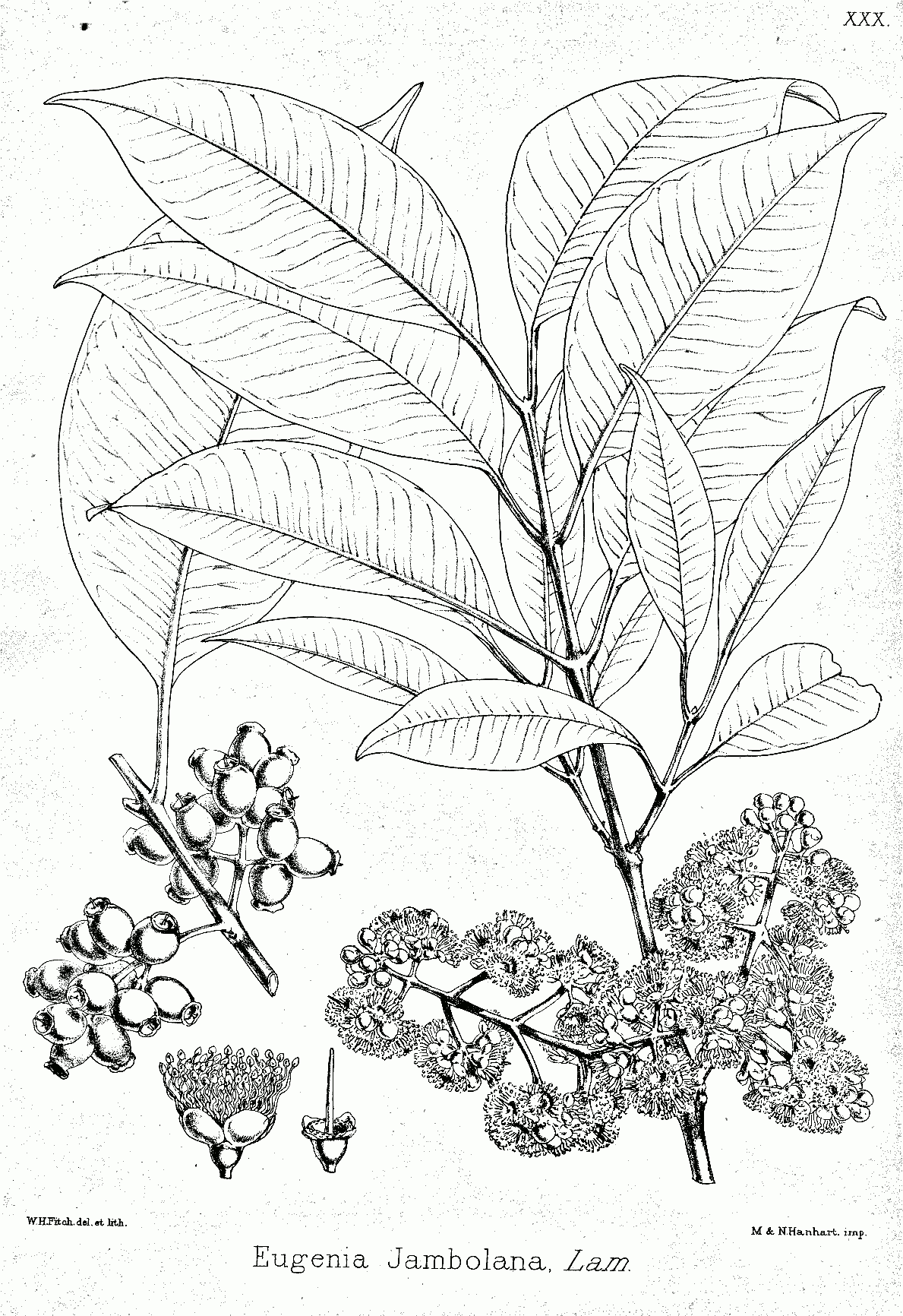

Jambu is the dark purple fruit of a large evergreen tree, and it is the seed inside that Ayurveda values most. Astringent and cooling, it is the herb the tradition reaches for when the digestion runs loose and the waterworks are unsettled.
- Botanical name
- Syzygium cumini
- Family
- Myrtaceae
- Sanskrit
- जम्बू
- Part used
- Seed (beeja), stem bark, fruit and leaf
- Taste (rasa)
- Astringent, sweet and sour (kashaya, madhura, amla)
- Quality (guna)
- Light and dry (laghu, ruksha)
- Energy (virya)
- Cooling (sheeta)
- After digestion (vipaka)
- Pungent (katu)
- Action (karma)
- Binds and absorbs, kindles digestion, settles Kapha and Pitta (grahi, deepana, kapha-pitta-hara)
- Effect on dosha
- Pacifies Kapha and Pitta; may aggravate Vata (kapha-pitta-shamaka, vata-vardhaka)
- Best known for
- A binding, cooling fruit and seed for the digestion and the waterworks
What is Jambu?
Jambu is the fruit of a large evergreen tree, Syzygium cumini, of the myrtle family, which grows widely across the Indian subcontinent and casts a broad, dense shade. In early summer the tree hangs heavy with clusters of small oval fruit that ripen from green through crimson to a deep, glossy purple-black. Each fruit holds a single large seed, and it is that seed, along with the bark, the fruit and the leaf, that Ayurveda has long used.
The tree carries an unusual weight of meaning. Its Sanskrit name, Jambu, is the name from which the whole rose-continent of classical geography, Jambudvipa, takes its title, the land said to be marked by this very tree. In common speech the fruit is called Jamun, and English names it after its colour and taste: black plum, Java plum, Indian blackberry. Among its many textual synonyms are Mahaphala, the great fruit, and Rajajambu, the royal Jambu, the name given to the larger, sweeter cultivated kind. The ripe fruit is eaten fresh and stains the tongue a vivid purple, but for medicine it is chiefly the dried seed, ground to a fine powder, that the tradition prepares.
What Ayurveda uses it for
Jambu belongs to the astringent, binding side of Ayurveda. The classical writers count it among the grahi herbs, those that absorb and hold, checking a flow that has become loose or unsteady, and they place it firmly among the fruits that settle Kapha and Pitta. Its cool, dry, astringent nature was understood to firm the stool, quiet thirst and calm an over-heated, over-active digestion, while its deepana quality gently kindles the digestive fire.
Within that role the dravyaguna texts describe the seed and bark as traditionally indicated in a familiar set of conditions, each named here in its classical Sanskrit term with a plain gloss:
- Prameha: the classical group of urinary and metabolic disorders, the indication most closely tied in the tradition to the seed powder in particular.
- Atisara: diarrhoea and loose, frequent motions, where its binding, absorbing quality is called upon.
- Trishna: excessive or unquenchable thirst, which its cooling nature is said to quiet.
- Chardi: nausea and vomiting, an unsettled, upward-moving state the astringent fruit is used to calm.
- Raktapitta: a classical bleeding tendency arising from heat in the blood, for which its cooling, astringent action is described.
- Grahani: disturbed digestion and absorption, the long-standing looseness the grahi herbs are named to steady.
These are the traditional textual indications recorded in the classical literature. They set out how Ayurveda has long understood the herb and are given for reference and study, not as statements of medical effect or as advice to treat any condition.
Of all its parts, it is the seed, beeja, that the tradition links most closely with Prameha, taken as a fine powder. The bark and the fresh fruit are drawn on more for the loose digestion, the thirst and the bleeding tendencies described above.
Its qualities, in plain words
Ayurveda describes every herb by a short list of qualities, and for Jambu they line up neatly behind its reputation as a binder and cooler.
Its taste is astringent first, with a sweet and sour note behind it, and in Ayurveda an astringent taste is the taste that draws together, firms and holds. It is light and dry, so rather than feeding and grounding the body it tightens and absorbs, drawing off the wet, loose quality that Kapha and unsettled digestion bring. It is cooling, which is why it suits heat, thirst and irritation, the states the texts link to Pitta. And it finishes pungent after digestion, a quality that keeps it from being merely heavy and lends it its drying, absorbing edge. Put together, these qualities describe a cool, dry, astringent fruit, which is why the tradition settles most firmly on its Kapha-and-Pitta-settling, binding action. Because that same dryness and coolness can unsettle the light, mobile quality of Vata, the fruit is one the sources note may aggravate Vata if used heavily.
How it is taken
The usual medicinal form is the seed powder, Jambu beeja churna. The ripe seed is dried thoroughly and ground to a fine powder, and it is this powder that the classical writers name most often, typically stirred into water, honey or buttermilk according to the aim. The stem bark is prepared as a decoction or a similar water extract, and the fresh fruit is simply eaten in season.
From these parts the tradition made a number of named preparations. Jambu appears in the fermented liquid preparation Jambvasava, made from the fruit, and the seed powder is used both on its own and combined with other astringent, Prameha-linked herbs in classical formulas. As a cool, astringent medicine it was commonly paired with honey or buttermilk, the vehicles Ayurveda favours for carrying a binding, absorbing action, rather than with the milk and ghee reserved for the nourishing herbs.
Good to know
Jambu sits on the astringent, clearing side of Ayurveda rather than the nourishing side, and its whole character is one of drawing together and drying rather than feeding. Its cool, dry nature makes it well suited to loose, over-heated states, but for the same reason it is used more carefully where dryness or an aggravated Vata already prevails. One point is worth keeping in view: the fruit and its parts are astringent and binding by design, and the tradition matches the vehicle, honey, water or buttermilk, to the effect it seeks.
This entry describes the classical Ayurvedic understanding of the herb. It is not medical advice, and anyone with a health condition should speak to a qualified practitioner.
Frequently asked
Which part of the plant is used? Chiefly the seed, dried and ground to a fine powder. The stem bark, the fresh fruit and the leaf are also described in the classical literature, but it is the seed that the tradition names for most of its medicinal preparations, and the seed in particular that it links with Prameha.
Is Jambu cooling or warming? Cooling. Its astringent, dry, cooling nature is why the tradition reaches for it in states of heat, thirst and loose, over-active digestion, and why it is counted among the fruits that settle both Kapha and Pitta.
Why is it taken with honey or buttermilk rather than milk? Because Jambu is a binding, absorbing herb rather than a nourishing one. Honey and buttermilk carry its astringent, drying action, while the milk and ghee that suit the building herbs would work against that aim. The tradition chooses the vehicle to match the purpose.
Jambu is astringent, sweet and cooling; it binds the stool, quiets thirst and vomiting, and is heavy on the digestion, settling Kapha and Pitta.
After the Bhavaprakasha Nighantu, on Jambu
The seed of Jambu, taken as a fine powder, is the part the tradition names for the classical group of urinary and metabolic disorders.
After the Bhavaprakasha Nighantu, on the Prameha herbs
Frequently asked questions
What is Jambu used for in Ayurveda?
Jambu (Syzygium cumini), the dark jamun fruit, is valued in Ayurveda above all for Prameha, the classical group of urinary and metabolic disorders, and for steadying a loose, over-heated digestion. Its seed especially is classed as grahi, binding and absorbing. Astringent, sweet and sour in taste, it settles Kapha and Pitta while it kindles digestion, though it may aggravate Vata.
What is jamun seed good for?
The seed of Jambu is the part Ayurveda prizes for Prameha, the urinary and metabolic group, and for binding a loose digestion, since its grahi and astringent action absorbs and holds. It settles excess Kapha and Pitta. It is traditional supportive care within that classical framework, not a treatment for any named condition, so metabolic concerns should be managed with your doctor.
Which dosha does Jambu balance?
Jambu pacifies Kapha and Pitta through its astringent, cooling and binding nature, and this is why the tradition favours it for hot, loose, congested digestive and metabolic states. Its one caution is Vata: being astringent and drying, it can aggravate Vata, so it suits Vata-predominant people less well and is used more carefully where dryness or constipation is already present.
Is Jambu good for digestion and diarrhoea?
Ayurveda classes Jambu, and especially its seed, as grahi, meaning it binds and absorbs, so it is traditionally used to steady a loose, over-heated digestion. Its astringent taste and cooling nature settle the disturbed heat. It offers classical support rather than a cure for any named condition, so persistent or severe loose stool should be reviewed by your doctor.
How do you take Jambu seed powder?
Jambu seed is usually dried and powdered, then taken in a small measure with water, often for its grahi and metabolic actions within a practitioner's plan. Because it is drying and can aggravate Vata, the dose and suitability are best guided by a qualified practitioner, particularly if you are also managing blood sugar with your doctor.
References
- Charaka Samhita, Sutrasthana, chapter 27 (Annapana-vidhi), among the fruits, and in the group of herbs that bind and check the flow (sangrahika).
- Sushruta Samhita, Sutrasthana, among the astringent, Kapha-and-Pitta-settling fruits.
- Bhavaprakasha Nighantu, Amradi Phala Varga, entry on Jambu with its synonyms and properties.
- Raja Nighantu, listing the Sanskrit synonyms of the tree, among them Mahaphala and Rajajambu.
- Ashtanga Hridaya, on the astringent (kashaya) fruits and their use in loose digestion and thirst.