Materia Medica · Dravyaguna
Kumkuma
Crocus sativus · Iridaceae
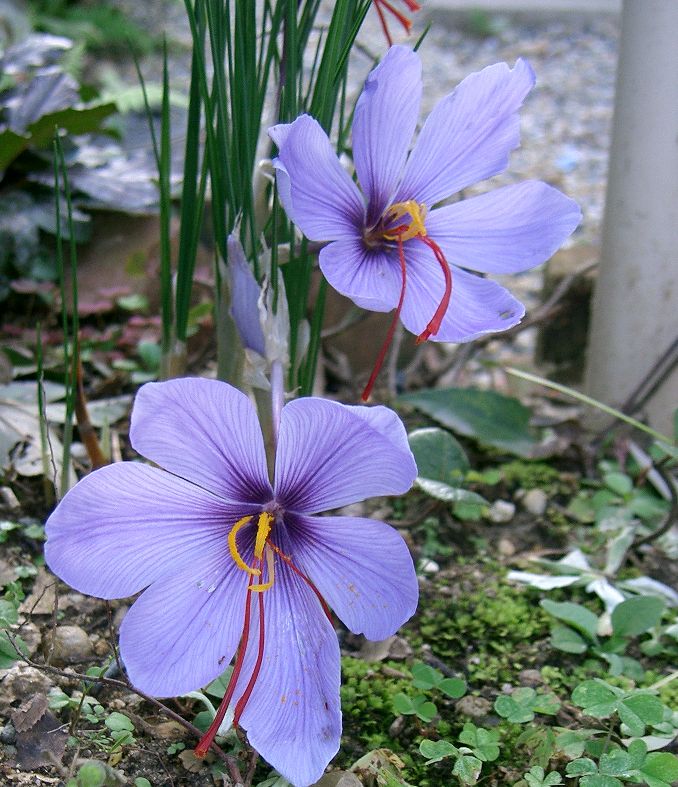

Kumkuma is saffron, the dried red stigmas of the autumn crocus and one of the most precious substances known to Ayurveda. Used in the smallest amount, it is prized above all for the complexion, and it has a settled place in the classical care of the heart.
- Botanical name
- Crocus sativus
- Family
- Iridaceae
- Sanskrit
- कुङ्कुम
- Part used
- Stigmas
- Taste (rasa)
- Bitter and pungent (tikta, katu)
- Quality (guna)
- Unctuous and light (snigdha, laghu)
- Energy (virya)
- Warming (ushna)
- After digestion (vipaka)
- Pungent (katu)
- Action (karma)
- Improves the complexion, gladdens the heart, settles all three doshas (varnya, hridya, tridoshahara)
- Best known for
- A precious spice for the complexion and the heart
What is Kumkuma?
Kumkuma is saffron, the dried red stigmas of the autumn crocus, Crocus sativus, a low bulbous plant of the iris family that flowers in the cooler months. The plant is small and unassuming, sending up a single pale-violet bloom, but within each flower sit three slender crimson stigmas, and it is these threads alone that Ayurveda uses. Because so many flowers are needed to gather even a little of them, saffron has always counted among the most precious of substances.
The name is an old and rich one. In classical India the plant is Kumkuma, and it carries the synonyms Kashmiraja, “king of Kashmir,” the northern valley long famous for growing it, Kesara, meaning the filament or thread, and Aruna, “reddish,” for the deep colour of the stigmas. In everyday speech it is Kesar or Zaffran, and to English speakers simply saffron. The threads themselves are what is meant whenever the tradition speaks of Kumkuma.
What Ayurveda uses it for
In the classical texts Kumkuma is valued first as a Varnya substance, one that improves the complexion, and this is the use for which it is best known. It appears by name in the celebrated Kumkumadi preparations for the face, and the dravyaguna writers place it among the herbs that lend the skin a clear and even tone. Alongside this it is described as Hridya, good for the heart, and as a warming, kindling substance that also carries a place in Vajikarana, the branch of Ayurveda concerned with vigour.
Within that role the classical literature describes the stigmas as traditionally indicated in a familiar set of conditions, each named here in its Sanskrit term with a plain gloss:
- Vaivarnya: discolouration or dullness of the complexion, where its work upon Varna, the skin’s tone, is its foremost use, as in the Kumkumadi preparations.
- Shiroroga: disorders of the head, for which the fragrant, warming threads are described.
- Chardi: nausea, where a small amount of the spice is used to settle the stomach.
- Hridroga: as a Hridya support in the classical sense, a substance held to be good for the heart.
- Daurbalya: debility and weakness, where its warming, kindling quality is called upon.
These are the traditional textual indications recorded in the classical literature. They set out how Ayurveda has long understood the stigmas and are given for reference and study, not as statements of medical effect or as advice to treat any condition.
Kumkuma is also counted among the classical Vajikarana substances, those the tradition connects with vigour and vitality. This too is recorded here as a point of classical understanding, placing the precious spice within the setting the old texts give it.
Its qualities, in plain words
Ayurveda describes every substance by a short list of qualities, and for Kumkuma they sit behind its double reputation, for the skin and for the heart.
Its taste is bitter with a pungent edge, and in Ayurveda these are the tastes that clear and kindle rather than feed. It is unctuous and light, so it moistens without weighing the body down, which is part of why it suits the skin. It is warming, the quality that lets a fragrant spice rouse the digestion and the circulation, and it finishes pungent after digestion. Put together, these qualities describe a warm, fragrant, unctuous spice, potent out of all proportion to its size, which is why the tradition uses it in the smallest amount. Because it is gentle in balance, the texts call it broadly tridoshahara, settling to all three doshas when used with care.
How it is taken
The stigmas are used whole or lightly rubbed, and because they are so concentrated only a few threads are needed at a time. A common classical way is to steep them in warm milk, which draws out their colour and fragrance and carries their warming, nourishing action gently into the body. A pinch may likewise be added to sweet preparations, to ghrita and to tonic pastes.
Kumkuma is best known, though, as the named ingredient of Kumkumadi Taila, the classical medicated oil for the face in which saffron is steeped with other complexion-giving herbs. It appears too in fragrant confections and in the rich, sweet formulas of the Vajikarana group. Whether taken within or applied to the skin, it is always the small, measured amount that the tradition intends, for the threads are prized precisely because a very little goes a long way.
Good to know
Kumkuma is a precious substance, used in very small amount, and this measure is part of its very nature rather than a mere caution: a few threads are enough, and the classical writers never call for it by the spoonful. It is a warm, kindling spice, and in keeping with that the tradition has treated it with more care during pregnancy when taken in large quantity, favouring only the small culinary or medicinal amounts the texts describe. Used sparingly and in the manner the classical literature sets out, it holds an honoured and long-settled place.
This entry describes the classical Ayurvedic understanding of the herb. It is not medical advice, and anyone with a health condition should speak to a qualified practitioner.
Frequently asked
Why is saffron so precious? Because each crocus flower gives only three slender stigmas, and a great many flowers are needed to gather even a small amount. The threads must be picked by hand, which is why Kumkuma has always counted among the costliest of substances and is used in the smallest measure.
Which part of the plant is used? Only the stigmas, the three crimson threads at the centre of each flower. The rest of the plant is set aside, and it is these threads alone that the classical preparations call for.
Why is it taken with milk? Warm milk draws out the colour and fragrance of the stigmas and carries their gentle warming action into the body, which is the classical way of taking saffron internally. For the skin it is instead steeped in oil, as in Kumkumadi Taila.
Kumkuma improves the complexion, is good for the heart, and settles the three doshas; it is warming and used in the smallest amount.
After the Bhavaprakasha Nighantu, on Kumkuma
Among the Varnya herbs, those that better the complexion, saffron holds an honoured place.
After the Charaka Samhita, on the complexion-improving group
Frequently asked questions
What is Kumkuma (saffron) used for in Ayurveda?
Kumkuma is the dried red stigmas of the autumn crocus, Crocus sativus, one of the most precious substances in the materia medica. Ayurveda values it for improving the complexion and gladdening the heart. The texts class its action as varnya, complexion-enhancing, hridya, good for the heart, and tridoshahara, able to settle all three Doshas.
Is saffron good for skin and complexion?
The tradition classes Kumkuma as varnya, a herb that improves the complexion, and it appears in many classical beauty formulas, including facial oils. It is used both internally in small amounts and externally in preparations for a clear, even, radiant skin tone. This is a traditional cosmetic use rather than a claim to treat any skin disease.
How do you use Kumkuma, and how much?
Saffron is extremely potent and precious, so only a very small amount is used, a few strands, often steeped in warm milk or added to a formula. Ayurveda counts it as tridoshahara, suitable in modest measure for all constitutions. More is not better with saffron; follow a small traditional measure or a practitioner's guidance.
Why is Kumkuma called good for the heart?
The texts describe Kumkuma as hridya, meaning good for the heart, a term Ayurveda uses both for the physical heart and for the emotional sense of a gladdened, uplifted mood. This is why saffron is traditionally linked with cheer and a settled temperament as much as with complexion. It is one of the classical herbs said to gladden the heart.
Is saffron safe during pregnancy?
Saffron is used in some traditional preparations, but it is potent, and large amounts are not advised, particularly in pregnancy. A few culinary strands are one thing; medicinal doses are another. In pregnancy or breastfeeding, and if you take medication, use Kumkuma only in small culinary amounts unless a qualified practitioner and your doctor advise otherwise.
References
- Charaka Samhita, Sutrasthana, among the Varnya (complexion-improving) group of herbs.
- Sushruta Samhita, on the fragrant and complexion-giving substances used in preparations for the skin.
- Bhavaprakasha Nighantu, Karpuradi Varga, entry on Kumkuma with its synonyms and properties.
- Raja Nighantu, listing the many Sanskrit synonyms of the plant, including Kashmiraja, Kesara and Aruna.
- Ashtanga Hridaya, on the Kumkumadi preparations for the face and complexion.