Overview
Mandukparni, scientifically known as Centella asiatica L. Urb. (Syn. Hydrocotyle asiatica) belongs to the family Apiaceae (formerly Umbelliferae) and stands as one of the most revered botanical medicines in the Ayurvedic pharmacopoeia. The plant is recognized across multiple classical Ayurvedic texts under various nomenclatures, including Brahmi, Saraswati, Talipetraka, Mandooka-parni, and Jalabrahmé. In Sanskrit literature, the name Mandukparni derives from “manduka” (frog) and “parni” (leaf), referring to the frog-shaped appearance of its leaves and its affinity for moist, aquatic habitats. The Hindi nomenclature includes Brahmi, Ghotu kola, and Kula-kudi, while in English-speaking regions it is commonly designated as Gotu kola, Indian pennywort, or asiatic pennywort.
Mandukparni possesses profound historical significance within the Ayurvedic tradition, occupying a position of particular prominence in the classical formularies and therapeutic systems developed over millennia. The herb is traditionally recognized as a medhya rasayana (intellect-promoting rejuvenative) (traditionally considered intellect-promoting rejuvenative), a status that has secured its continuous application across generations of Ayurvedic practitioners. Its geographical distribution spans the tropical and subtropical regions of Asia, including India, Sri Lanka, Bangladesh, Indonesia, and Southeast Asian territories, where it thrives in marshy environments and near water bodies. The plant’s adaptability to diverse ecological niches has facilitated its widespread cultivation and accessibility throughout the Indian subcontinent, contributing to its established role in both household remedies and sophisticated clinical preparations.
The fundamental importance of Mandukparni in contemporary Ayurvedic practice extends across multiple therapeutic domains, particularly in traditional support for the nervous system, cognitive function, skin health, and circulation according to Ayurvedic principles. Its multifaceted pharmacological profile, combined with its relative safety profile and mild potency, positions it as an accessible yet efficacious botanical medicine suitable for a spectrum of constitutional presentations and age groups. The herb exemplifies the Ayurvedic principle of employing gentle, naturally-occurring substances to traditionally support the body’s inherent regulatory mechanisms, making it a cornerstone botanical within both classical and modern Ayurvedic formulation design.
Classical References
Mandukparni’s integration into the classical Ayurvedic canon is extensively documented across the primary scriptural sources of Ayurvedic medicine. The earliest systematic references to this herb appear within the Charaka Samhita (circa 100 CE), one of the three principal foundational texts of Ayurveda. Within the Charaka Samhita’s Sutra Sthana (theoretical section), the herb is enumerated among the medhya rasayanas—a specialized category of rejuvenative medicines specifically designed to enhance intellect, memory, and cognitive function. The text identifies Mandukparni as particularly beneficial for disorders of the mind and nervous system, establishing its primary therapeutic domain within the classical framework.
The Sushruta Samhita, the foundational surgical and pharmacological text compiled between the 2nd and 4th centuries CE, contains detailed references to Mandukparni within its Sutra Sthana and Uttara Tantra (pharmacology sections). This authoritative source emphasizes the herb’s utility in the treatment of kushtha (skin diseases), visarpa (dermatological conditions), and kshata (traumatic injuries), in addition to its applications in neurological and psychological domains. The Sushruta Samhita particularly highlights the herb’s traditional use to support tissue healing and regeneration, a therapeutic application that remains relevant in contemporary Ayurvedic dermatology.
The Ashtanga Hridayam, composed by Vagbhata during the 7th century CE, presents a concise yet comprehensive overview of Mandukparni’s properties within its Padartha Vigyaniya Adhyaya (principles of pharmacology). This seminal work confirms Mandukparni’s classification as a medhya rasayana and emphasizes its role in supporting healthy aging and maintaining cognitive acuity throughout the lifespan. The text’s systematic approach to botanical classification reinforces the herb’s position as a primary choice for vata-predominant conditions affecting the nervous system.
The Bhavaprakasha Nighantu, compiled by Bhava Misra in the 16th century, provides extensive botanical and therapeutic details regarding Mandukparni.
Within the Haritakyadi Varga (section on herbaceous plants), the text offers precise descriptions of the plant’s morphology, habitat preferences, and harvesting protocols, alongside confirmation of its traditional uses across multiple therapeutic contexts.
The Bhavaprakasha Nighantu remains instrumental in contemporary Ayurvedic practice as a bridge between classical knowledge and practical application.
The Dhanvantari Nighantu, another significant pharmacological compendium from the medieval Ayurvedic period, similarly documents Mandukparni’s therapeutic properties and recommends specific formulations incorporating this herb for diverse health conditions. These classical references collectively establish an unbroken tradition of Mandukparni utilization spanning over two thousand years, underscoring the herb’s enduring relevance and recognized therapeutic value within the Ayurvedic medical system.
Botanical Description
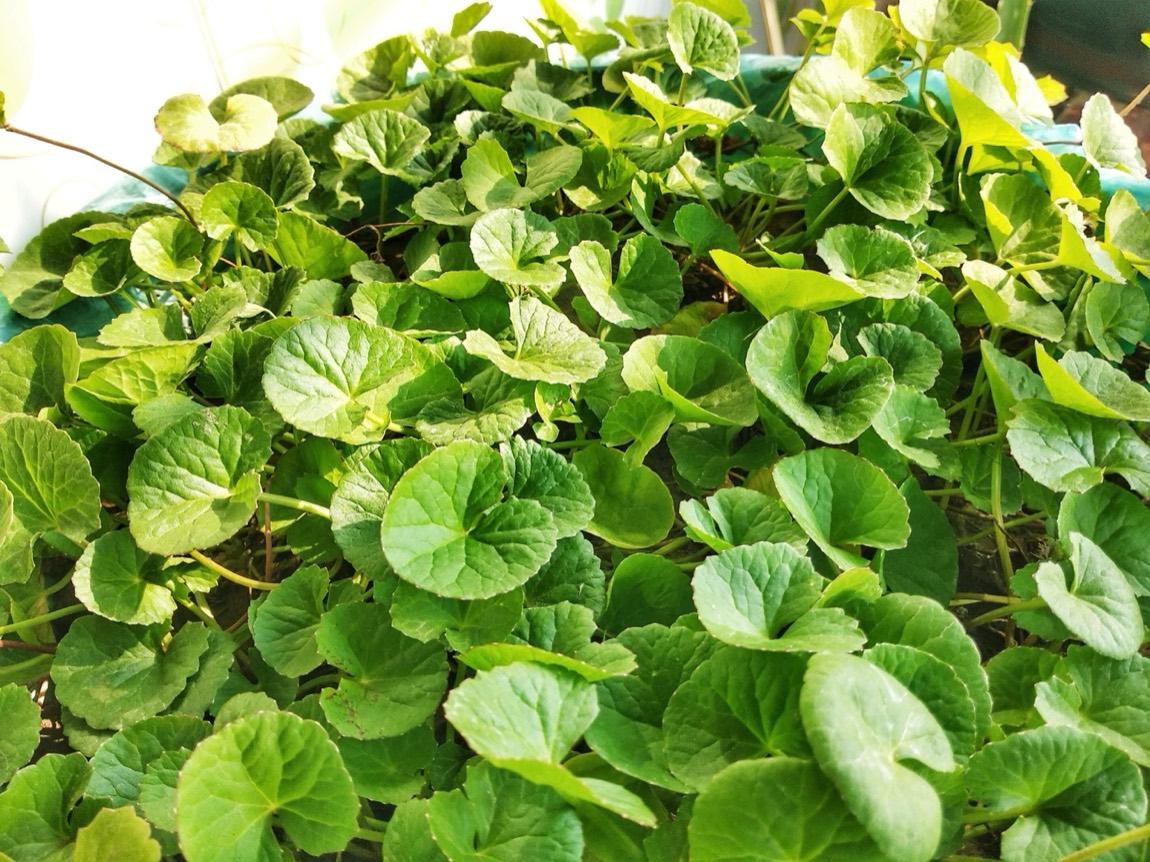
Mandukparni presents as a delicate, perennial herbaceous plant with distinctive morphological characteristics that have informed both its Sanskrit nomenclature and its botanical classification. The plant typically reaches heights between 10 to 30 centimeters, displaying a prostrate to creeping growth habit that allows it to spread laterally across moist substrates. The stems are slender, rooting at the nodes, and often display a reddish to purplish coloration, particularly at points of contact with soil.
The characteristic leaves are perhaps the most immediately recognizable botanical feature, appearing as small, reniform (kidney-shaped) to orbicular structures measuring approximately 0.5 to 2 centimeters in diameter. The leaf margin displays shallow crenulations (scalloped edges), and the surface demonstrates a glossy, sometimes slightly pubescent texture. The leaves are palmately veined, with petioles (leaf stalks) that are typically longer than the leaf blade itself, arising from nodes distributed along the creeping stems. This architectural arrangement facilitates maximum surface area exposure for photosynthetic activity while maintaining the plant’s prostrate habit—an adaptation particularly advantageous in the marshy, competitive environments where Mandukparni naturally occurs.
The inflorescence emerges as small, inconspicuous umbels of pale pink or white flowers appearing in clusters at the stem nodes. These flowers are notably minute, measuring only 3 to 4 millimeters in diameter, and possess the characteristic pentamerous structure typical of the Apiaceae family. The flowering period typically spans the warmer months, from April through October in most Indian geographical zones, with flower production being particularly vigorous during the monsoon season when moisture availability reaches optimal levels.
The fruit develops as a characteristic schizocarp, producing small, flattened, ribbed structures approximately 3 to 5 millimeters in length. The fruits are generally non-aromatic and contain the herb’s seeds, which are responsible for propagation under natural conditions, though vegetative propagation through stem fragmentation remains highly efficient and commonly employed in cultivation.
Mandukparni’s geographical distribution spans the Asian tropics and subtropics, with primary concentrations in India, Sri Lanka, Bangladesh, Myanmar, Thailand, and Indonesia. The plant demonstrates a pronounced preference for wetland ecosystems, thriving in marshy areas, along water margins, in rice paddies, and in other moisture-saturated environments. In India specifically, the herb grows profusely in the coastal regions, riverine systems, and monsoon-influenced areas of the Western Ghats, Eastern Himalayas, Assam, and the Deccan plateau regions.
The officinal parts utilized in Ayurvedic formulation comprise the entire aerial portion of the plant, encompassing stems, leaves, and occasionally the root system, depending on the specific therapeutic application and traditional formulation protocol. Harvesting traditionally occurs during the monsoon months (July through September) when the plant achieves maximum biomass accumulation and phytochemical concentration. The material is typically collected in the morning hours following the dissipation of dew, dried under shade conditions to preserve the herb’s volatile components and thermolabile constituents, and subsequently processed according to specific formulation requirements.
Pharmacological Properties (Dravyaguna)
Within the Ayurvedic pharmacological framework, Mandukparni demonstrates the following characteristic properties that collectively determine its therapeutic potential and clinical applications:
Rasa (Taste): Mandukparni is traditionally attributed a predominance of madhura (sweet) and tikta (bitter) rasas, with some classical sources acknowledging a secondary astringent quality. The sweet rasa dominates the initial gustatory experience, while the bitter rasa emerges as the herb’s lingering aftertaste. These twin rasas reflect the herb’s capacity to simultaneously nourish tissues while clearing excess heat and metabolic byproducts from physiological systems.
Guna (Physical Qualities): The herb exhibits predominately laghu (light) and snigdha (unctuous) gunas, combined with a secondary ruksha (dry) quality. The light quality facilitates rapid absorption and distribution throughout bodily tissues, while the unctuous characteristic supports the herb’s nourishing and demulcent properties. This apparent paradox between snigdha and ruksha reflects the herb’s capacity to simultaneously hydrate tissues while eliminating stagnant fluids through diuretic mechanisms.
Virya (Energetic Potency): Classical sources consistently attribute a sheeta (cold) virya to Mandukparni, positioning it within the cooling therapeutic category. This thermoregulatory property proves particularly valuable in managing pitta-predominant conditions, inflammatory presentations, and thermal imbalances affecting the nervous system. The cooling potency is moderate rather than extreme, permitting safe application across diverse constitutional types without inducing excessive frigidity or compromising digestive function. digestive function.
Vipaka (Post-digestive Effect): The herb demonstrates a madhura vipaka, indicating that its final metabolic transformation within the gastrointestinal system produces sweet-taste residues that nourish tissues, particularly the nervous system and sensory organs. This sweet post-digestive effect contributes to the herb’s reputation as a rasayana, supporting cellular regeneration and systemic rejuvenation.
Prabhava (Specific Action): Beyond its constituent rasa, guna, virya, and vipaka properties, Mandukparni possesses a specific prabhava (unique efficacy) as a medhya (intellect-promoting) agent. This prabhava functions independently of the herb’s basic pharmacological properties, enabling it to selectively enhance cognitive function, memory formation, and nervous system integration at levels exceeding what its rasa-guna-virya profile would predict. This unique action exemplifies the Ayurvedic principle that certain botanical substances possess mysterious and irreducible therapeutic powers that transcend mechanical pharmacological explanations.
Karma (Therapeutic Actions): The comprehensive therapeutic actions of Mandukparni include medhya (nootropic), rasayana (rejuvenative), vrana-shodhana (wound-cleansing), vrana-ropana (wound-healing), yakrit-uttejaka (hepatic-stimulating), jvarahara (fever-reducing), kledahara (dampness-reducing), and rakta-prasadana (blood-purifying) functions. These diverse actions collectively position Mandukparni as a polypharmacological agent affecting multiple physiological systems simultaneously.
Mahakashaya Classification: According to the Charaka Samhita’s Sutra Sthana, Mandukparni occupies prominent positions within two principal Mahakashaya (group of ten herbs) classifications: the Medhya Rasayana Dashemani (the ten intellect-promoting rejuvenatives) and the Vrana-ropana Dashemani (the ten wound-healing herbs). This dual classification reflects the herb’s recognized efficacy across distinct yet complementary therapeutic domains, establishing it as a botanical agent of considerable versatility and clinical utility.
Traditional Uses and Indications
Within the classical Ayurvedic framework, Mandukparni addresses a comprehensive spectrum of health conditions, with primary emphasis upon neurological, cognitive, and psychological domains. The herb is traditionally indicated for the treatment of smriti-bhramsha (memory impairment), medha-kshaya (reduced cognitive capacity), buddhi-vibhrama (confusion and disorientation), and unmada (insanity or severe psychological disturbance). These applications reflect the herb’s established status as a premier medhya rasayana, making it the botanical medicine of choice for individuals seeking to enhance or restore cognitive function across the lifespan.
Beyond its primary neurological applications, classical Ayurvedic texts document Mandukparni’s utility in addressing kushtha (broad category of skin diseases), visarpa (herpes zoster and similar dermatological conditions), and kshata (traumatic injuries to skin and soft tissues). The herb’s reputation as a vrana-ropana (wound-healing) agent has secured its continuous application in dermatological formulations for millennia, particularly within topical preparations designed to accelerate tissue regeneration and minimize scar formation.
Ayurvedic practitioners traditionally employ Mandukparni in the management of rakta-pitta (bleeding disorders), visra-jvara (chronic or recurrent fevers), and various manifestations of pitta-predominant pathology. The herb’s cooling potency and blood-purifying actions make it particularly suitable for individuals demonstrating excessive heat presentations affecting circulatory function. Classical texts similarly indicate its use in brahmacharya-palana (supporting celibate spiritual practices) and yoga-sadhana (assisting yogic practices), reflecting the herb’s role in supporting nervous system stability and mental focus conducive to contemplative disciplines.
Within the traditional Ayurvedic framework for managing vata disorders, Mandukparni occupies a significant position despite its cooling nature, as its grounding, tissue-nourishing properties and nervous-system supportive actions prove particularly beneficial for vata-predominant individuals presenting with deficient or depleted constitutional status. The herb’s capacity to simultaneously cool excess heat while stabilizing nervous system function positions it as an agent capable of addressing complex constitutional imbalances combining vata and pitta disturbance patterns.
The herb is additionally recognized within classical texts as a rasayana suitable for preventive medicine and healthy aging support, particularly in maintaining cognitive sharpness and sensory function throughout advancing years. This rejuvenative application reflects the Ayurvedic principle of administering tonifying substances during specific life stages and seasonal periods to maintain optimal health and prevent age-related decline.
Classical Formulations
Mandukparni appears as a primary constituent within numerous classical Ayurvedic formulations, reflecting its widespread pharmaceutical utility and therapeutic versatility. The following represent major traditional preparations incorporating this significant herb:
Brahmi Ghritam: This classical medicated ghee preparation combines Mandukparni (Brahmi) as its primary ingredient with cow ghee and supporting herbs including Shankhapushpi, Yashtimadhu, and Jatamansa. The formulation is traditionally prepared according to specific proportional protocols established within the Sahasrayoga and similar classical formularies. Brahmi Ghritam remains widely employed in supporting cognitive function, enhancing memory capacity, and addressing nervous system disturbances. The ghee base facilitates nervous tissue penetration and systemic distribution of the herb’s bioactive components.
Brahmi Tailam (Brahmi Oil): This traditional medicated oil formulation features Mandukparni as its essential constituent combined with sesame or coconut oil, along with supporting herbs such as Shankhapushpi, Hibiscus flowers, and aromatic botanicals. When properly prepared according to classical oil-infusion protocols, Brahmi Tailam serves as an exceptional topical application for supporting scalp and nervous system health. Regular abhyanga (oil massage) with Brahmi Tailam, particularly upon the cranium and feet, constitutes a classical rejuvenative protocol supported by millennia of Ayurvedic application. Visit Art of Vedas’ Ayurveda Thailams collection to explore authentic formulations featuring Mandukparni.
Saraswata Churna: This classical herbal powder formulation combines Mandukparni with supporting botanicals including Ashwagandha, Vidari, Jatamansi, and aromatic seeds. The formulation name itself honors Saraswati, the Vedic deity of knowledge and wisdom, reflecting the preparation’s traditional application in supporting intellectual development and cognitive enhancement. Saraswata Churna may be administered internally in specific traditional dosages established within classical texts, typically combined with warming vehicles such as warm milk or ghee to optimize absorption and therapeutic efficacy.
Brahmarasayana: This sophisticated classical rasayana formulation, documented extensively within the Bhava Prakasha and related texts, incorporates Mandukparni alongside Ashwagandha, Shatavari, Vidari Kanda, and numerous other rejuvenative botanicals. This complex preparation represents one of the most revered polyherbal tonics within the Ayurvedic tradition, traditionally administered as a comprehensive rejuvenative course designed to support all bodily tissues and promote longevity. The formulation’s sophisticated composition reflects the Ayurvedic principle of combining complementary botanical agents to achieve comprehensive physiological support exceeding the individual contributions of singular herbs.
Brahmi Arishta: This fermented herbal decoction combines Mandukparni with supporting herbs and undergoes a specialized fermentation process utilizing specific yeasts and beneficial bacteria. The fermentation process generates naturally-occurring ethanol and organic acids that enhance bioavailability of the constituent herbs while creating a preservation mechanism facilitating extended shelf stability. Brahmi Arishta is traditionally administered in specific volumetric measures combined with warm water, particularly valued for supporting cognitive function and managing chronic neurological concerns.
Jatamansi Brahmi Taila: This traditional medicated oil combines Mandukparni with Jatamansi (Spikenard) and other aromatics suspended within sesame oil base. The formulation is particularly valued for topical application to the head and spine, traditionally employed to support nervous system relaxation, promote restful sleep, and address anxiety-related presentations. The combination of Mandukparni’s cooling, grounding properties with Jatamansi’s nervine-sedative actions creates a synergistic topical preparation of considerable therapeutic utility. Further information regarding such specialized Thai formulations may be accessed through Art of Vedas.
Brahmi Kvatha (Brahmi Decoction): This classical preparation involves simmering fresh or dried Mandukparni material with water according to established decoction protocols, producing a therapeutic beverage traditionally administered warm, often combined with honey and sesame oil. The decoction method preserves heat-stable compounds while facilitating extraction of water-soluble phytochemical constituents, rendering this preparation particularly appropriate for individuals with sensitive digestive systems or reduced capacity for processing more concentrated herb forms.
Brahmi Swarasa: This preparation involves mechanical expression of fresh Mandukparni plant material, producing a concentrated liquid extract representing the herb’s most bioavailable formulation. The swarasa method is traditionally reserved for fresh, vigorously growing plants harvested during optimal seasonal windows, typically during the monsoon period when phytochemical concentrations peak. Though requiring careful storage protocols and limited shelf stability, Brahmi Swarasa represents the herb’s most potent and rapidly-acting formulation.
Methods of Administration
Ayurvedic pharmacology recognizes multiple administration protocols for Mandukparni, with selection among these methods depending upon individual constitutional factors, the specific condition being addressed, and the therapeutic objectives guiding treatment design. The following represent traditional administration methodologies established within classical pharmaceutical texts:
Swarasa (Fresh Juice Expression): The mechanical expression of fresh Mandukparni plant material produces a concentrated liquid extract of maximal therapeutic potency. Classically, 15-30 milliliters of fresh swarasa, administered two to three times daily with honey, represents a standard therapeutic protocol for acute cognitive concerns or severe pitta-predominant conditions. The fresh juice method ensures preservation of volatile aromatic compounds and thermolabile constituents potentially compromised by heat-based processing. However, swarasa formulations demonstrate limited shelf stability and typically remain viable for only 24-48 hours, rendering this method appropriate primarily for fresh-herb applications or within clinical settings maintaining refrigeration capabilities.
Kalka (Herb Paste): Fresh Mandukparni may be manually processed into a fine paste through mechanical grinding, facilitating incorporation into various medicated ghees, oils, and other therapeutic vehicles. Kalka preparations maintain superior therapeutic potency relative to dried herb formulations while retaining reasonable shelf stability when appropriately stored. Traditional dosing for Mandukparni kalka typically ranges from 3-5 grams, administered one to three times daily as tolerated by individual digestive capacity, typically combined with warm water, milk, or ghee.
Kashaya (Decoction): The classical decoction method involves simmering 5-10 grams of dried Mandukparni material within 200-300 milliliters of water for 10-15 minutes, reducing the liquid volume by approximately one-third. Following straining and cooling to comfortable drinking temperature, the resulting decoction is traditionally consumed warm, two to three times daily, often combined with honey or sesame oil. The decoction method proves particularly suitable for individuals demonstrating healthy digestive function and those seeking a mild, sustained therapeutic effect. Kashaya preparations may be conveniently maintained within refrigeration for 3-5 days without significant potency deterioration.
Churna (Fine Powder): Dried Mandukparni material is ground into a fine, homogeneous powder through mechanical processing, producing a stable formulation suitable for extended storage and versatile application. Traditional Churna dosing typically ranges from 2-5 grams, administered one to three times daily, ideally combined with honey (for vata predominance), ghee (for pitta predominance), or warm water (for kapha predominance). Churna formulations demonstrate superior compliance relative to fresh-plant preparations due to convenient administration, extended shelf stability, and portability.
Tailam (Medicated Oil): Mandukparni material is incorporated into oil bases—typically sesame, coconut, or specialized carrier oils—through classical oil-infusion protocols. Medicated Mandukparni oils are traditionally employed for external abhyanga (massage therapy), with particular emphasis upon cranial massage (shiro abhyanga) and spinal column application. Classical protocols recommend applying warm Mandukparni oil to the scalp for 10-20 minutes daily, followed by gentle warm-water rinsing. This traditional application constitutes one of Ayurveda’s premier nervous system support methodologies, with continuous application over 14-21 day cycles typically producing noticeable cognitive and emotional benefits. Explore specialized Ayurvedic Thailam formulations featuring Mandukparni.
Ghrita (Medicated Ghee): Mandukparni is processed into ghee through specialized infusion protocols, producing a therapeutically potent formulation suitable for internal administration. Traditional ghee-based preparations demonstrate enhanced bioavailability for nervous system tissues while providing superior shelf stability relative to aqueous or oil-based formulations. Classical dosing for Mandukparni ghee typically ranges from 5-15 milliliters, administered once to twice daily with warm milk or as directed by qualified practitioners, with treatment duration extending from 40-100 days depending upon therapeutic objectives and constitutional responsiveness.
Arishta/Asava (Fermented Decoction): Mandukparni-based fermented preparations undergo controlled fermentation processes generating naturally-occurring ethanol and beneficial microbial metabolites that enhance bioavailability and medicinal properties. Traditional Arishta dosing typically ranges from 15-30 milliliters, administered once to twice daily with warm water, ideally consumed 30-60 minutes following meal completion. Fermented preparations maintain extended shelf stability and represent an accessible alternative for individuals unable to tolerate fresh-plant or unprocessed herb formulations.
Basti (Enema Therapy): Within the context of classical Ayurvedic purification protocols, Mandukparni decoctions are occasionally incorporated into specialized basti (enema) formulations, particularly for addressing vata-predominant neurological concerns or supporting comprehensive detoxification programs. Basti administration requires appropriate professional guidance and represents an advanced therapeutic methodology reserved for qualified Ayurvedic practitioners.
Frequently Asked Questions
What is the traditional Sanskrit designation for Mandukparni, and what do its various names signify?
Mandukparni derives its Sanskrit nomenclature from the term “manduka” (frog) and “parni” (leaf), the combined terminology referencing the characteristic frog-shaped appearance of the herb’s distinctive kidney-shaped leaves. Alternative Sanskrit designations include Brahmi (one who bestows intellectual brilliance, derived from Brahma, the deity associated with creation and intellect), Saraswati (referring to Saraswati, the Vedic goddess of knowledge and wisdom), and Talipetraka. Each nomenclature reflects different aspects of the herb’s therapeutic properties or botanical characteristics, collectively demonstrating the sophisticated botanical knowledge embedded within classical Sanskrit terminology.
How does Mandukparni differ from Brahmi (Bacopa monnieri), as both herbs share the nomenclature “Brahmi” in traditional contexts?
This represents a significant source of confusion within contemporary Ayurvedic practice, as both Mandukparni (Centella asiatica) and Bacopa monnieri have historically been designated as “Brahmi” within various regional Ayurvedic traditions. However, classical pharmacological analysis demonstrates that these constitute distinct botanical species possessing separate pharmacological profiles and distinct therapeutic applications. Mandukparni demonstrates predominately cooling properties with lighter, more mobile qualities, rendering it particularly suitable for pitta-predominant individuals and acute inflammatory presentations. Bacopa monnieri (often designated as Jala-Brahmi or aquatic Brahmi) exhibits comparatively warming properties with more substantial, grounding qualities, positioning it as superior for vata-predominant individuals and chronic depletion patterns. Contemporary Ayurvedic practice increasingly employs precise botanical nomenclature to distinguish these herbs definitively.
What constitutes the most appropriate seasonal timing for Mandukparni harvesting to achieve optimal phytochemical concentration?
Classical Ayurvedic texts establish the monsoon season (typically June through September, varying by geographical region) as the optimal harvest window for Mandukparni. During this period, abundant moisture availability stimulates vigorous growth, promoting maximum vegetative biomass accumulation and corresponding phytochemical compound concentration. Morning hours, following the dissipation of nocturnal dew but preceding peak solar heating, represent the traditional harvest timing, as this window ensures adequate moisture content for preservation of volatile compounds while minimizing photooxidation damage. Freshly harvested material intended for swarasa (juice expression) formulations demonstrates optimal therapeutic potency when processed within hours of collection, while material designated for drying and subsequent powder or extract production requires shade-drying protocols protecting against photodegradation.
Which constitutional types derive maximum therapeutic benefit from Mandukparni administration, and are there any contraindications based on doshic composition?
Mandukparni’s cooling, grounding, and slightly moistening properties position it as particularly beneficial for pitta-predominant individuals and those demonstrating excess heat manifestations affecting the nervous system. However, the herb’s light quality and capacity to promote circulation render it therapeutically appropriate across all doshic compositions when appropriately formulated. Vata-predominant individuals traditionally receive Mandukparni suspended within warming vehicles such as ghee or warm sesame oil to mitigate the herb’s potentially destabilizing light qualities. Kapha-predominant individuals may employ the herb in powdered form with warm water or light spicing, potentially diluting the formulation’s demulcent properties while preserving its cognitive-enhancing and circulatory-promoting actions. Contraindications remain minimal, though classical texts recommend cautious application in individuals demonstrating severe constitutional coldness or profound tissue depletion, wherein the herb’s light quality might exacerbate deficient presentations without appropriate tonifying support.
How long does a typical Mandukparni treatment course require to demonstrate appreciable cognitive benefits according to classical Ayurvedic protocols?
Classical Ayurvedic texts establish varying treatment durations depending upon the specific health concerns being addressed and individual constitutional responsiveness. For acute cognitive concerns, optimized nervous system support, and general preventive rejuvenation, continuous administration of 40-60 days typically produces noticeable cognitive clarity, enhanced memory retention, and improved emotional stability. More profound cognitive restoration and comprehensive nervous system rejuvenation traditionally requires extended treatment protocols ranging from 100-200 days, with some classical sources recommending seasonal courses spanning three-month periods repeated across multiple years for maximum benefit. This extended timeframe reflects the Ayurvedic principle that true rejuvenation requires sustained botanical support permitting gradual tissue renovation at cellular levels, contrasting with biomedical approaches emphasizing rapid symptom amelioration through pharmaceutical intervention.
Can Mandukparni be safely combined with other botanical medicines, and are there specific formulation strategies recommended within classical texts?
Mandukparni demonstrates considerable synergistic compatibility with numerous complementary botanical agents, a principle reflected throughout classical formulary texts. The herb combines particularly effectively with Shankhapushpi for enhanced cognitive benefits, with Jatamansi for nervous system relaxation and emotional balance support, and with Ashwagandha for comprehensive stress-response system tonification. Conversely, Mandukparni’s cooling nature necessitates thoughtful combination with other thermodynamically similar herbs to prevent excessive chilling of digestive function; such combinations should be carefully individualized based on constitutional assessment. Classical texts emphasize the principle of rasayana polypharmacy, wherein multiple complementary botanicals produce synergistic effects exceeding individual contributions, making appropriate herb combination fundamental to optimized therapeutic outcomes. Individual practitioners should consult with qualified Ayurvedic professionals regarding specific formulation strategies tailored to particular constitutional presentations.
What storage protocols preserve Mandukparni’s therapeutic potency across extended periods, and how should practitioners evaluate formulation stability?
Proper Mandukparni storage varies considerably depending upon preparation form. Dried Mandukparni powder (churna) maintains optimal therapeutic potency when stored in airtight containers protected from light, heat, and humidity, with appropriate storage duration extending 6-12 months under controlled conditions. Medicated oils and ghee formulations benefit from cool, dark storage environments, with refrigeration significantly extending shelf life to 12-24 months depending upon preparation specifics and oil base selection. Fermented preparations (arishtams and asavas) demonstrate extended stability due to fermentation-generated preservative compounds, remaining therapeutically viable for 2-3 years within cool storage conditions. Fresh swarasa (juice) preparations require immediate refrigeration and demonstrate practical utility for only 24-48 hours, necessitating regular preparation for practitioners employing this potent formulation. Visual inspection for discoloration, unusual odor development, or crystalline precipitate formation indicates loss of viability, warranting discarding of compromised preparations.
Does Mandukparni interact with conventional pharmaceutical medications, and should Ayurvedic practitioners coordinate care with other medical professionals?
While Mandukparni demonstrates an exceptional safety profile across the Ayurvedic literature and extended historical application, contemporary evidence suggests potential interactions with certain pharmaceutical classes, particularly anticoagulant and antithrombotic medications. Though such interactions remain relatively modest in magnitude, prudent clinical practice warrants coordinated care between Ayurvedic practitioners and pharmaceutical prescribers when patients simultaneously utilize multiple therapeutic systems. Patients receiving conventional psychiatric medications, blood-thinning agents, or immunomodulatory substances should inform their healthcare providers of concurrent Mandukparni utilization, permitting comprehensive therapeutic coordination. This collaborative approach reflects contemporary medical ethics principles while honoring the distinct yet complementary knowledge systems represented by Ayurveda and biomedicine. For practitioners seeking authentic, standardized Mandukparni formulations meeting quality and safety specifications, exploration of Art of Vedas and their specialized herbal preparations proves advantageous.
How does Mandukparni’s traditional application in yoga and meditation practices reflect its specific pharmacological properties?
Classical Ayurvedic texts explicitly recommend Mandukparni as a supportive botanical for individuals engaged in spiritual practices such as yoga and meditation, terminology reflecting recognition of the herb’s capacity to stabilize nervous system function, enhance mental clarity, and promote sustained attention—all fundamental prerequisites for contemplative disciplines. The herb’s cooling potency mitigates excess mental agitation (rajas) while its grounding, tissue-nourishing properties counteract the destabilizing qualities (vata) potentially exacerbated by extended meditative practice. From a purely physiological perspective, the herb’s neuromodulatory and potentially GABAergic properties promote nervous system regulation and reduced anxiety responsiveness—biochemical correlates to the subjective reports of enhanced meditative capacity traditionally attributed to Mandukparni. The herb’s historical association with Saraswati and its designation as supporting brahmacharya (celibate spiritual discipline) reflects pre-modern Ayurvedic recognition that botanical selection strategically supports specific lifestyle disciplines, constituting an integrated approach to health promotion transcending narrow symptomatic focus.
What distinguishes authentic Mandukparni preparations from