Materia Medica · Dravyaguna
Saptaparna
Alstonia scholaris · Apocynaceae
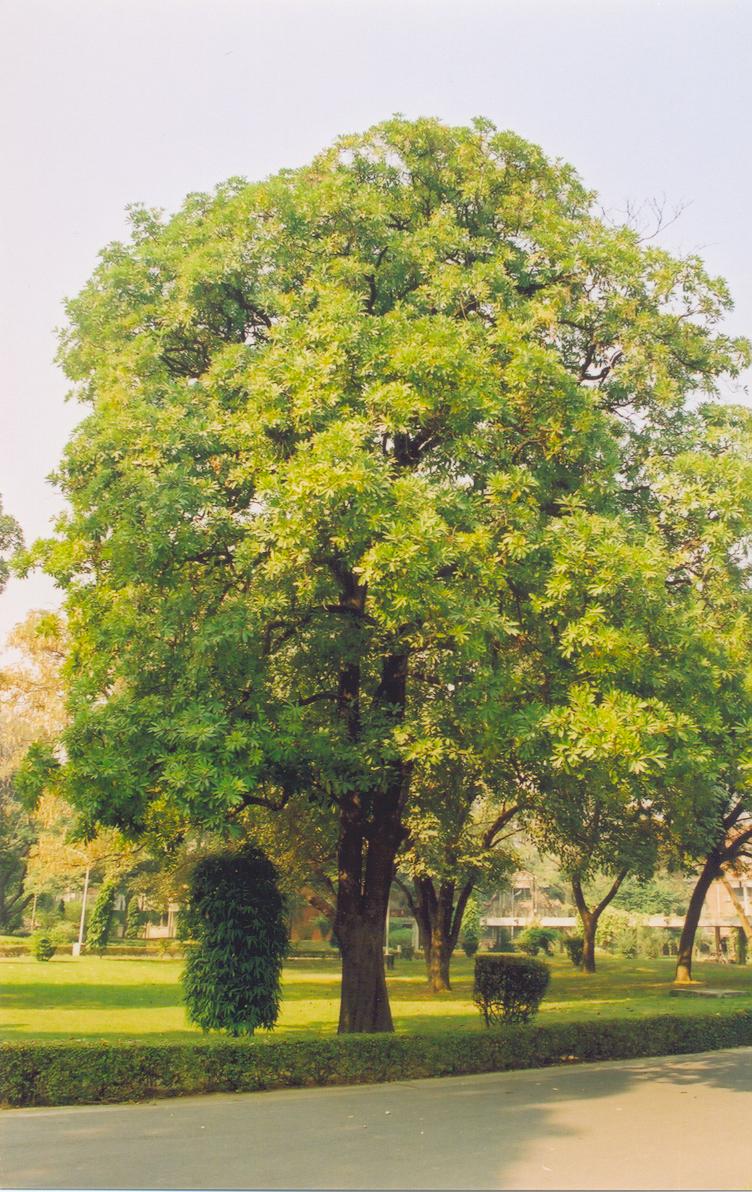

Saptaparna is the bark of a tall evergreen tree whose leaves are borne seven to a whorl. Bitter and astringent, the bark is one of Ayurveda's classic remedies in fever, above all the intermittent kind, and the tree's milky latex is used on the skin.
- Botanical name
- Alstonia scholaris
- Family
- Apocynaceae
- Sanskrit
- सप्तपर्ण
- Part used
- Bark (the milky latex also used)
- Taste (rasa)
- Bitter and astringent (tikta, kashaya)
- Quality (guna)
- Light and unctuous (laghu, snigdha)
- Energy (virya)
- Warming (ushna)
- After digestion (vipaka)
- Pungent (katu)
- Action (karma)
- A bitter tonic that clears fever and worms and holds the bowel, settling Kapha and Vata (jwaraghna, krimighna, grahi, kaphavatahara)
- Effect on dosha
- Pacifies Kapha and Vata (kaphavatahara)
- Best known for
- A bitter bark long turned to for intermittent fever
What is Saptaparna?
Saptaparna is the bark of a tall evergreen tree, Alstonia scholaris, that grows through the warm forests of India and much of tropical Asia. Unlike many of the herbs Ayurveda uses, this is no low creeper or slender shrub but a large tree, straight-trunked and spreading, with glossy leaves and a bark that runs bitter to the taste. When the trunk or a branch is cut it weeps a thick, milky latex, and both the bark and that sap are put to use.
The name is a plain description of the leaf. Sapta means seven and parna means leaf, so the word means “seven-leaved,” for the leaves are borne in whorls of about seven set around the stem like the spokes of a wheel. The tree carries other names in the same spirit, Saptachhada and Vishamachhada, and in English it is called by turns the blackboard tree, the milkwood-pine, the devil’s tree, or dita bark, this last being the name under which the bark long travelled in trade.
What Ayurveda uses it for
In the classical texts Saptaparna is first and foremost a bitter tonic and a remedy in fever. It is counted among the tikta or bitter drugs, and its foremost place is as a Jwaraghna, a herb that quiets fever, with the intermittent fevers that come and go, the kind the texts call Vishama Jwara, being its most characteristic use. Alongside this the tradition describes it as Krimighna, working against worms, and as Grahi, a herb that holds and steadies the bowel, and its bitter, warming, drying nature was understood to settle the Kapha and Vata doshas.
Within that role the dravyaguna texts describe the bark, and in places the latex, as traditionally indicated in a familiar set of conditions, each named here in its classical Sanskrit term with a plain gloss:
- Jwara: fever, and above all the intermittent Vishama Jwara that returns in bouts, the bark’s foremost and best-known use.
- Kushtha: the broad classical category of skin disorders, where its bitter, Kapha-clearing nature is called upon.
- Krimi: the classical category of intestinal worms, against which the bitter bark is described.
- Atisara: loose motions and diarrhoea, met by the bark’s astringent, bowel-holding Grahi quality.
- Vrana: wounds, upon which the tree’s milky latex is traditionally applied.
- Gulma: the classical class of firm abdominal masses and distension.
- Kandu: itching of the skin, named among its bitter, cleansing uses.
- Shvitra: a discolouration or whitening of the skin, listed in the classical accounts.
These are the traditional textual indications recorded in the classical literature. They set out how Ayurveda has long understood the herb and are given for reference and study, not as statements of medical effect or as advice to treat any condition.
Its qualities, in plain words
Ayurveda describes every herb by a short list of qualities, and for Saptaparna they gather neatly behind its reputation as a bitter tonic for fever.
Its taste is bitter, with an astringent edge, and in Ayurveda a bitter taste is the taste that clears, dries and cools excess, while the astringent taste draws things together and holds. It is light, so it does not sit heavily or clog, yet unctuous enough not to parch, which is unusual company for a bitter. It is warming, and it finishes pungent after digestion, and it is this warmth that turns the bark from a merely cooling bitter into one that also moves and clears. Put together, these qualities describe a light, bitter, warming bark that dries and clears without much weight behind it, which is why the tradition settles most firmly on its fever-quieting and worm-clearing actions and counts it as settling to Kapha and Vata.
How it is taken
The usual form is a preparation of the bark. The classical writers most often gave it as a kashaya or kwatha, a decoction made by boiling the bark in water, since the bitter principles pass readily into a hot brew, and the dried bark was also reduced to churna, a powder. The bitter, warming decoction was the natural vehicle for a fever remedy.
From the bark the tradition built named preparations aimed at fever and the digestive fire, in which Saptaparna is paired with other bitter, fever-quieting herbs, and the tree gives its name to Saptaparna-based fever and skin formulations. Its thick, milky latex belongs to a different use again: rather than being taken by mouth it is applied outwardly, laid upon wounds and troubled skin in the manner the classical accounts describe for Vrana.
Good to know
Saptaparna is one of the bitter, clearing herbs rather than the sweet, building ones, turned to for fever and the digestion rather than for nourishment, and its bitter, warming, drying nature is what the classical accounts return to again and again. Two points are worth keeping in view. The part used is chiefly the bark, with the milky latex reserved for outward use on the skin and wounds, and the two are not interchangeable. And because the tree is a large forest species with several close relatives, the classical identity rests on the true seven-leaved Alstonia scholaris, the tree the Sanskrit name itself describes.
This entry describes the classical Ayurvedic understanding of the herb. It is not medical advice, and anyone with a health condition should speak to a qualified practitioner.
Frequently asked
Why is it called the seven-leaved tree? Because its leaves grow in whorls set around the stem, about seven together, like the spokes of a wheel. The Sanskrit name Saptaparna, from sapta (seven) and parna (leaf), records exactly this arrangement, and the related name Saptachhada carries the same sense.
Which part of the tree is used? Chiefly the bark, which is bitter and is prepared as a decoction or a powder. The tree’s thick, milky latex is also used, but outwardly, applied to wounds and the skin rather than taken by mouth.
What is Saptaparna best known for in the classical texts? For fever, and above all the intermittent kind that comes and goes, which the texts call Vishama Jwara. This is the bark’s foremost use, alongside its bitter action against worms and its astringent steadying of the bowel.
Saptaparna is bitter and astringent, warming after digestion; it quiets fever, holds the bowel and settles the Kapha and Vata doshas.
After the Bhavaprakasha Nighantu, on Saptaparna
Its bark is turned to in the fevers that come and go, and its milky sap is laid upon wounds.
After the classical Nighantu tradition, on the uses of the bark and latex
Frequently asked questions
What is Saptaparna used for in Ayurveda?
Saptaparna, from Alstonia scholaris, is a tall forest tree whose bitter, astringent bark Ayurveda has long turned to in fever, especially the intermittent kind. The texts class it as jwaraghna, krimighna and grahi, a bitter tonic that clears fever and worms and holds the bowel, while its milky latex is put to the skin and wounds.
What are the benefits of Saptaparna bark?
In tradition Saptaparna is valued as a bitter tonic that clears fever, particularly the intermittent kind, clears worms and holds a loose bowel, its grahi action, while settling Kapha and Vata. Its bitter, astringent bark underlies this long use. It is taken within classical formulas as a fever and digestive tonic rather than a casual herb.
How is Saptaparna taken?
Saptaparna bark is used as a bitter decoction, a Kashayam, or as a powder within classical formulations, taken in measured doses, while its latex is applied externally to the skin and wounds. The form and amount are set to the complaint. Because it centres on fever, it is best used under a qualified Ayurvedic practitioner.
Which dosha does Saptaparna balance?
Saptaparna pacifies Kapha and Vata, being kaphavatahara, through its bitter, astringent nature, and its bitterness also clears heat and fever. Its grahi action holds the bowel. Being bitter and drying, very dry, Vata-dominant constitutions use it within balanced formulas. A practitioner confirms the picture, since fever always needs proper assessment.
Is Saptaparna safe to take for fever?
Saptaparna is a classical bitter fever tonic best taken only under a qualified Ayurvedic practitioner, who sets the form and dose. Fever, and especially recurring or intermittent fever, always needs proper medical assessment and should not be self-treated. Speak with your doctor as well as an Ayurvedic practitioner before using it.
References
- Charaka Samhita, among the bitter (tikta) drugs and the fever-quieting groups of herbs.
- Sushruta Samhita, among the Aragvadhadi gana, the group of bitter, Kapha-clearing plants.
- Bhavaprakasha Nighantu, entry on Saptaparna (Saptachhada) with its synonyms and properties.
- Raja Nighantu, listing the many Sanskrit synonyms of the tree, named for its seven-leaved whorl.
- Dhanvantari Nighantu, on the bitter tonic and fever-quieting bark.