Materia Medica · Dravyaguna
Aparajita
Clitoria ternatea · Fabaceae
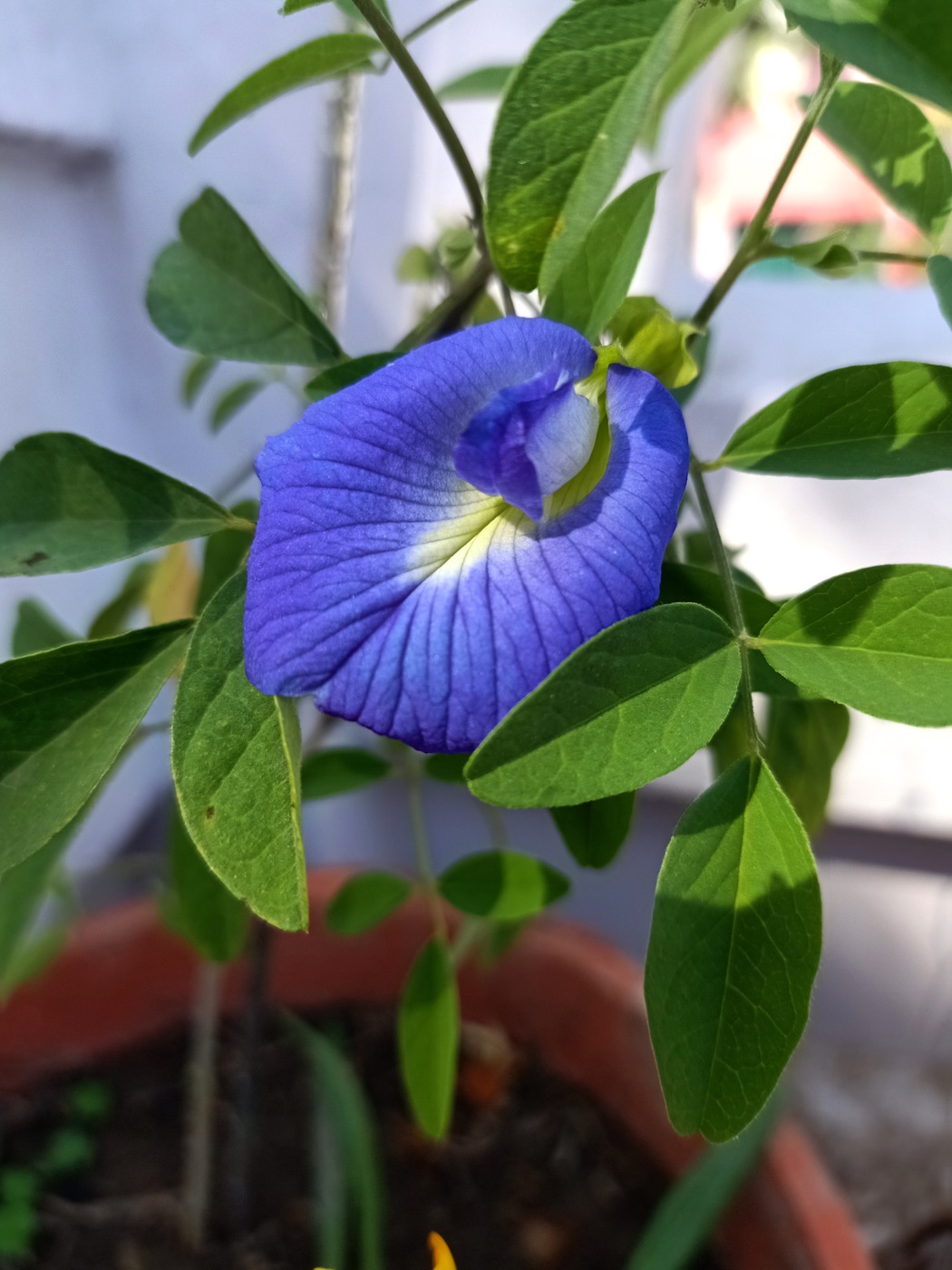

Aparajita is a climbing vine whose deep blue flowers give the well-known blue herbal tea. Ayurveda counts it among the herbs that support the mind and the memory, and among those that settle the effect of toxins.
- Botanical name
- Clitoria ternatea
- Family
- Fabaceae
- Sanskrit
- अपराजिता
- Part used
- Root, seed and flower
- Taste (rasa)
- Bitter and astringent (tikta, kashaya)
- Quality (guna)
- Light and dry (laghu, ruksha)
- Energy (virya)
- Cooling (sheeta)
- After digestion (vipaka)
- Pungent (katu)
- Action (karma)
- Supports the mind and memory, counters toxins (medhya, vishaghna)
- Effect on dosha
- Settles all three doshas (tridoshahara)
- Best known for
- A blue-flowered climber for the mind and against toxins
What is Aparajita?
Aparajita is a slender climbing vine, Clitoria ternatea, a member of the legume family that twines over hedges and fences across the warm country of India. It is an unassuming plant until it flowers, and then it is unmistakable, for its blossoms are a deep, saturated blue unlike almost anything else in the field. It is these flowers, steeped in hot water, that give the blue herbal tea now widely known. There is also a white-flowered form of the same plant, and the classical writers describe the two varieties side by side.
The name carries the plant’s old standing. Aparajita means “unconquered” or “undefeated,” a word of some weight in the tradition, and the plant is tied by name to Vishnu in one of its common synonyms, Vishnukranta. Another name, Girikarnika, and the everyday name Gokarna, both turn on the shape of the flower, likened to an ear. In English it is usually called butterfly pea or blue pea.
One point is worth settling at the outset. In some regions the name Shankhapushpi is given to this plant, but Shankhapushpi is more properly the name of a separate Medhya herb, listed in this encyclopaedia under its own entry. The two share a reputation for the mind, which is how the names came to overlap, but they are different plants.
What Ayurveda uses it for
In the classical texts Aparajita is counted among the Medhya herbs, those understood to support the medha, the faculty of intellect and memory. Alongside that it is well known as a Vishaghna herb, one that settles or counters the effect of toxins, and the sources describe a broadly calming, settling action on the mind. Its bitter and astringent nature, cooling and light, was understood to clear rather than to heat, and the tradition places it among the herbs that settle all three doshas.
Within that role the dravyaguna texts describe the plant as traditionally indicated in a familiar set of conditions, each named here in its classical Sanskrit term with a plain gloss:
- Smriti-daurbalya: weakness of memory, where its standing as a Medhya herb is called upon.
- Unmada: the classical group of disturbances of the mind.
- Apasmara: the classical group of seizure-type disturbances, named alongside Unmada in the texts on the mind.
- Shotha: swelling, for which the plant is described.
- Kushtha: the broad classical category of skin disorders.
- Visha: toxins, the seat of its well-known Vishaghna action.
- Krimi: the classical category of intestinal worms.
- Netraroga: disorders of the eyes, for which the plant is named.
These are the traditional textual indications recorded in the classical literature. They set out how Ayurveda has long understood the herb and are given for reference and study, not as statements of medical effect or as advice to treat any condition.
The deep blue of the flower, now valued as a natural colour for the blue herbal tea, is noted here only as a point of botanical fact, and places the classical herb in its present-day context.
Its qualities, in plain words
Ayurveda sums up each herb in a short list of qualities, and for Aparajita they sit closely behind its reputation as a settling, clearing herb.
Its taste is bitter with an astringent edge, and in Ayurveda these are the tastes tied to clearing and calming rather than to heating. It is light and dry, so it moves easily and does not sit heavy or add to the body. It is cooling, which is why the texts favour it for a mind that runs hot and restless, and why it settles the sharp, fiery quality called Pitta. And it finishes pungent after digestion. Put together, these qualities describe a light, cooling, clearing herb, which is why the tradition settles on its supporting action for the mind and its countering action against toxins, and why the sources place it among the herbs that settle all three doshas rather than favouring one alone.
How it is taken
Aparajita is unusual among the herbs described here in that three separate parts are named for use: the root, the seed and the flower. The choice of part follows the purpose. The root is the part most often named where a settling or clearing action is wanted, the seed is described among the parts used, and the flower gives both the familiar blue infusion and a place in the tradition’s fondness for the plant.
From these parts the classical writers prepared the plant in the plain ways: as a powder, or churna, of the dried part, and as a decoction. The fresh flowers steeped in hot water give the deep blue infusion for which the plant is now widely known. Where the tradition reached for the root in preparations for the mind, it was often taken with the vehicles Ayurveda favours for carrying such an action, such as ghee or warm milk.
Good to know
Aparajita is described in two forms, a blue-flowered and a white-flowered variety of the same plant, and the classical writers set the two down together. Both are named in the texts, and the deep blue form is the one most familiar today through the blue herbal tea. As with the group of Medhya herbs generally, the plant belongs to the settling and clearing side of Ayurveda rather than the heating side, in keeping with its cooling, light nature.
This entry describes the classical Ayurvedic understanding of the herb. It is not medical advice, and anyone with a health condition should speak to a qualified practitioner.
Frequently asked
Why is it called “unconquered”? Because Aparajita means undefeated or unconquered, a name of some standing in the tradition, and the plant is tied by name to Vishnu in the common synonym Vishnukranta. The everyday names Gokarna and Girikarnika turn instead on the shape of the flower, likened to an ear.
Is Aparajita the same as Shankhapushpi? Not in this encyclopaedia. In some regions the name Shankhapushpi is given to this plant, but it is more properly the name of a separate Medhya herb, listed here under its own entry. The two share a reputation for the mind, which is how the names came to overlap.
Which part of the plant is used? The root, the seed and the flower are all named. The root is most often described where a settling or clearing action is wanted, while the flower gives the deep blue infusion for which the plant is now widely known.
Aparajita is bitter and cooling; it supports the intellect, settles the mind and counters the effect of toxins.
After the classical Nighantu literature, on the mind-supporting herbs
The root, the seed and the flower are the parts named for use, the blue and the white varieties both described.
After the dravyaguna texts, on the parts and varieties of Aparajita
Frequently asked questions
What is Aparajita used for?
Aparajita, the blue-flowered climber Clitoria ternatea, is valued in Ayurveda as a Medhya herb for the mind and memory and as a settling remedy against toxins, its action classed as medhya and vishaghna. Bitter and astringent in taste, it is said to settle all three Doshas. It is used traditionally under guidance for anything more than casual use.
Is butterfly pea and Aparajita the same plant?
Yes. Aparajita is the Sanskrit name for Clitoria ternatea, the same deep blue-flowered legume known in English as butterfly pea or blue pea, and as Vishnukranta in some regions. Ayurveda classes it as a Medhya, mind-supporting herb that also counters toxins, and describes it as tridoshahara, settling all three Doshas.
Is Aparajita good for the mind and memory?
Ayurveda counts Aparajita among the Medhya herbs, the group traditionally associated with the intellect and memory. Its bitter, astringent qualities and tridoshahara nature make it a gentle, balancing choice for the mind in the classical texts. It is framed as a supportive herb rather than a promise, and is best used with a practitioner's guidance for a considered course.
Which dosha does Aparajita balance?
Aparajita is described in the tradition as tridoshahara, meaning it settles all three Doshas, Vata, Pitta and Kapha. Its bitter and astringent rasa lends it a cooling, settling character. This balancing quality, together with its Medhya action on the mind and its vishaghna action against toxins, is why the texts value the blue-flowered climber so widely.
Can you drink Aparajita flower tea?
The deep blue flowers of Aparajita are traditionally infused into a striking blue tea, a gentle everyday way to take the herb. Ayurveda classes the plant as Medhya and tridoshahara, settling to all three Doshas. Enjoy the flower tea as a mild infusion, and seek a practitioner's advice for any medicinal use of the herb.
References
- Bhavaprakasha Nighantu, entry on Aparajita (Vishnukranta) with its synonyms and properties.
- Raja Nighantu, listing the Sanskrit synonyms and the blue and white varieties of the plant.
- Kaiyadeva Nighantu, on the qualities and actions of Aparajita among the Medhya herbs.
- Dhanvantari Nighantu, on Vishnukranta and its Vishaghna (toxin-countering) action.
- Classical dravyaguna literature, on the root, seed and flower as the parts used.