Materia Medica · Dravyaguna
Bhumyamalaki
Phyllanthus niruri · Phyllanthaceae
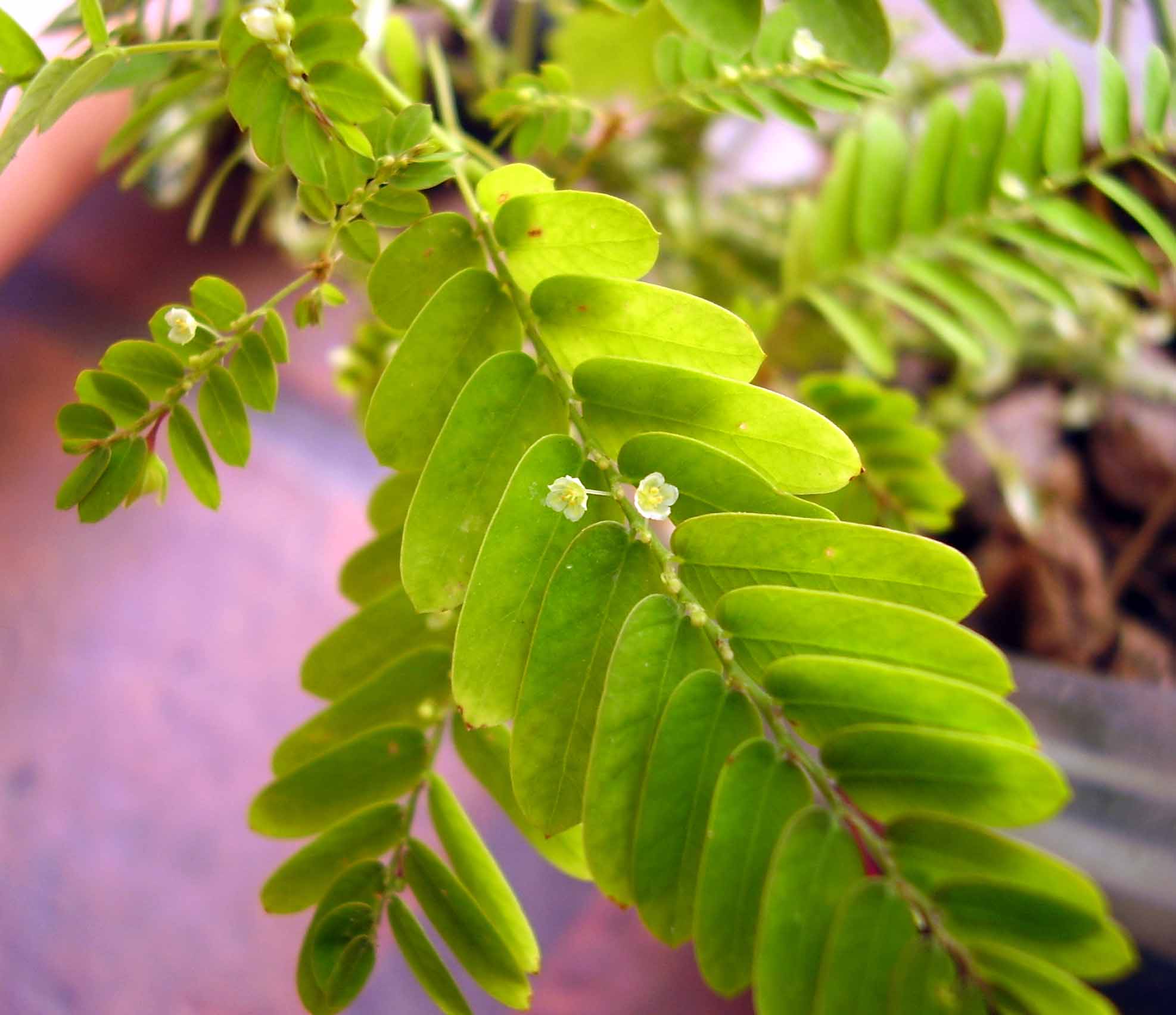

Bhumyamalaki is a modest, low-growing plant whose name means "ground amla", because its tiny leaf-lined stems resemble a miniature version of the amla tree. In the classical dravyaguna tradition the whole plant is prized as a light, cooling herb long associated with the liver and healthy digestion.
- Botanical name
- Phyllanthus niruri
- Family
- Phyllanthaceae
- Sanskrit
- भूम्यामलकी
- Part used
- Whole plant (Panchanga)
- Taste (rasa)
- Bitter, astringent and sweet (Tikta, Kashaya, Madhura)
- Quality (guna)
- Light and dry (Laghu, Ruksha)
- Energy (virya)
- Cooling (Sheeta)
- After digestion (vipaka)
- Sweet (Madhura)
- Action (karma)
- Kindles appetite, supports the liver and gently promotes urine (Deepana, Yakrit-supportive, Mutrala)
- Best known for
- A cooling herb classically valued for supporting the liver
What is Bhumyamalaki?
Bhumyamalaki is a small, common annual herb whose whole plant, roots, stems, leaves and tiny fruit together, is used in Ayurveda. The Sanskrit name is a picture in itself. “Bhumi” means earth or ground, and “amalaki” is the amla tree, so Bhumyamalaki reads as “ground amla” or “amla of the earth”. Anyone who has seen it growing understands why. Its slender stems are lined with two neat rows of little oval leaves, and along the underside sit minute round fruits, so the whole plant looks like a knee-high miniature of the towering amla tree.
The plant is placed in the family Phyllanthaceae in modern botanical classification. Many older Ayurvedic and botanical works list it under Euphorbiaceae, the larger family from which the genus Phyllanthus was later separated, so both names appear in the literature.
Charaka, one of the founding authors of Ayurveda, refers to it by the name Tamalaki. Later works such as the Bhavaprakasha Nighantu gather its many names together, among them Bhudhatri, Bahupatra (“the many-leaved one”) and Bahuphala (“the many-fruited one”), each describing something you can see at a glance. In parts of India and Bengal it is known in daily speech as Bhui-amla. Because a very similar plant travelled and grew across South America, it also carries the well-known common names Chanca Piedra and Stonebreaker.
A note on the plant behind the name is worth adding. In the Indian herb trade “Bhumyamalaki” covers several closely related species, including Phyllanthus amarus, Phyllanthus fraternus and Phyllanthus urinaria, which look almost identical in the field. True Phyllanthus niruri is largely an American plant, so what reaches a given market under this name is not always the same species.
What Ayurveda uses it for
In the classical dravyaguna tradition Bhumyamalaki is above all a herb of the liver. The nighantu literature, the Ayurvedic works that catalogue plants and their qualities, consistently connects it with supporting the liver, which Ayurveda calls yakrit, together with healthy bile and steady digestion. It is described as a cooling plant that gently encourages the flow of urine, which Ayurveda understands as one of the body’s natural ways of clearing itself.
Charaka, listing it as Tamalaki, places it among two well-known groups of ten herbs each. One is the Kasahara Mahakashaya and the other the Shwasahara Mahakashaya, the classical groupings traditionally called upon to ease the throat and the breath. This gives the plant a second, older strand of reputation alongside its association with the liver.
Across the nighantus the overall character is consistent. Bhumyamalaki is regarded as a light, cooling herb that settles both Pitta and Kapha, and is spoken of as helping to kindle the appetite. It is a good example of a plant that Ayurveda values not for a single dramatic action but for a gentle, steadying, cooling influence on digestion and the inner tissues.
Its qualities, in plain words
Ayurveda describes every herb through a small set of qualities, and Bhumyamalaki’s set explains a great deal about how it is understood.
Its taste, or rasa, is a blend of three. It is chiefly bitter (Tikta) and astringent (Kashaya), with a sweet (Madhura) note underneath. Bitter and astringent tastes are the classic signatures of cooling, clearing herbs, while the sweet undertone softens the overall effect and makes it less harsh.
Its qualities, or guna, are light (Laghu) and dry (Ruksha). A light herb is easy for the body to carry and does not sit heavily, and a dry herb tends to reduce excess dampness rather than add moisture.
Its potency, or virya, is cooling (Sheeta). This is the single word that best captures the plant. It is a calming, cooling influence, which is why it is associated with settling Pitta, the warm and fiery quality in Ayurvedic thinking.
Its post-digestive effect, or vipaka, is sweet (Madhura). Vipaka is the quality that remains after digestion is complete, and a sweet vipaka is generally considered nourishing and steadying to the tissues over time.
Put together, this is the profile of a herb that cools, lightens and gently clears, while its sweet notes keep it from being drying or depleting in moderate use.
How it is taken
Bhumyamalaki has traditionally been prepared in the simple, direct ways typical of a whole-plant herb. The fresh plant juice, known as svarasa, is one classical form. The plant is also simmered into a water decoction called kwatha or kashaya, and dried and ground into a whole-plant powder, or churna. Each form is a different way of drawing the qualities of the same panchanga, the whole plant, into a usable preparation.
Because the useful part is the entire plant rather than a single root or seed, Bhumyamalaki is a herb that lends itself to these unfussy methods. The specific quantity, the vehicle it is taken with and the length of any course are matters for a qualified Ayurvedic practitioner to judge for the individual, and precise therapeutic doses are not given here.
It is worth being honest about formulations. Bhumyamalaki appears widely in traditional and modern preparations, but the classical sources do not agree on a single named formula in which it is unquestionably the principal herb, and several products often linked with it are modern proprietary blends rather than classical yogas. For that reason no specific named formulation is asserted in this entry.
Good to know
As a light and dry herb, Bhumyamalaki can unsettle Vata if it is taken in excess, or by people who are already very dry and Vata-predominant by nature. This is the usual caution for cooling, drying plants, and it is one reason the classical texts leave dose and duration to a practitioner’s judgement rather than a fixed rule.
There is also the matter of identity noted earlier. Because several near-identical Phyllanthus species share the trade name, and true Phyllanthus niruri is mostly a New World plant, the exact species on any given label cannot be assumed without a botanical specimen. This is a point of interest for anyone who values knowing precisely what a herb is.
This entry describes the classical Ayurvedic understanding of the herb. It is not medical advice, and anyone with a health condition should speak to a qualified practitioner.
Frequently asked
Why is it called “ground amla”? Because the plant looks like a tiny version of the amla tree grown at ankle height. Its stems carry two neat rows of small leaves with minute round fruits beneath, so “Bhumi” (earth) plus “amalaki” (the amla plant) gives “ground amla”. The names Bahupatra, the many-leaved, and Bahuphala, the many-fruited, describe the same appearance.
Is Bhumyamalaki the same as amla? No. Despite the shared name and the family resemblance, they are different plants. Amla is the fruit of a tall tree, while Bhumyamalaki is a small annual herb used whole. The name simply reflects how alike the two look, not that they are the same species or used in the same way.
What is Bhumyamalaki best known for in Ayurveda? It is best known as a cooling herb classically associated with supporting the liver, healthy bile and steady digestion, and with gently promoting the flow of urine. Charaka also groups it among herbs traditionally used to ease the throat and the breath. Throughout the classical literature it is treated as a light, cooling plant that settles Pitta and Kapha.
Bhumyamalaki is named among the herbs called upon to ease the throat and the breath.
After the Charaka Samhita, Sutrasthana 4
Called Bhumyamalaki, Shiva and Tamalaki, the many-leaved and many-fruited plant, it is a bitter and cooling herb.
After the Bhavaprakasha Nighantu, Guduchyadi Varga
Frequently asked questions
What is Bhumyamalaki good for?
Bhumyamalaki (Phyllanthus niruri) is a small annual whose whole plant Ayurveda uses as a cooling herb classically valued for supporting the liver and gently promoting the flow of urine. The texts describe its action as deepana, liver-supportive and mutrala, with a bitter, astringent and sweet taste (tikta, kashaya, madhura). It is a traditionally cooling, liver-directed herb.
Is Bhumyamalaki good for the liver?
Ayurveda has long valued Bhumyamalaki, also called Bhumi Amla or Tamalaki, as a cooling herb that supports the liver (yakrit). Its bitter, cooling nature is thought to settle heat and support this organ in the classical view. This is a traditional reputation rather than a claim to treat any named liver disease, and liver complaints should be discussed with your doctor.
How do you take Bhumyamalaki?
The whole plant is used, taken as a fresh juice, a decoction or a dried powder, and it also appears in classical liver formulations. A common way is the powder or juice taken with a suitable anupana. Because dose depends on the person and the intended use, it is best set by a qualified Ayurvedic practitioner rather than fixed for all.
What is the difference between Bhumyamalaki and Amla?
They are different plants despite the shared name. Amla (Amalaki) is the sour Indian gooseberry fruit prized as a Rasayana, while Bhumyamalaki (Phyllanthus niruri) is a small ground-growing herb whose whole plant is used, valued chiefly for the liver and urine. Bhumi in Bhumyamalaki means earth, marking it as the low, ground-hugging plant, not the fruit tree.
Does Bhumyamalaki help with urine flow?
Yes, in the classical sense. The texts describe Bhumyamalaki as mutrala, meaning it gently promotes the flow of urine, alongside its cooling, liver-supportive action. This makes it a traditional choice where the tradition wants to support the urinary passage gently. It is a classical use rather than a diagnosis-based treatment, so persistent urinary symptoms warrant professional advice.
References
- Charaka Samhita, Sutrasthana 4 (Shad Virechana Shatashritiya), Kasahara and Shwasahara Mahakashaya
- Bhavaprakasha Nighantu, Guduchyadi Varga
- Raja Nighantu, Parpatadi Varga
- Kaiyadeva Nighantu, Oshadhi Varga
- Madhava Chikitsa, Jvara Chikitsa section