Materia Medica · Dravyaguna
Guduchi
Tinospora cordifolia · Menispermaceae
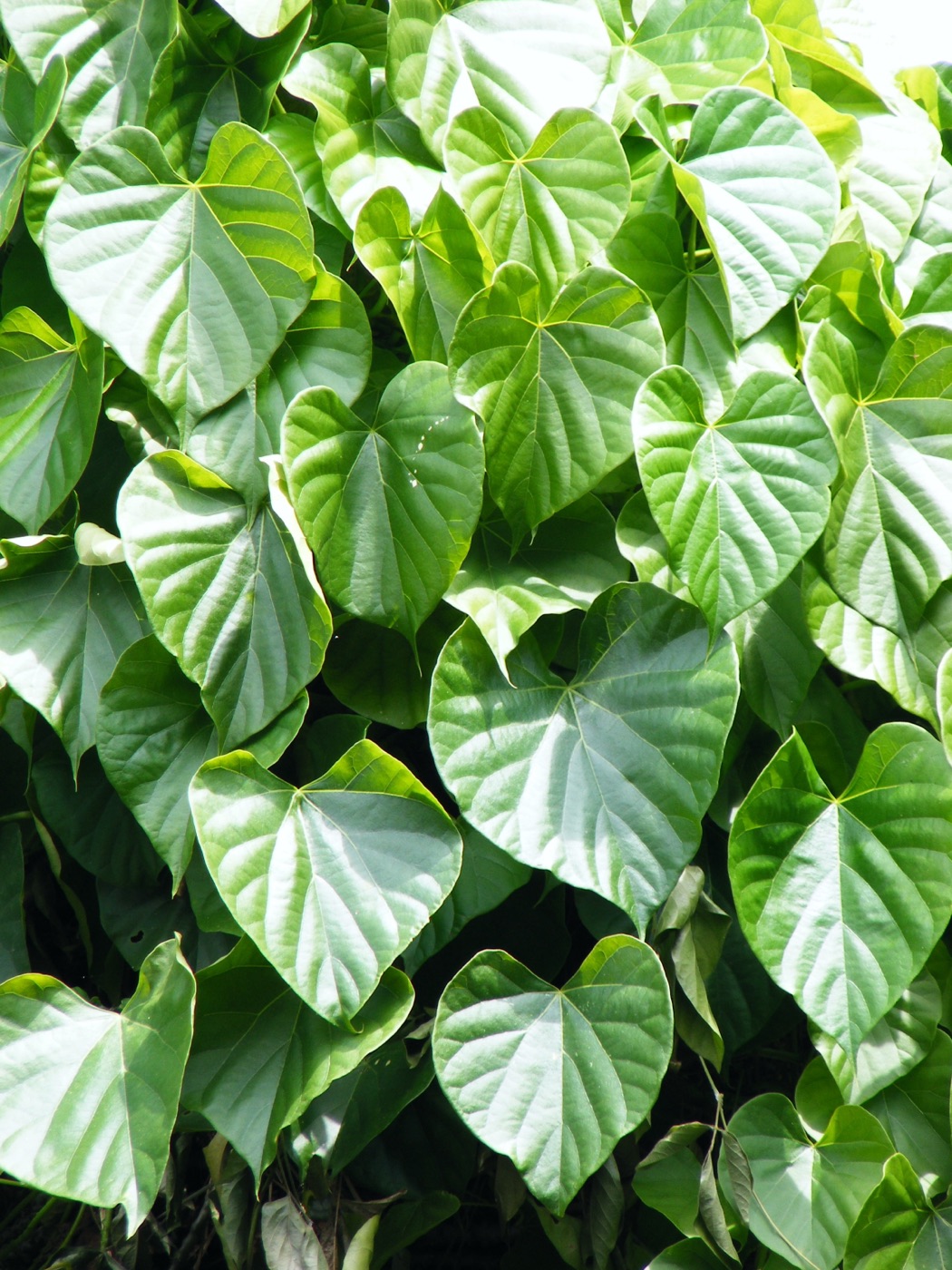

Guduchi is the stem of a climbing vine that Ayurveda holds in unusual esteem. The tradition gave it the second name Amrita, the nectar of the immortals, for the way it cools and restores the body at once.
- Botanical name
- Tinospora cordifolia
- Family
- Menispermaceae
- Sanskrit
- गुडूची
- Part used
- Stem (root used occasionally)
- Taste (rasa)
- Bitter and astringent (tikta, kashaya)
- Quality (guna)
- Heavy and slightly oily (guru, snigdha)
- Energy (virya)
- Warming (ushna)
- After digestion (vipaka)
- Sweet (madhura)
- Action (karma)
- Rebuilds strength, kindles digestion, cools and steadies (rasayana, deepana)
- Best known for
- Cooling and steadying the body without weakening it
What is Guduchi?
Guduchi is the stem of a climbing vine, Tinospora cordifolia, that winds its way up trees across India. The leaves are shaped like hearts, which is what cordifolia means, and the soft green stem is the part Ayurveda uses. Cut across, the fresh stem is succulent and gives a little milky sap.
The name worth knowing is its second one: Amrita, the nectar of the immortals. Ayurveda does not give that name lightly. It marks Guduchi as one of the most prized of all the rejuvenating herbs, a plant the tradition turned to again and again to keep the body steady and well over a long life.
What Ayurveda uses it for
Guduchi is, first of all, a rasayana, a herb taken to rebuild and steady the body over time rather than to act in a hurry. Charaka places it at the head of the vayasthapana group, the herbs said to hold back the wear of the years.
What makes Guduchi unusual is a kind of balance built into it. It is bitter, which cools, yet it also kindles the digestive fire, which most cooling things do not. So the tradition reaches for it where there is heat to be cooled but the digestion is weak and cannot afford to be cooled further. That double nature is why the texts call it tridoshahara, settling to all three doshas at once. It is also counted among the medhya herbs, those said to support a clear and steady mind.
Its qualities, in plain words
Ayurveda describes every herb by a short list of qualities, and Guduchi’s explain its quiet balance.
It is bitter and astringent, the tastes that cool and clear, which is why it suits heat and the quality the texts call Pitta. Yet its potency is warming, so it does not chill the digestion the way a purely cooling herb would. And it finishes sweet after digestion, and a sweet finish in Ayurveda means a herb that feeds and builds rather than depletes. Put together: a herb that cools and clears, keeps the digestive fire alight, and restores strength, all at once. Few herbs hold those together, which is why this one earned the name of nectar.
How it is taken
The simplest classical form is the powder of the dried stem, a few grams with warm water. The most concentrated form is Guduchi Satva, a fine starch settled out of the crushed fresh stem, taken in much smaller amounts. The tradition also makes a self-fermented tonic, Amritarishtam, and a decoction, Guduchyadi Kashayam, where the stem is simmered down with other herbs.
The classical writers held that Guduchi grown climbing on a Neem tree was the most potent of all, having drawn on the bitterness of its host.
Good to know
Guduchi is a slow, building herb, taken as a course over weeks. It belongs to the steady, restorative side of Ayurveda rather than the quick-acting one.
This entry describes the classical Ayurvedic understanding of the herb. It is not medical advice, and anyone with a health condition should speak to a qualified practitioner.
Frequently asked
Why is it called Amrita? Amrita means the nectar of the immortals. Ayurveda gave Guduchi the name for its standing among the rejuvenating herbs, the plants thought to keep the body steady and well across a long life.
Which part is used? Mainly the stem, fresh or dried. The root is used now and then, but the classical preparations are built on the stem.
Is it cooling or warming? Both, in a sense. Its taste is bitter and cooling, but its potency is warming, so it cools without putting out the digestive fire. That balance is the heart of its reputation.
Guduchi settles all three doshas; it kindles the fire, restores the body, and gives strength.
After the Bhavaprakasha, in the Guduchyadi Varga
Frequently asked questions
What is Guduchi used for?
Guduchi (Tinospora cordifolia) is a climbing stem Ayurveda calls Amrita, the nectar of long life. It is used to cool and steady the body while quietly building it back up. Its action is classed as rasayana and deepana, so the tradition values it for rebuilding strength, kindling digestion, and cooling without weakening.
Why is Guduchi called Amrita?
Amrita means the nectar of immortality. Ayurveda gives Guduchi this name for its life-supporting, rebuilding nature, seen in its Rasayana action. The name reflects how highly the tradition prizes a herb that can cool and steady a heated body while gently restoring its strength, rather than draining it the way many cooling herbs might.
Is Guduchi a Rasayana?
Yes. Guduchi is one of the classical Rasayana herbs, those said to rebuild and sustain the tissues and vitality. Uniquely, it does this while also being cooling and digestive (deepana), so it can steady a heated body without weakening it. This combination of rejuvenation and cooling is central to its reputation.
How do you take Guduchi?
Guduchi is commonly taken as its churna (stem powder), as a water decoction (Guduchi Kashayam), or as the starch called Guduchi Satva. It also enters many compound formulas. As a Rasayana it suits steady use, and the form, dose and duration are best matched to you by a qualified Ayurvedic practitioner.
Which dosha does Guduchi balance?
Ayurveda regards Guduchi as broadly balancing to all three doshas, and it is especially valued where there is heat, which the tradition links to Pitta, and where digestion needs kindling. Its bitter and astringent tastes (tikta, kashaya) cool and steady, while its Rasayana nature rebuilds, so it settles without leaving the body depleted.
References
- Charaka Samhita, Sutrasthana, where Guduchi heads the vayasthapana (age-steadying) group.
- Bhavaprakasha, Guduchyadi Varga, the section named after Guduchi itself.
- Sharangadhara Samhita, on Guduchi Satva, the starch drawn from the stem.