Materia Medica · Dravyaguna
Tulsi
Ocimum tenuiflorum · Lamiaceae
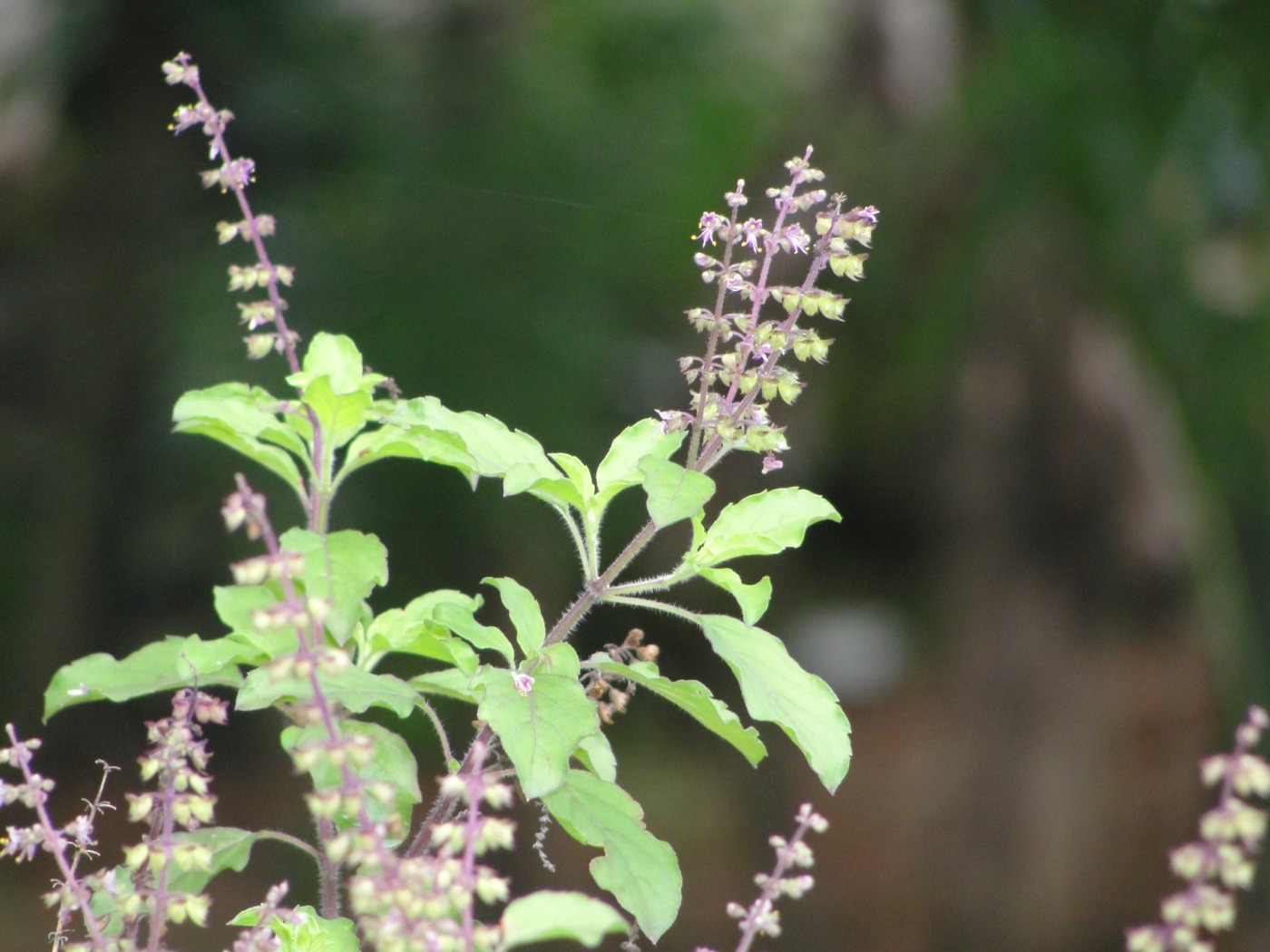

Tulsi is the holy basil grown in courtyards across India. In Ayurveda it is the everyday herb for the breath and the lungs, taken as a simple leaf tea when the chest feels heavy or a cold is coming on.
- Botanical name
- Ocimum tenuiflorum
- Family
- Lamiaceae
- Sanskrit
- तुलसी
- Part used
- Leaves (and seeds)
- Taste (rasa)
- Pungent and bitter (katu, tikta)
- Quality (guna)
- Light and dry (laghu, ruksha)
- Energy (virya)
- Warming (ushna)
- After digestion (vipaka)
- Pungent (katu)
- Action (karma)
- Clears Kapha and Vata, kindles digestion (kapha-vata-hara, deepana)
- Best known for
- The everyday herb for breath, immunity and clear lungs
What is Tulsi?
Tulsi is holy basil, Ocimum tenuiflorum, a small aromatic shrub grown in courtyards and temple grounds across India. It is the most domestic of all Ayurvedic herbs: not something you buy from a pharmacy, but a plant kept by the door and picked fresh. There are two everyday types, the green Rama tulsi and the darker, sharper Krishna tulsi. The leaves are the part used.
It is worth saying plainly that Tulsi sits at the meeting point of medicine and devotion in India. That is not a claim about what it does; it simply explains why almost every household has known the plant for generations.
What Ayurveda uses it for
Tulsi is the classic herb for the breath. The texts reach for it when the chest feels heavy, when there is a cough or a cold, or in the damp turn of the seasons when Kapha tends to gather in the lungs. Its warming, drying nature is the reason: it thins and clears the kind of stagnation Ayurveda calls excess Kapha.
It is also a gentle aid to digestion and is classically taken as a daily leaf tea to keep the system light. This describes the traditional use and is not medical advice.
Its qualities, in plain words
Tulsi is warming and drying, with a pungent, slightly bitter taste. In Ayurvedic logic that combination does one main job: it clears damp, heavy, cold congestion, the signature of Kapha, and to a lesser degree settles the cold dryness of Vata. It is not a cooling or building herb; it is a clearing one. That is why it suits the chest and the changeable seasons rather than states of heat or depletion.
How it is taken
The simplest way is the oldest: a few fresh leaves steeped in hot water as a tea, sometimes with a little ginger, black pepper and honey for the chest. The leaves are also chewed fresh, juiced, or dried into powder. Tulsi appears in many classical cough and breathing formulations.
Good to know
Tulsi is warming, so the tradition uses it more in cool, damp conditions than in states of heat. It is an everyday herb rather than a strong medicine, which is why it is taken freely as a tea. Anyone with a health condition should still speak to a qualified practitioner.
Frequently asked
Is Tulsi the same as the basil used in cooking? They are close cousins. Culinary sweet basil is Ocimum basilicum; Tulsi is Ocimum tenuiflorum, more pungent and used as a herb rather than a kitchen flavouring.
Which part is used? Mainly the leaves, fresh or dried. The seeds are used separately.
Tulsi clears the channels of the chest and lightens the breath.
Classical tradition, after the Bhavaprakasha Nighantu
Frequently asked questions
What is Tulsi used for?
Tulsi, holy basil, Ocimum tenuiflorum, the sacred household herb of India, is used in Ayurveda above all for the breath, the lungs and seasonal resilience. The texts class it as kapha vata hara, clearing Kapha and Vata, and deepana, kindling digestion. It is an everyday herb the tradition links with clear lungs and steady immunity.
What are the benefits of Tulsi in Ayurveda?
Ayurveda associates Tulsi with clear breathing, healthy lungs and seasonal resilience, using it to clear Kapha from the chest and to kindle digestion (deepana). Its pungent and bitter taste (katu, tikta) is warming and drying. It is a treasured everyday herb for breath and immunity in the classical tradition, its benefits framed as support rather than cure.
How do you take Tulsi, as tea or leaves?
Tulsi is most often taken as a tea or infusion of the fresh or dried leaves, and the fresh leaves may be chewed. It combines well with ginger, black pepper and a little honey for the chest. Being warming, it suits Kapha and Vata and cold, damp conditions, and is taken through the day as a household drink.
Can you take Tulsi every day?
Yes, Tulsi is a classic everyday herb, taken daily as tea or fresh leaves for the breath and general resilience, and it is also a revered plant in the Indian household. It is gentle enough for regular use in most people. Those on blood thinning or blood sugar medicines, or who are pregnant, should check with their doctor first.
Which dosha is Tulsi good for?
Tulsi chiefly clears Kapha and Vata (kapha vata hara). Its warming, drying, pungent and bitter nature suits cold, damp Kapha in the chest and the coldness of Vata, which is why it is favoured for the breath and lungs. Being heating, it is used more sparingly in high Pitta. A practitioner matches it to your constitution.
References
- Bhavaprakasha Nighantu, Pushpa Varga, entry on Tulsi.
- Classical dravyaguna texts on katu-tikta herbs and the breath.