Materia Medica · Dravyaguna
Hingu
Ferula assa-foetida · Apiaceae (also known by its older name Umbelliferae, the carrot and parsley family)
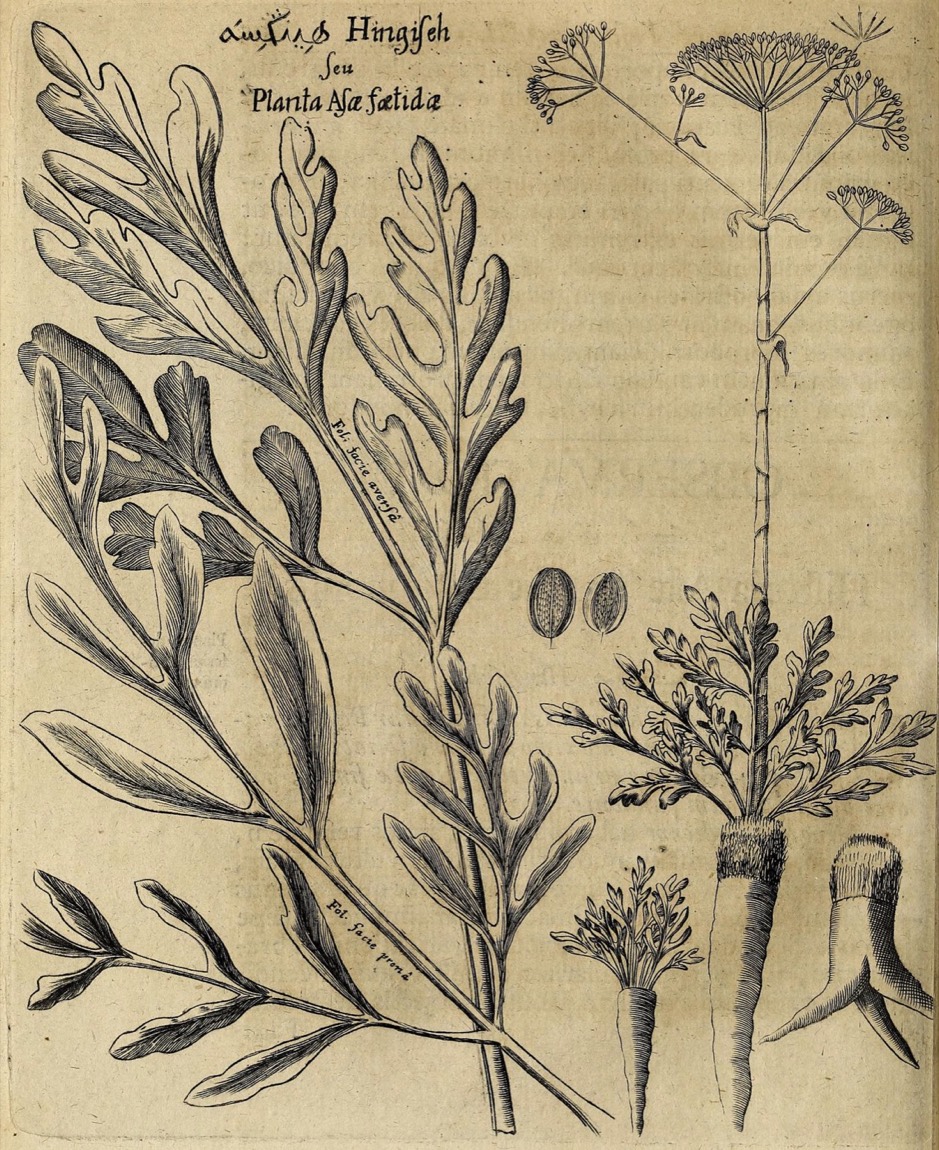

Hingu is the pungent, warming oleo-gum-resin of a large plant in the carrot and parsley family, familiar around the world as asafoetida or hing. In the classical texts it is valued as a small culinary addition that kindles the digestive fire and settles the downward movement of Vata.
- Botanical name
- Ferula assa-foetida
- Family
- Apiaceae (also known by its older name Umbelliferae, the carrot and parsley family)
- Sanskrit
- हिङ्गु
- Part used
- Oleo-gum-resin from the root and rhizome
- Taste (rasa)
- Pungent, with a secondary bitter note in some traditions (katu, tikta)
- Quality (guna)
- Light and sharp, and unctuous in the Bhavaprakasha tradition (laghu, tikshna, snigdha)
- Energy (virya)
- Warming (ushna)
- After digestion (vipaka)
- Pungent (katu)
- Action (karma)
- Kindles digestion and settles downward wind (deepana, pachana, anulomana)
- Best known for
- a warming culinary and digestive resin
What is Hingu?
Hingu is the dried resin of a large flowering plant in the Apiaceae family, the same botanical group that gives us carrot, fennel and parsley. In kitchens across the world it is better known as asafoetida, or simply hing. The part that is used is not the leaf, flower or whole herb but the oleo-gum-resin, a hardened latex that the plant exudes. This resin is collected by making an incision in the living root and rhizome and allowing the milky sap to seep out and set. What we call asafoetida is that set resin.
The Sanskrit name Hingu sits alongside a long list of older synonyms, and each one paints part of its character. Ramatha and Bahlika point to the regions it was traded from, while Ugragandha means something like “fierce smelling”, a fair description of the raw resin’s powerful, sulphurous aroma. Other names such as Jantughna and Sooladhna describe its traditional role in the body. Raw and undiluted the smell is famously sharp, yet when a small piece is warmed in fat it mellows into a rounded, savoury note that many cuisines prize.
One honest note on botany. Asafoetida resin is drawn from several closely related Ferula species, and their taxonomy is genuinely contested. Ferula assa-foetida is the name most often given, but Ferula narthex and Ferula foetida are also cited in the trade, so the exact accepted species is not settled.
What Ayurveda uses it for
In the classical texts Hingu is best known as a warming culinary and digestive resin rather than a herb taken on its own. It is grouped with the substances that kindle the digestive fire, a category the texts call Deepana, and with those that help the body work through undigested matter, called Pachana. It is also described as Anulomana, meaning it supports the normal downward and settling movement of Vata, the airy principle associated with wind and movement in the digestive tract.
Traditionally a very small amount is added to pulses, beans, cooked vegetables and heavier dishes to make them lighter and more agreeable to the stomach. Cooks who work with lentils will recognise the logic at once, since a pinch of hing is a classic way to make a bean dish sit more comfortably. The texts describe it as easing a sense of heaviness or trapped wind after eating, and it is grouped with the condiments used to support comfortable digestion. Because it is strongly heating and penetrating it is used sparingly and almost always tempered in warm ghee or oil first. Ayurveda also calls it Hrdya, agreeable to the heart, and Chedana, a substance that helps to scrape and clear the channels.
Its qualities, in plain words
Ayurveda describes every substance through a small set of properties, and Hingu’s read as a clear, warming profile. Its taste, or rasa, is Katu, meaning pungent, the sharp quality you meet in pepper or fresh ginger. Some later commentaries add a secondary bitter note, Tikta, though sources differ on whether bitter should formally sit alongside pungent.
Its qualities, or guna, are given as Laghu, light, and Tikshna, sharp and penetrating, the sense of something that moves quickly and does not sit heavily. The Bhavaprakasha tradition also lists it as Snigdha, unctuous, which fits a resin carried in oil, although other sources describe it as dry, so no single value is settled here.
Its potency, or virya, is Ushna, warming. This is the heart of its character, a genuine inner heat that is easy to feel. After digestion its lasting effect, the vipaka, is again Katu, pungent, so the warming and stimulating quality continues rather than turning cool. Taken together these properties explain why the tradition treats it as pacifying to Vata and Kapha, the airy and heavier watery principles, while cautioning that its heat can increase Pitta, the fiery principle, if it is used in excess.
How it is taken
The raw resin is not eaten by itself. The classic step, which any cook of Indian food knows, is to fry or “bloom” a tiny amount for a moment in warm ghee or oil. This softens the fierce pungency and releases the rounded, savoury flavour before it is added to the rest of the dish. It may also simply be dissolved in a little warm water. The fat or water is doing real work here, both carrying the resin and tempering its sharpness.
Hingu also appears as an ingredient in classical formulations rather than only as a standalone spice. It is a defining component of several traditional churna, or powder blends, and it is used in some vati, or tablet, preparations. Named formulations that feature it include Hingvashtaka churna, a well known digestive powder, Hinguvachadi churna, and Hingu Triguna Taila. In all of these it is one carefully measured ingredient among many. Because it is potent and easy to overdo, anyone using it beyond ordinary cooking should follow the guidance of a qualified practitioner rather than self-dose.
Good to know
Hingu is above all a small culinary ingredient, used in pinches rather than spoons. Its strength lies in restraint, and a little goes a long way. In the traditional pattern it is added early in cooking, bloomed in warm fat, so that its heat and flavour infuse the whole dish rather than sitting on top of it.
A practical point for shoppers. Commercial asafoetida is very often blended with wheat flour or another starch as a carrier, which matters for anyone avoiding gluten, so it is always worth reading the label. Because the resin is strongly heating, the classical view holds that it is best used only in small amounts and is unsuitable in excess for people of a heated, Pitta constitution.
This entry describes the classical Ayurvedic understanding of the herb. It is not medical advice, and anyone with a health condition should speak to a qualified practitioner.
Frequently asked
Is Hingu the same thing as asafoetida? Yes. Hingu is the Sanskrit name, and asafoetida, or hing, is the same dried resin as it is known in English and Hindi cookery. They refer to the identical oleo-gum-resin taken from the root of the Ferula plant.
Why does raw asafoetida smell so strong? The raw resin has a famously fierce, sulphurous aroma, which is why one of its old Sanskrit names, Ugragandha, means “fierce smelling”. Warming a small piece in ghee or oil tames that pungency and turns it into a rounded, savoury flavour, which is why it is almost always cooked in fat before use.
Does Hingu contain gluten? The pure resin does not, but commercial asafoetida is frequently mixed with wheat flour or other starch as a carrier. Anyone avoiding gluten should check the ingredients on the packet, since the carrier is not always obvious.
Hingu is pungent and heating, light and penetrating, and is counted among the substances that kindle the digestive fire and settle the downward movement of wind.
After the Bhavaprakasha Nighantu
The synonyms and properties of Hingu, including Ramatha and Ugragandha, are set out among the pungent substances of the Pippalyadi group.
After the Raja Nighantu
Frequently asked questions
What is Hingu (asafoetida) used for in Ayurveda?
Hingu, known in the kitchen as asafoetida, is the dried resin of a Ferula root. Ayurveda classes it as deepana, pachana and anulomana, kindling digestion and settling downward wind. It is used in small amounts to make heavy food lighter and more agreeable to the stomach, and to ease bloating and trapped Vata.
Is Hingu good for gas and bloating?
Traditionally, yes. Hingu is one of Ayurveda's classic carminatives, valued as anulomana, guiding downward wind on its way, which is exactly why a pinch is added to beans, lentils and heavy dishes. It settles the trapped, upward-moving Vata the tradition links to bloating and gas. It is used in cooking amounts as everyday digestive support.
How much Hingu should you use?
Only a small amount, a pinch, is used, since Hingu is intensely pungent and strong. In cooking it is typically fried briefly in a little ghee or oil to mellow it before adding to the dish. For any medicinal use beyond seasoning, an Ayurvedic practitioner sets the dose. A little goes a long way.
Which dosha does Hingu balance?
Hingu chiefly settles Vata, easing the trapped, downward wind behind bloating and colic, and its warming, pungent nature also clears Kapha and kindles Agni. Being sharply heating, it can aggravate Pitta if overused, so Pitta types keep to small amounts. It is above all a Vata-settling, digestion-kindling resin.
Can you take Hingu during pregnancy?
Because Hingu is strongly heating and stimulating, Ayurveda advises caution in pregnancy, and it is best kept to small culinary amounts only, or avoided, unless an Ayurvedic practitioner advises otherwise. As with any potent spice used medicinally, speak with your doctor first if you are pregnant or breastfeeding.
References
- Raja Nighantu, Pippalyadi varga (verses 6.72 to 6.75)
- Bhavaprakasha Nighantu, Haritakyadi varga
- Charaka Samhita, Sutrasthana chapter 27 (Annapana vidhi, on food and drink)
- Ashtanga Hridaya, Sutrasthana chapter 6 (Annasvarupa vijnaniya, on the nature of foods)