Materia Medica · Dravyaguna
Krishna Jeeraka
Nigella sativa · Ranunculaceae
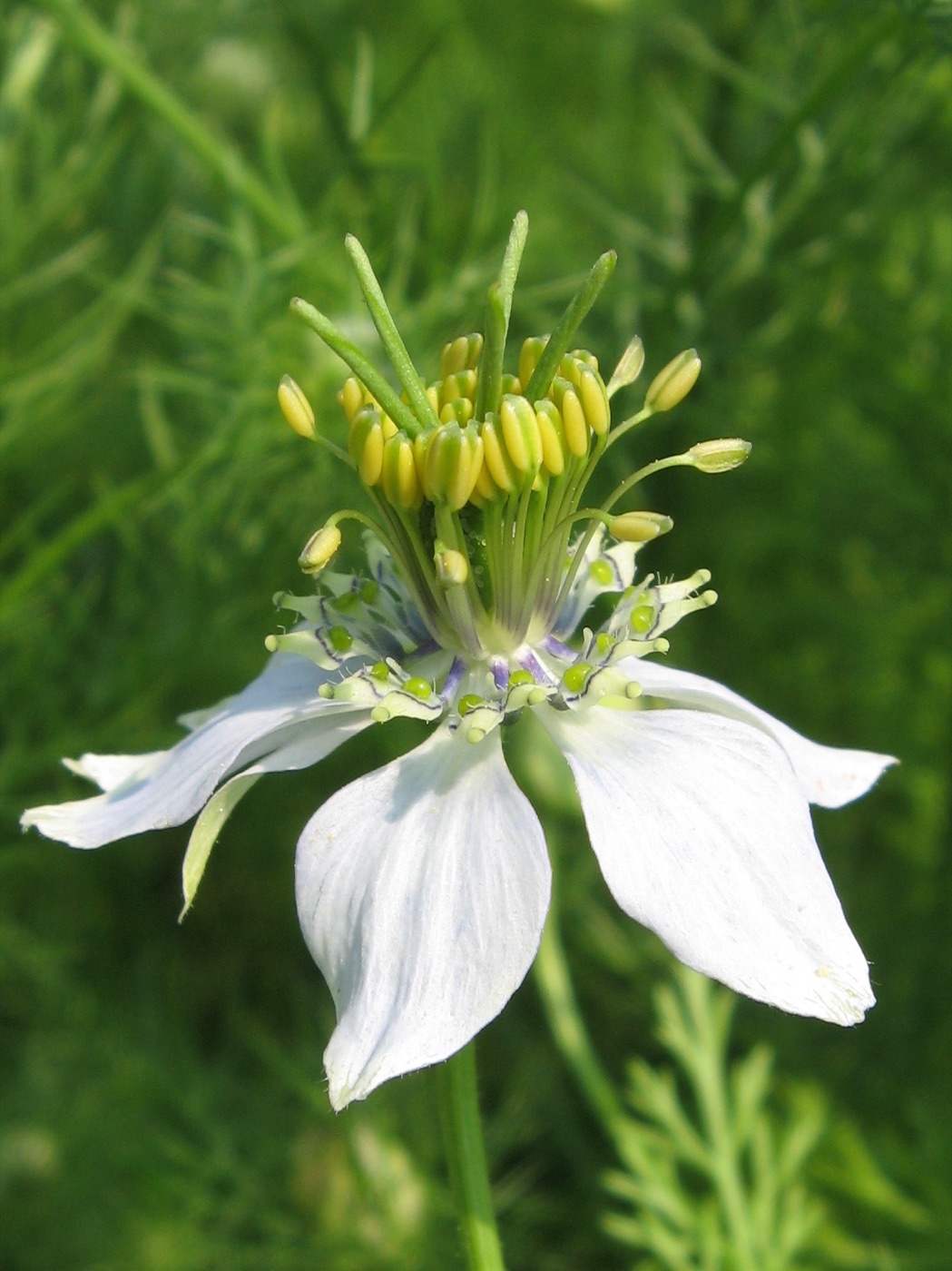

Krishna Jeeraka, better known in classical texts as Upakunchika, is the small black seed of the plant Nigella sativa. Ayurvedic materia medica groups it among the pungent, warming seeds prized as a kitchen and household spice.
- Botanical name
- Nigella sativa
- Family
- Ranunculaceae
- Sanskrit
- उपकुञ्चिका
- Part used
- Seed
- Taste (rasa)
- Pungent and bitter (katu, tikta)
- Quality (guna)
- Light, dry and penetrating (laghu, ruksha, tikshna)
- Energy (virya)
- Warming (ushna)
- After digestion (vipaka)
- Pungent (katu)
- Action (karma)
- Kindles the digestive fire and helps clear the channels (deepana, pachana, srotoshodhana)
- Best known for
- A warming, pungent seed used as a digestive spice
What is Krishna Jeeraka?
Krishna Jeeraka is the small black seed of Nigella sativa, a flowering plant of the Ranunculaceae, the buttercup family. In the kitchen and in classical texts these tiny angular seeds are the part that matters, and a pressed oil from the seed is used as well.
The name is worth pausing on, because it carries a small warning. Krishna Jeeraka can be read as “black cumin,” and in some regions the same folk name is attached to caraway, Carum carvi. The plant described here is specifically the one botanically identified as Nigella sativa, the seed widely sold today as kalonji or black seed. Its steadier classical Sanskrit name is Upakunchika (उपकुञ्चिका), with Kalajaji (कालाजाजी) as the other common Devanagari synonym. Because the everyday names overlap, it is always sensible to check the botanical name on any product before assuming which seed you have.
Set beside the plants it is sometimes confused with, Nigella sativa stands apart. It is not an umbellifer like cumin or caraway but a member of the buttercup family, and its seeds are jet black, faintly ridged and carry a warm, slightly peppery aroma.
What Ayurveda uses it for
In the classical Ayurvedic understanding Upakunchika was valued above all as a digestive and channel-clearing seed. The Nighantu texts, the traditional dictionaries of materia medica, place it among the pungent, warming seeds that support agni, the digestive fire, through deepana and pachana, and they give it srotoshodhana, a clearing of the bodily channels, and krimighna, an action against worms.
Read across those sources, the warming, penetrating seed is traditionally associated with the following settings, each given in its Sanskrit term with a plain gloss:
- Agnimandya and Ajirna: a weak digestive fire and the indigestion that follows.
- Adhmana and Anaha: bloating and distension of the belly.
- Shula: the colic and griping pain the texts group under this term.
- Krimi: the classical category of intestinal worms, its krimighna action.
- Pratishyaya and Pinasa: the blocked, running condition of the nose, where the aromatic seed is traditionally used.
- Stanya: the flow of breast milk, which the seed is traditionally said to support.
The attribution here is drawn from the nighantu tradition, which records the seed’s qualities and synonyms more fully than any single named formulation. These are traditional textual associations, given for reference and study rather than as statements of medical effect or as advice to treat any condition.
Its qualities, in plain words
Ayurveda reads every substance through a short list of qualities, and Krishna Jeeraka has a clear, consistent profile.
Its rasa, or taste, is Katu (pungent) and Tikta (bitter). You can taste both when you chew a seed, a peppery warmth with a bitter edge underneath.
Its guna, the physical qualities, are Laghu (light), Ruksha (dry) and Tikshna (penetrating or sharp). Light and dry means it sits easily and does not add heaviness or moisture. Penetrating suggests a substance that works its way into the finer channels rather than sitting on the surface, a little like a sharp aroma that reaches every corner of a room.
Its virya, the potency, is Ushna (heating). This warming energy is the heart of how the seed is understood.
Its vipaka, the taste that remains after digestion is complete, is Katu (pungent), so the warming, pungent character carries through from first taste to final effect.
Taken together, these qualities explain the traditional reading of its effect on the doshas. Through its heating potency, its pungent-bitter tastes and its light, penetrating nature, the seed was understood to pacify Kapha and Vata. The same warmth means it can increase Pitta if used in excess, which is why it belongs to the warming, stimulating group rather than the cooling one.
How it is taken
In traditional practice the seed is used whole or ground to a powder, and the pressed seed oil is used too. Warmth tends to meet warmth: the pungent seeds are commonly taken with warm water, with honey, or in the company of other warming spices, and of course used straight as a culinary spice in cooking.
Classical practice tends to pair Krishna Jeeraka with other warming, digestive dravyas rather than using it alone, so that the seeds sit within a small blend of like-minded spices. This is the usual pattern for the pungent, agni-supporting group.
No specific named classical formulation, such as a Churna, Arishtam or Kashayam, could be reliably confirmed as being built around this particular seed, so none is named here. Where the seed appears, it is generally as a warming culinary and household spice and as one member of a spice blend rather than as the centre of a named preparation.
Good to know
Because its potency is Ushna (heating), Krishna Jeeraka is traditionally used with a little more caution by those of Pitta constitution and in warm conditions or warm seasons, where extra heat is less welcome. As with all warming spices, small amounts within a blend are the classical habit rather than large amounts alone.
The most important practical note is one of identity. The folk name Krishna Jeeraka is shared with caraway (Carum carvi) in some regions, and several of its synonyms, such as Karavi and Prithvika, are shared with other seeds in different texts. This entry is specifically for the plant botanically identified as Nigella sativa, the kalonji or black seed whose main classical name is Upakunchika. Always verify the botanical name on any product.
This entry describes the classical Ayurvedic understanding of the herb. It is not medical advice, and anyone with a health condition should speak to a qualified practitioner.
Frequently asked
Is Krishna Jeeraka the same as cumin? Not in the way the name might suggest. Although “Krishna Jeeraka” reads as “black cumin,” the seed described here is Nigella sativa, a member of the buttercup family, not true cumin. Its clearer classical name, Upakunchika, helps tell the two apart. In some regions the same folk name is also used for caraway, so checking the botanical name is the reliable way to know which seed you have.
What part of the plant is used? The seed, the small black seeds of the plant, and the pressed seed oil. In classical practice the seed is used whole or as a powder.
Which doshas does it suit? Through its heating potency and its pungent, bitter, light and penetrating qualities, it was traditionally understood to pacify Kapha and Vata. Because it is warming, it can increase Pitta if used in excess, so those of Pitta constitution tend to use it more sparingly.
The seed is listed under the name Upakunchika, with Krishna Jeeraka and Kalajaji given among its synonyms.
After the Bhavaprakasha Nighantu
The seed is placed among the medicinal plants of the Oshadhi Varga.
After the Kaiyadeva Nighantu
The seed is grouped in the Shatapushpadi Varga alongside other warming, aromatic seeds.
After the Dhanvantari Nighantu
Frequently asked questions
What is Krishna Jeeraka (Kalonji) used for?
Krishna Jeeraka is a small black seed (Nigella sativa) valued in classical Ayurveda as a warming, pungent household spice traditionally used to support the digestive fire. The tradition classes it as deepana and pachana, kindling Agni and aiding digestion, and as srotoshodhana, helping clear the channels. Its pungent, bitter taste makes it a warming culinary and digestive seed.
Is Krishna Jeeraka good for digestion?
Yes, Ayurveda values Krishna Jeeraka as a warming digestive seed. It is classed as deepana and pachana, meaning it kindles the digestive fire and helps digest food, and as srotoshodhana, helping clear the body's channels. Its pungent and bitter tastes suit dull, sluggish digestion. Used as a spice it is gentle, but seek advice for any ongoing complaint.
How do you use Krishna Jeeraka?
As a warming household spice, Krishna Jeeraka is used in cooking, dry-roasted or tempered in oil to bring out its pungent, digestive quality, and it also appears in classical preparations. Taken this way it gently supports Agni and helps clear the channels. For medicinal use, the dose and form are best guided by an Ayurvedic practitioner.
Is Krishna Jeeraka the same as cumin?
No. The name Jeeraka covers several seeds, and Krishna Jeeraka, the black seed, is Nigella sativa (kalonji), distinct from ordinary cumin (Jeeraka or Shweta Jeeraka). They are different plants, though both are warming, pungent digestive spices used to kindle Agni. This article concerns the black seed, valued as deepana, pachana and srotoshodhana.
Which dosha does Krishna Jeeraka balance?
Being warming and pungent, Krishna Jeeraka mainly settles Kapha and Vata, the cold, heavy or dull qualities behind sluggish digestion, while its fire-kindling nature supports Agni. Its heating character means those with marked Pitta, acidity or heat should use it more sparingly. As a spice it is gentle; for medicinal amounts, follow a practitioner's guidance.
References
- Bhavaprakasha Nighantu, synonym listings for Upakunchika
- Kaiyadeva Nighantu, Oshadhi Varga
- Dhanvantari Nighantu, Shatapushpadi Varga