Priyangu (Callicarpa macrophylla) — Ayurvedic Herb Profile

Overview

Priyangu, scientifically identified as Callicarpa macrophylla Vahl (family Lamiaceae), represents one of the classical medicinal plants documented extensively throughout the Ayurvedic pharmaceutical corpus. The plant is recognized across multiple nomenclatural systems: in Sanskrit as Priyangu or Priyangubeeja; in Hindi as Priyangoo, Phirange, or Priyang; and in English variously as Priyangu, Beautyberry, or Indian Priyangu. The Latin binomial Callicarpa macrophylla reflects the botanical classification established within modern phytotaxonomy, though some classical Ayurvedic texts may reference related Callicarpa species or allied botanicals within the same genus.

Native to the Indian subcontinent and extending through the tropical and subtropical regions of South and Southeast Asia, Priyangu flourishes in deciduous and semi-deciduous forests, particularly in areas receiving moderate rainfall. The plant holds significant historical importance within classical Ayurvedic medicine, where it appears consistently across foundational texts spanning more than two millennia. Its prominence derives from multifaceted therapeutic properties traditionally attributed to the plant across digestive, dermatological, and systemic wellness applications. Within the framework of contemporary Ayurvedic scholarship and clinical practice, Priyangu continues to occupy an esteemed position as both a single agent and constituent of polypoly-herbal formulations.

Classical References

Priyangu occupies a distinguished position within the classical Ayurvedic materia medica, documented systematically across the primary foundational texts of Ayurveda. The plant appears with remarkable consistency across the Brihatrayi (the three great classical treatises) and the various Nighantu (herbal compendia), affirming its enduring status within the traditional pharmaceutical system.

In the Charaka Samhita, Priyangu is referenced within the context of formulation principles and therapeutic applications. While explicit verse citations vary according to different manuscript editions and commentarial traditions, the Charaka tradition, particularly within discussions of Kashaya Dravyas (astringent substances (Kashaya Dravyas)) and Kanda-Mula-Phala-Pushpa Varga (bulbs, roots, fruits, and flowers classification), acknowledges Priyangu’s properties. The Chakrapani commentary on the Charaka Samhita provides interpretive elaboration regarding the plant’s classification and therapeutic indications.

The Sushruta Samhita incorporates Priyangu within its pharmaceutical discussions, particularly in contexts relating to external applications and dermatological preparations. The text references the plant’s utility in formulations designed for cutaneous conditions and wound management, reflecting classical understanding of the plant’s drying and astringent qualities. Sushruta’s pharmaceutical methodology consistently incorporates Priyangu within paradigms of oil-based and paste-based preparations.

Within the Ashtanga Hridayam, composed by Vagbhata in the seventh century CE, Priyangu appears within the systematic enumeration of medicinal substances organized according to therapeutic properties and applications. Vagbhata’s concise yet comprehensive approach to materia medica solidified Priyangu’s position within the standardized pharmacological framework that persists in contemporary Ayurvedic education and practice.

The Bhavaprakasha Nighantu, a fifteenth-century herbal compendium composed by Bhava Mishra, provides detailed characterization of Priyangu. The text assigns the plant to specific plant categories (Varga) and elaborates upon its organoleptic properties, post-digestive effects, and traditional indications. The Bhavaprakasha’s inclusion of Priyangu within its systematized arrangement of medicinal substances reflects the herb’s sustained relevance across centuries of Ayurvedic pharmaceutical development.

The Dhanvantari Nighantu, another classical herbal text, similarly acknowledges Priyangu and its properties within the broader context of Ayurvedic materia medica. These references collectively establish Priyangu as a herb of substantial traditional significance, consistently recommended across multiple classical frameworks and perpetuated through successive generations of Ayurvedic scholarship.

Botanical Description

Callicarpa macrophylla presents as a deciduous to semi-deciduous woody shrub, typically attaining heights between 1.5 to 4 meters, though under optimal growing conditions it may develop into a small tree reaching 5-6 meters. The plant exhibits characteristic morphological features consistent with members of the Lamiaceae family, though historically it was classified within Verbenaceae before contemporary taxonomic revision.

The leaves of Callicarpa macrophylla are notably large—indeed, the species epithet “macrophylla” derives from this feature—typically measuring 15-30 centimeters in length and 6-15 centimeters in width. The leaves present a lanceolate to elliptic-lanceolate form with serrated or crenate margins. The leaf surface exhibits a distinctly wrinkled or rugose texture, particularly on the adaxial (upper) surface, with prominent venation. The petioles are robust and measure approximately 2-4 centimeters in length. Leaves display seasonal deciduousness, particularly in regions experiencing pronounced dry seasons, with leafing occurring typically during the monsoon and post-monsoon periods.

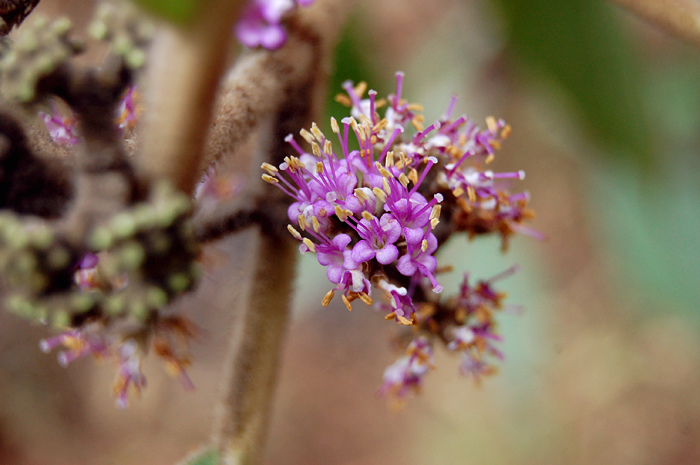
The inflorescence comprises small, delicate flowers arranged in axillary cymes. The flowers themselves are relatively inconspicuous, typically exhibiting pale pink, lavender, or white coloration. Floral morphology follows the standard pentamerous pattern characteristic of Lamiaceae, with five sepals and five petals. The androecium comprises four stamens, with the style typically exserted from the corolla. Flowering typically occurs during the monsoon and early post-monsoon seasons, generally from June through September, depending upon local climatic conditions.

The fruit represents perhaps the most distinctive and visually prominent feature of Callicarpa macrophylla. The plant produces abundant small drupes (stone fruits), typically measuring 4-6 millimeters in diameter, arranged in dense clusters along the branches. These drupes display a striking blue, purple, or violet coloration at maturity—a characteristic that has earned the genus its common English designation “Beautyberry.” The fruits mature during the post-monsoon season, typically from October through December, and persist on the plant for an extended period, often remaining visible through the dry season even as foliage is shed.

The plant’s geographical distribution encompasses the Indian subcontinent, particularly the Western Ghats, the Deccan peninsula, and extending through the northeastern regions into Bangladesh and Myanmar. It flourishes in deciduous and semi-deciduous forests, typically at elevations from sea level to approximately 1500 meters, though it displays greatest vigor in regions receiving 150-300 centimeters of annual rainfall. The plant demonstrates considerable ecological plasticity, establishing itself readily in secondary forest formations and disturbed habitats, contributing to its relative abundance and accessibility historically.

Officinal Parts: Ayurvedic pharmaceutical tradition primarily utilizes the leaves (Patra), fruits (Phala), and seeds (Beeja) of Callicarpa macrophylla. The entire aerial parts, particularly when in productive phase, may be employed in certain formulations. Contemporary practice occasionally incorporates the root bark, though classical texts do not emphasize this component. The fruits, valued particularly for their organoleptic and pharmacological properties, constitute a primary source material for numerous classical formulations.

Harvesting and Collection: Traditional harvesting protocols align Priyangu collection with the fruiting season, typically from October through December, when the fruits achieve full maturation and the characteristic purple-blue coloration. Leaves may be harvested throughout the growing season, though spring and post-monsoon collections are traditionally considered optimal. The entire aerial part may be harvested and dried for preparation of Kwatha (decoctions) and similar preparations. Fruits are typically dried in shade to preserve their volatile components and pharmacological integrity. Storage follows traditional Ayurvedic protocols, maintaining the dried material in cool, dry conditions protected from light and moisture.

Pharmacological Properties (Dravyaguna)

Within the classical Ayurvedic system of pharmacological classification, Priyangu exhibits characteristic properties that have been systematically documented across foundational texts and perpetuated through contemporary Ayurvedic scholarship. The assessment of Priyangu’s pharmacological properties follows the established Dravyaguna methodology, encompassing Rasa (taste), Guna (qualities), Virya (potency), Vipaka (post-digestive effect), Prabhava (specific action), and Karma (therapeutic actions).

Rasa (Taste)

Priyangu is traditionally classified as possessing a predominantly Tikta (bitter) Rasa, with secondary Kashaya (astringent) components. Some classical texts acknowledge minor Katu (pungent) characteristics. This gustatory profile aligns with the plant’s chemical composition and its therapeutic applications within Ayurvedic practice.

Guna (Qualities)

Priyangu is characterized as Laghu (light), Ruksha (dry), and Tikshna (sharp or penetrating). These qualities reflect the plant’s capacity for rapid absorption and systemic penetration, as well as its tendency toward drying effects within the body’s tissues. Some formulations incorporate Priyangu specifically to counteract excessive moisture or to enhance digestive fire.

Virya (Potency)

The plant is traditionally classified as possessing Ushna Virya (heating potency), though certain classical sources describe it as relatively balanced or with moderate heating properties. This thermal quality aligns with its bitter and astringent tastes and contributes to its applications in promoting Agni (digestive fire) and facilitating metabolic processes.

Applications and Traditional Uses

Classical Ayurvedic texts describe Priyangu as particularly valuable for addressing specific health concerns…

Vipaka (Post-Digestive Effect)

Priyangu exhibits Katu Vipaka (pungent post-digestive effect), consistent with its initial bitter and astringent taste profile and heating potency. This post-digestive transformation indicates the plant’s ultimate metabolic consequences within the organism and shapes its long-term physiological implications.

Prabhava (Specific Action)

Beyond the conventional understanding derivable from Rasa, Guna, Virya, and Vipaka, Priyangu is credited with specific actions that transcend simple pharmacological prediction. Classical texts suggest particular effectiveness for cutaneous conditions and digestive disorders, pointing to the plant’s demonstrated efficacy in traditional applications.ard specific phytocompound actions not fully explained by classical pharmacological parameters.ully explicable through the five primary properties alone.

Karma (Therapeutic Actions): The classical Ayurvedic literature describes Priyangu as possessing the following primary actions:

  • Deepana – promoting digestive fire and enhancing metabolic capacity
  • Pachana – aiding digestive processes and supporting nutrient assimilation
  • Ropana – supporting healing and tissue repair processes
  • Krimighna – traditionally used against parasitic conditions

ng>Pachana – facilitating the proper digestion and assimilation of ingested substances

  • Krimighna – traditionally understood as opposing parasitic organisms or inflammatory processes
  • Ropana – promoting tissue healing and wound repair
  • Kashayakara – exerting astringent effects throughout the system
  • Kandughna – traditionally applied to pruritic conditions and inflammatory dermatological manifestations
  • Shotha-shamana – reducing edema and inflammatory swelling
  • Rakta-prasadana – traditionally purifying and clarifying blood tissue
  • Dosha Influence: Within the tripartite Dosha framework of Ayurveda, Priyangu is traditionally understood to pacify Kapha Dosha primarily, with secondary benefits for Pitta Dosha when used judiciously. The plant’s light, dry, and heating properties antagonize the heavy, moist, and cold qualities of excess Kapha. The bitter and astringent tastes similarly reduce Kapha while supporting balanced Pitta function. However, excessive use may potentially aggravate Vata Dosha due to its drying properties, necessitating thoughtful administration in constitutionally Vata-predominant individuals.

    Mahakashaya Classification: Within the Charaka Samhita’s systematic enumeration of medicinal substance categories (Mahakashaya), Priyangu appears within the context of Deepaniya Dravyas (substances promoting digestive fire) and Krimighna Dravyas (substances traditionally opposing parasitic or inflammatory conditions). This dual classification reflects the plant’s primary applications within classical Ayurvedic therapeutic protocols.

    Traditional Uses and Indications

    Priyangu has occupied a consistent and valued position within classical Ayurvedic therapeutics across diverse clinical presentations. The plant’s traditional indications reflect the cumulative observational knowledge of Ayurvedic practitioners across centuries, documented within foundational texts and perpetuated through contemporary practice.

    Gastrointestinal Applications: Classical Ayurvedic texts consistently recommend Priyangu for various digestive disorders. The plant’s Deepana and Pachana properties position it as particularly valuable in contexts of Mandagni (weakened digestive fire) and Ama (improperly metabolized substances). Traditional practitioners administered Priyangu in cases of Atopa (intestinal distension or flatulence), Vibandha (constipation), and Indigestion characterized by sluggish digestive capacity. The plant’s bitter taste naturally stimulates the secretion of digestive enzymes and bile, supporting the preliminary stages of food breakdown. Formulations containing Priyangu were traditionally employed before meals to kindle Agni and optimize subsequent digestive processes.

    Dermatological Manifestations: Among Priyangu’s most consistent classical applications are various skin conditions. The plant was traditionally indicated for Kandu (itching and pruritic conditions), Kushtha (various dermatological conditions including eczematous presentations), and inflammatory skin manifestations characterized by Pitta involvement. The Kashaya (astringent) properties facilitate tissue contraction and drying of exudative processes, while the plant’s purifying quality addresses underlying constitutional imbalances presumed to generate cutaneous disease. Both internal administration and external application of Priyangu preparations were employed within classical protocols addressing dermatological pathology.

    Respiratory and Throat Applications: Classical texts reference Priyangu’s traditional use in conditions affecting the throat and respiratory passages. The plant’s drying and heating properties, combined with its astringent action, positioned it as valuable for conditions involving excessive expectoration or throat inflammation. The plant was traditionally incorporated into gargling preparations and throat-directed formulations for voice clarity and throat health maintenance.

    Systemic Purification Protocols: Within the broader Ayurvedic framework of Rasayana (rejuvenation) and Shuddhikara (purification) therapies, Priyangu appeared as a supporting agent in formulations designed to clarify bodily tissues and remove accumulated Ama. The plant’s traditional Rakta-prasadana (blood-purifying) properties positioned it as a valuable component of protocols addressing systemic toxicity or constitutional imbalance.

    Wound Healing and Tissue Repair: The Ropana (tissue-healing) property of Priyangu directed its traditional application to wounds, ulcerations, and similar breaches in tissue integrity. Applied externally through medicated oils or pastes, the plant was understood to facilitate the organized repair and regeneration of damaged tissues through its drying, astringent, and specifically ropaka properties.

    Metabolic and Systemic Balance: Beyond specific disease presentations, Priyangu was traditionally regarded as a general agent supporting appropriate metabolic function and systemic balance. The plant’s capacity to enhance Agni and facilitate proper tissue formation positioned it as valuable for constitutional support in individuals manifesting Kapha imbalance or sluggish metabolic function.

    Classical Formulations

    Throughout the history of Ayurvedic pharmaceutical development, Priyangu has served as a valued constituent of numerous classical formulations, reflecting its diverse therapeutic applications and compatibility with various preparation methodologies.

    Priyangu Taila represents a classical medicated oil preparation incorporating Priyangu as a primary ingredient, traditionally employed for external application to the skin in various dermatological presentations. The preparation follows standard Ayurvedic oil-infusion methodology, wherein dried plant material is processed into a carrier oil base, typically sesame or coconut oil, creating a delivery vehicle for topical application. Such preparations are found at Art of Vedas’ Ayurvedic Thailams collection, representing the contemporary continuation of classical formulation traditions.

    Priyangu Ghrita constitutes a ghee-based preparation, where Priyangu is processed through the classical ghee-infusion methodology. Ghrita formulations provide enhanced absorption and systemic penetration compared to aqueous or oil-based preparations, making this formulation particularly valued for conditions requiring deeper tissue involvement. The preparation was traditionally administered orally in measured quantities, often combined with complementary medicinal substances.

    Priyangu Kashaya represents the decoction preparation of Priyangu, created through extended aqueous extraction of dried plant material. This aqueous preparation provides direct access to the plant’s water-soluble principles and represents one of the most accessible and readily prepared forms for oral administration. Classical practitioners prepared fresh Kashaya regularly, administering it at specific dosages and frequencies according to the presenting condition and constitutional factors of the individual.

    Priyangu Churna denotes the powdered form of dried Priyangu plant material, prepared through thorough drying and fine grinding according to classical pharmaceutical standards. This versatile preparation permitted diverse administration routes: suspension in warm water, mixture with honey, combination with medicated oils, or incorporation into more complex polyherbal formulations. The Churna form proved particularly convenient for long-term therapeutic protocols.

    Chandanadi Taila represents a classical polyherbal oil formulation wherein Priyangu appears as a supporting constituent alongside Chandana (sandalwood), Manjishtha (Indian madder), and other complementary botanicals. This formulation addresses primarily cutaneous manifestations and inflammatory conditions, with Priyangu contributing its drying, astringent, and tissue-healing properties to the overall therapeutic effect.

    Manjishthadi Taila similarly incorporates Priyangu within a polyherbal oil base, with Manjishtha comprising the primary active agent. The addition of Priyangu enhances the formulation’s astringent and purifying actions, making it particularly valuable for chronic dermatological conditions and inflammatory presentations.

    Karpuradi Taila constitutes another classical formulation incorporating Priyangu alongside Karpura (camphor), Twak (cinnamon), and related botanicals. This preparation traditionally addresses various skin conditions, with Priyangu’s tissue-healing and antimicrobial properties complementing the warming and penetrating effects of camphor and allied substances.

    Priyangu Churna with Honey combines powdered Priyangu with raw honey (Madhu), creating a simple yet effective formulation for digestive support and systemic health maintenance. Classical protocols recommended this preparation for morning administration, taken in measured quantities before meals to enhance subsequent digestive capacity.

    Priyangu-Draksha Formulation combines Priyangu with Draksha (raisins), leveraging the synergistic effects of Priyangu’s digestive and purifying properties with Draksha’s nourishing and rejuvenative qualities. This formulation represents a traditional approach to balancing Priyangu’s drying tendencies with more nourishing elements, particularly valuable for extended therapeutic protocols.

    These classical formulations represent merely a selection from the extensive historical record of Priyangu-containing preparations documented across centuries of Ayurvedic pharmaceutical development. Contemporary practice continues to employ these established formulations while developing new preparations that honor traditional principles while addressing modern therapeutic requirements. Quality Ayurvedic preparations maintaining classical standards are available through providers such as Art of Vedas, ensuring access to well-prepared formulations consistent with traditional pharmaceutical methodology.

    Methods of Administration

    Classical Ayurvedic therapeutics recognizes multiple distinct preparation methodologies and administration routes, each suited to particular conditions and constitutional presentations. Priyangu’s versatility permits employment across numerous preparation modalities, each extracting and delivering different aspects of the plant’s pharmacological profile.

    Swarasa (Fresh Juice Extract): The fresh juice of Priyangu, obtained through expression of newly harvested plant material, represents one of the most concentrated preparations available. Swarasa preparations provide rapid physiological effects and maximum potency, though seasonal availability and shorter shelf stability limit their practical application within most contemporary contexts. When available, Swarasa was traditionally administered in quantities of 10-30 milliliters, often combined with honey or warm water, typically on an empty stomach or in specific timing relative to meals according to the condition being addressed.

    Kalka (Fresh Paste): The fresh paste obtained through grinding and processing of Priyangu plant material represents another concentrated preparation form. Kalka retains water-soluble and volatile components while providing a semi-solid delivery vehicle. Traditional administration of Kalka involved quantities of 5-15 grams, typically combined with suitable vehicles such as honey, ghee, or warm water. Kalka preparations were particularly valued for conditions where rapid systemic effect was desired.

    Kashaya (Decoction): Among the most widely employed preparation methodologies, Kashaya extraction involves extended aqueous decoction of dried plant material. Classical protocols typically recommended decocting dried Priyangu material in quantities of 12-25 grams per preparation, heating with water (typically in proportions of 1 part plant to 8 parts water) until approximately 50-75 percent of the initial liquid volume remained. The resulting liquid extraction was strained, cooled slightly, and administered in quantities of 30-90 milliliters, typically twice daily, often with timing coordinated to specific meals or constitutional requirements. The Kashaya preparation permits convenient oral administration while providing access to the plant’s water-soluble principles.

    Churna (Powder): The powdered preparation of dried Priyangu offers maximum convenience and extended storage capability. Classical administration of Priyangu Churna involved quantities of 3-6 grams, typically taken with suitable vehicles such as honey (Madhu), warm water, ghee, or milk according to therapeutic intent and constitutional factors. Churna preparations permitted prolonged therapeutic protocols with minimal preparation time, making them particularly suitable for extended treatments and maintenance therapies. Some classical protocols recommended administration with warm milk for conditions involving Vata aggravation, while honey vehicles were preferred for Kapha-predominant presentations.

    Taila (Oil-Based Preparation): Priyangu is traditionally incorporated into medicated oil preparations through established Ayurvedic oil-infusion methodologies. These preparations provide enhanced transdermal penetration and systemic absorption through skin-based administration routes. Classical oil preparations containing Priyangu were employed both for therapeutic massage (Abhyanga) and for specific localized applications to affected areas. The oil-based format proved particularly valuable for dermatological presentations and for individuals demonstrating Vata constitutional dominance. Contemporary practitioners continue to utilize Priyangu-containing oils available through established suppliers, ensuring formulations prepared according to classical standards.

    Ghrita (Ghee-Based Preparation): Ghee-based formulations incorporate Priyangu through traditional Ayurvedic ghee-infusion processes, creating preparations with enhanced bioavailability and sustained systemic effects. Ghrita preparations are traditionally considered superior to oil-based formulations for internal administration, particularly for extended protocols. Classical administration involved measured quantities typically ranging from 5-15 milliliters, often taken with warm milk or water according to therapeutic intent.

    Arishtam and Asavam (Fermented Preparations): While not exclusively Priyangu-focused, fermented liquid preparations (Arishtam or Asavam) may incorporate Priyangu as a valued constituent. These preparations leverage fermentation processes to enhance bioavailability and generate specific metabolic effects distinct from non-fermented preparations. The fermentation process creates beneficial microbial metabolites and modifies plant chemistry in therapeutically significant ways. Classical protocols recommended Arishtam administration in quantities of 15-30 milliliters, typically diluted with warm water and taken in conjunction with food.

    Dosing Considerations: Classical Ayurvedic texts recognize that optimal dosing reflects complex interplay of multiple factors including the specific preparation methodology, the condition being addressed, the constitutional type of the individual, the season, concurrent medications or foods, and the specific therapeutic objective. General guidelines exist—such as the traditional Guna-Matra (appropriate quantity) for various preparation forms—but intelligent clinical practice requires individualization according to these multiple factors. The reader should understand that these dosing parameters represent classical references only and should not constitute basis for self-administration without proper guidance from qualified practitioners.

    Frequently Asked Questions

    What is the botanical relationship between Priyangu and the Callicarpa genus?

    Callicarpa macrophylla represents one species within the diverse Callicarpa genus, which encompasses approximately 140 species distributed throughout tropical and subtropical regions globally. While various Callicarpa species share similar pharmacological properties, the specific species most consistently identified with the classical Ayurvedic herb Priyangu is Callicarpa macrophylla, native to South and Southeast Asia. The common English designation “Beautyberry,” applied to the genus collectively, derives from the distinctive colorful fruits characteristic of these plants. However, classical Ayurvedic botanical identification preceded modern Linnaean taxonomy by centuries, and some Ayurvedic texts may reference material from related species without rigorous modern botanical distinction.

    Why does classical Ayurvedic literature emphasize Priyangu’s bitter taste despite the fruits being visually prominent?

    While the fruits of Callicarpa macrophylla constitute the most visually distinctive aspect of the plant, yielding the characteristic purple-blue coloration that earned the plant its “Beautyberry” common designation, classical Ayurvedic pharmaceutical emphasis falls upon the leaves and seeds rather than exclusively upon the fruits. The leaves exhibit pronounced bitter taste characteristics, as do the seeds, which align precisely with the classical Ayurvedic description of Priyangu as predominantly Tikta Rasa. The fruits, while valuable and certainly employed in certain formulations, present a somewhat different taste profile than the leaves and seeds. This distinction reflects the classical emphasis upon Rasa (taste) as the primary indicator of pharmacological properties, with visual characteristics such as fruit coloration serving secondary roles in plant identification and valuation.

    Is Priyangu suitable for individuals with Vata-predominant constitutions?

    Classical Ayurvedic theory suggests that Priyangu’s Laghu (light), Ruksha (dry), and Tikshna (sharp) qualities may tend to aggravate Vata Dosha, particularly in individuals manifesting constitutional Vata predominance or acute Vata imbalance. The plant’s heating properties, while generally beneficial for Kapha-predominant presentations, may prove excessive for Vata constitutions already prone to deficiency of bodily moisture and heat. However, this general principle requires individualization according to specific presenting conditions and concurrent factors. A skilled Ayurvedic practitioner might employ Priyangu judiciously in Vata individuals when the therapeutic benefit justifies the risk, employing suitable mediating vehicles such as ghee, milk, or sesame oil to moderate the drying effects. Self-administration without professional guidance remains inadvisable, particularly for constitutionally sensitive individuals.

    What is the significance of Priyangu appearing in both the Charaka Samhita and Sushruta Samhita?

    The appearance of Priyangu across multiple foundational classical texts—the Charaka Samhita (primarily addressed to internal pathology and medical therapeutics) and the Sushruta Samhita (with greater emphasis upon external applications and surgical procedures)—indicates the plant’s recognized value across diverse therapeutic domains. This cross-textual documentation suggests both the historical importance of the plant and its versatility across multiple clinical presentations. The Charaka emphasis reflects Priyangu’s digestive and systemic applications, while the Sushruta references underscore its utility in dermatological and wound-healing contexts. Such consistent multi-text documentation provides stronger evidence for the plant’s traditional status than reference within a single text alone, reflecting the synthesized classical consensus regarding Priyangu’s therapeutic value.

    How does the seasonal availability of Priyangu fruits influence its pharmaceutical preparation?

    Priyangu fruits mature during the post-monsoon season, typically from October through December in most Indian climatic zones, with geographic variation according to local rainfall patterns and temperature regimes. This seasonal fruiting pattern necessitated that classical practitioners either prepare dried fruit stores during the fruiting season for year-round availability or employ alternative plant parts (leaves and seeds) during periods of fruit unavailability. This seasonal limitation influenced the development of diverse preparation methodologies permitting preservation of the plant’s therapeutic value. Drying protocols were carefully developed to maintain the fruits’ pharmacological integrity, while other preparation forms such as oil-infusions and ghee-based preparations extended the usable shelf-life substantially. Contemporary access to plant material is less seasonally restricted through cultivation practices and storage technologies, yet traditional seasonal frameworks continue to inform classical practice.

    What phytochemical components are understood to underlie Priyangu’s traditional therapeutic actions?

    While classical Ayurvedic pharmacology predates modern phytochemical science by centuries, contemporary research has identified various potentially active constituents within Callicarpa macrophylla and related species. Priyangu plant material demonstrates measurable concentrations of flavonoids, phenolic compounds, and volatile oils. However, the reader should understand that classical Ayurvedic efficacy determination proceeded through empirical clinical observation across centuries rather than through isolated component identification. The traditional framework of Rasa, Guna, Virya, and Vipaka remains the primary classical assessment modality, and the relationship between traditional understanding and modern phytochemistry remains imperfect. The identification of specific phytochemical components does not invalidate the classical pharmacological assessment; rather, these represent different epistemological frameworks approaching the same plant material.

    Does Priyangu interact with contemporary pharmaceutical medications?

    Comprehensive safety and interaction data regarding Priyangu and contemporary pharmaceutical agents remains limited within the published medical literature. Classical Ayurvedic texts do not address interactions with modern synthetic pharmaceuticals, reflecting the temporal disconnect between classical formulation and modern medicine’s development. Individuals employing Priyangu concurrently with prescribed medications should absolutely consult qualified healthcare practitioners, including both their primary medical providers and experienced Ayurvedic practitioners familiar with pharmacological interaction assessment. The potential for herb-drug interactions cannot be excluded, particularly regarding medications with narrow therapeutic windows or specific absorption requirements.

    How does Priyangu differ from other classical bitter herbs such as Kutaja or Nimba?

    While Priyangu, Kutaja (Holarrhena antidysenterica), and Nimba (Azadirachta indica) all manifest predominantly bitter taste profiles and Kapha-pacifying properties, subtle pharmacological distinctions characterize each herb. Kutaja is traditionally emphasized for its pronounced Grahi (absorbing) quality, making it particularly valuable for conditions involving diarrhea or excessive intestinal secretion. Nimba is traditionally recognized for its powerful Rakta-prasadana (blood-purifying) and antimicrobial properties, positioning it as a central agent in formulations addressing inflammatory and infectious conditions. Priyangu, by contrast, emphasizes Deepana-Pachana (digestive fire-promoting) properties alongside tissue-healing capacity, suggesting distinct but overlapping therapeutic niches. Each herb, while sharing common taste and thermal properties, demonstrates particular excellences reflecting their specific Prabhava (special actions) and optimal applications within particular clinical contexts.

    What constitutes appropriate storage protocols for dried Priyangu material?

    Classical Ayurvedic pharmaceutical texts emphasize that preservation of medicinal substance integrity requires specific environmental conditions. Dried Priyangu material should be maintained in cool, dark conditions, protected from direct sunlight and excessive ambient humidity. Traditional storage containers included ceramic vessels with tight sealing, or cloth bags stored in specifically designated herb storage chambers maintained at lower temperatures. Contemporary storage protocols recommend keeping dried Priyangu in airtight glass or ceramic containers, stored in dark conditions at room temperature or cooler, away from direct heat sources and humidity. The storage duration of dried Priyangu varies with storage conditions; properly preserved material typically maintains therapeutic integrity for 6-12 months, though older material may retain utility. Regular assessment of material for signs of moisture accumulation, discoloration, or unwanted microbial growth should guide replacement protocols.

    References

    The following classical texts and scholarly sources provide foundational documentation regarding Priyangu and its position within Ayurvedic pharmaceutical tradition:

    • Charaka Samhita: Agnivesha’s Charaka Samhita, compiled approximately 1000 BCE, with substantial later elaborations by Charaka himself. Multiple manuscript traditions and commentarial interpretations exist, including the foundational Chakrapani commentary (c. 1000 CE). Available


      Related Articles on Ayurvedapedia