Materia Medica · Dravyaguna
Punarnava
Boerhavia diffusa · Nyctaginaceae
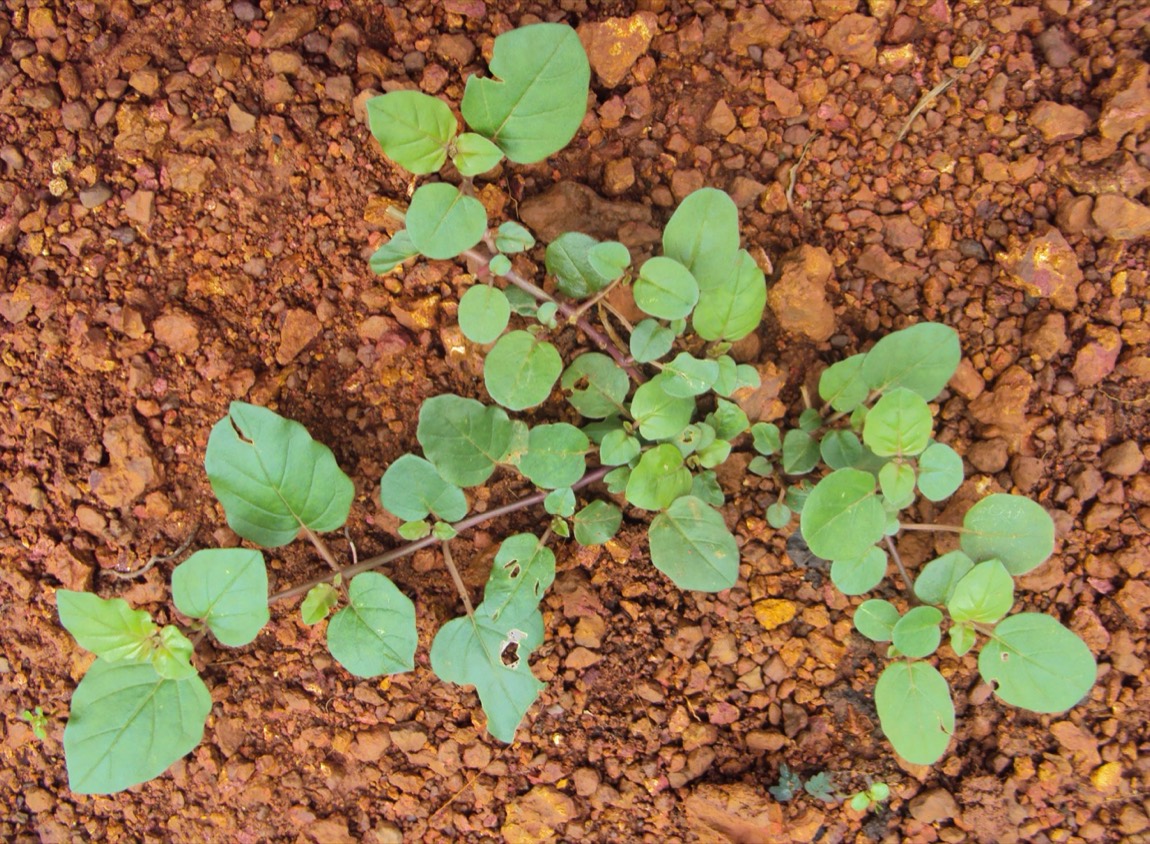

Punarnava is a spreading herb whose name means born new again. Ayurveda values it for clearing the body of excess fluid and for supporting the urinary system.
- Botanical name
- Boerhavia diffusa
- Family
- Nyctaginaceae
- Sanskrit
- पुनर्नवा
- Part used
- Root, and the whole plant
- Taste (rasa)
- Sweet, bitter and astringent (madhura, tikta, kashaya)
- Quality (guna)
- Light and dry (laghu, ruksha)
- Energy (virya)
- Warming (ushna)
- After digestion (vipaka)
- Pungent (katu)
- Action (karma)
- Clears swelling and excess fluid, promotes urine (shothahara, mutrala)
- Best known for
- Helping the body clear excess fluid and supporting the urinary system
What it is
Punarnava is a low, spreading herb, Boerhavia diffusa, that creeps along the ground in waste places and gardens across India. It has thick fleshy roots, small pink or white flowers, and leaves pale on the underside. The root is the main part used, though the whole plant is taken.
Its name is the most memorable thing about it. Punar means again and nava means new, so Punarnava is the herb that is “made new again.” The classical commentators chose the name from the plant’s habit: it appears to wither away in the dry season, then springs back vigorously with the first rains. They read this self-renewal as a sign of the herb’s character in the body.
What Ayurveda uses it for
Punarnava has one reputation above the rest. Charaka places it at the head of the shothahara group, the herbs that clear shotha, swelling and the holding of excess fluid. In the classical texts it is the first herb named when the body is waterlogged, and the root decoction is the standard way of giving it.
Closely tied to this is its work on the urinary system. Punarnava is mutrala, which means it encourages a healthy flow of urine. What the tradition found unusual, and valuable, is that it does this while also nourishing and supporting the kidneys rather than simply draining the body. A herb that both moves fluid out and feeds the tissue is uncommon, and this pairing is much of why Punarnava is so often named.
The same texts also count it a rasayana, a herb of renewal and lasting vitality, which once more echoes its name. Charaka classes it not only among the swelling-clearing herbs but also among those that ease cough and those that support the cleansing therapy of Basti, a breadth that shows how widely it was trusted.
Its qualities, in plain words
Ayurveda describes each herb by a short list of qualities, and Punarnava’s explain its action well.
It is light and dry, which is exactly what counters the heavy, watery quality of held fluid, the quality the tradition calls Kapha. Its potency is warming, which helps move and disperse what has become stagnant and cold. And its tastes run from sweet through bitter to astringent, the sweet lending a nourishing, renewing note while the bitter and astringent do the clearing.
Because of this balance the classical writers call it tridoshahara, able to settle all three doshas, though it acts most strongly on the heavy quality of Kapha and on heat through its bitterness.
How it is taken
The classic preparation is the root decoction, Punarnavadi Kwatha, a simmered water extract of the root used for swelling and for the urinary system. The root is also taken as a fine powder, churnam, in small amounts with warm water or honey, and the fresh juice is used where it can be had.
Punarnava lends its name to several compound preparations as well, including a guggulu-based formulation for the joints and an iron-bearing compound used where both fluid retention and weakness of the blood are seen. In all of these its job is the same: to clear what is held and to renew.
Good to know
Punarnava is taken as a course, and it is best suited to states of heaviness, holding and excess fluid rather than to dryness. The root is considered the most potent part. The tradition recognises a white-flowered and a red-flowered variety, and the texts sometimes distinguish their uses.
This entry describes the classical Ayurvedic understanding of the herb. It is not medical advice, and anyone with a health condition should speak to a qualified practitioner.
Frequently asked
Why is it called Punarnava? Because the name means “new again.” The plant seems to die back in the dry season and then revives with the rains, and the classical writers took this as a sign of its renewing quality in the body.
Which part is used? Chiefly the root, which is held to be the most potent part, though the whole plant is also taken.
What is Punarnava best known for? Clearing swelling and excess fluid, and supporting the urinary system. It is the foremost herb of the swelling-clearing group in the classical texts.
Punarnava clears swelling and moves the water of the body; it is the foremost herb for shotha.
After the Charaka Samhita, on herbs that clear swelling
Frequently asked questions
What is Punarnava used for?
Punarnava (Boerhavia diffusa) is a creeping herb whose name means renewed again, used in Ayurveda mainly to clear excess fluid and support the kidneys and urine. The texts describe its action as shothahara and mutrala, meaning it clears swelling and promotes the flow of urine, with a sweet, bitter and astringent taste. It is the tradition's foremost herb for fluid balance.
Does Punarnava reduce water retention?
Ayurveda values Punarnava for exactly this pattern: classed as shothahara and mutrala, it is traditionally used to help the body clear excess fluid and reduce swelling by promoting urine. Its very name, renewed again, reflects this rejuvenating, fluid-clearing reputation. This is a classical use rather than a promise, and persistent swelling should be checked with your doctor.
Is Punarnava good for the kidneys?
Punarnava is traditionally associated with supporting the urinary system and helping the body clear excess fluid, which is why Ayurveda links it with the kidneys and urine. Its mutrala action gently promotes urine flow. This reflects its classical reputation rather than a claim to treat any named kidney disease, so kidney concerns belong with a doctor's care.
How do you take Punarnava?
The root and whole plant are used, taken as a fresh juice, a decoction or a dried powder, and Punarnava also appears in many classical formulations for fluid and the urinary passage. A common form is the powder or decoction taken with a suitable anupana. Because dose varies with the person, confirm it with a qualified practitioner.
Which dosha does Punarnava balance?
Punarnava is chiefly used to reduce Kapha-related swelling and fluid, while its bitter component also settles Pitta and it is generally regarded as tridoshic in a balancing sense. Its clearing, fluid-moving action suits heavy, watery, Kapha-type accumulation in particular. Its balanced taste is part of why the tradition uses it so widely.
References
- Charaka Samhita, Sutrasthana, listing Punarnava among the shothahara (anti-swelling) group.
- Sushruta Samhita, on Punarnava within the Vidarigandhadi group.
- Bhavaprakasha Nighantu, Guduchyadi Varga, on the white and red varieties of Punarnava.