Materia Medica · Dravyaguna
Vidari
Pueraria tuberosa · Fabaceae (Leguminosae)
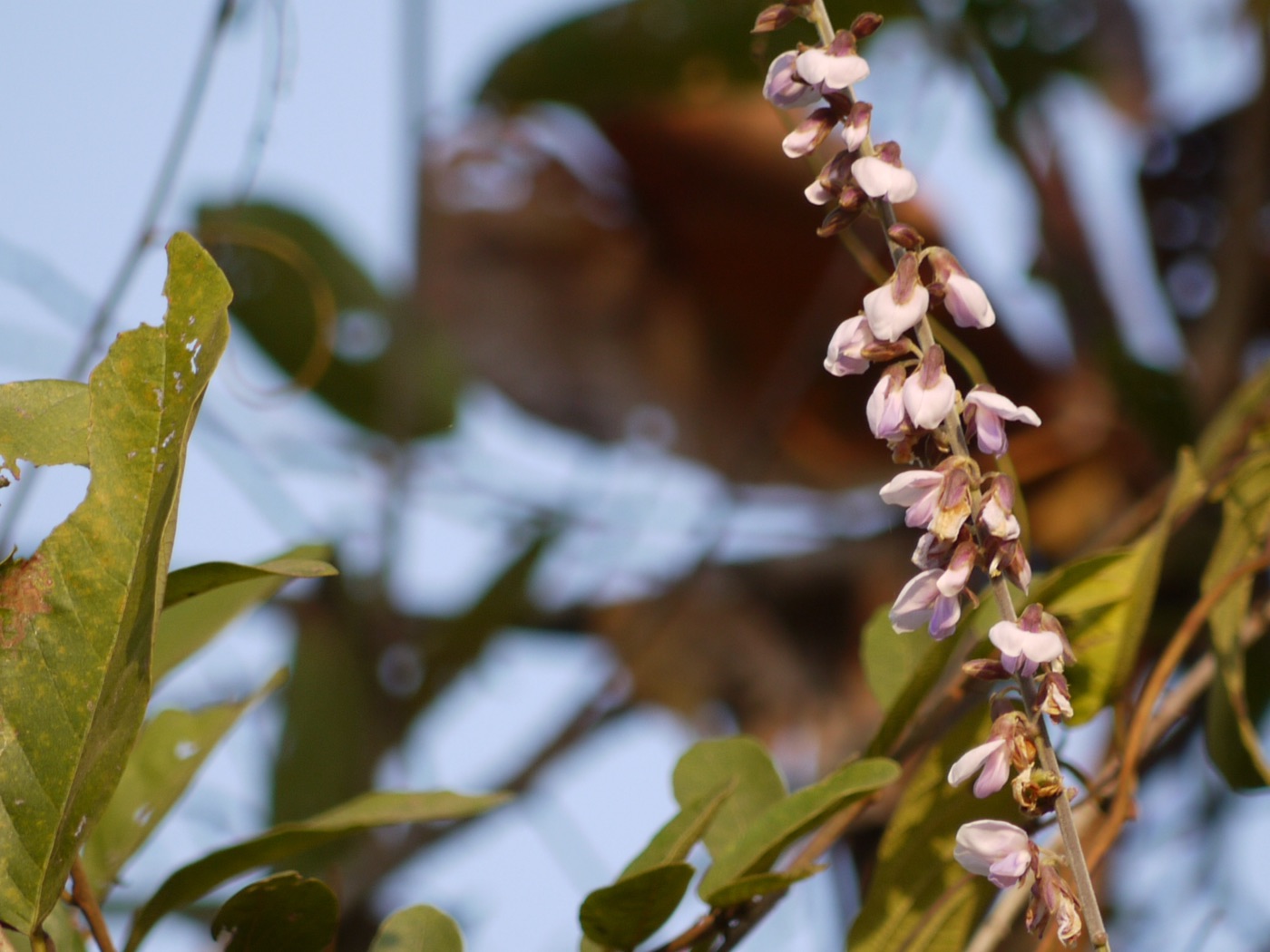
_DC._(6926236863).jpg)
Vidari is one of the classical sweet, cooling tubers of Ayurveda, prized as a balya (strengthening) and rasayana (rejuvenating) plant. Its heavy, unctuous, sweet character has long made it a companion herb in tonic preparations and a traditional support during convalescence.
- Botanical name
- Pueraria tuberosa
- Family
- Fabaceae (Leguminosae)
- Sanskrit
- विदारी
- Part used
- Tuberous root (Kanda / mula)
- Taste (rasa)
- Sweet (Madhura)
- Quality (guna)
- Heavy, unctuous (Guru, Snigdha)
- Energy (virya)
- Cooling (Sheeta)
- After digestion (vipaka)
- Sweet (Madhura)
- Action (karma)
- Strengthening and nourishing (Balya, Brimhana, Rasayana)
- Best known for
- A sweet, cooling, nourishing tuber used as a classical strengthening tonic
What is Vidari?
Vidari is the large tuberous root of a climbing legume of the Fabaceae family, the same broad plant family as peas and beans. In Sanskrit the plant is called Vidari, and its swollen underground tuber, the part used in Ayurveda, is often named Vidarikanda, where kanda simply means a bulb or tuber. It goes by several other traditional names too, including Bhumikushmanda, Swadukanda, Ikshugandha and Vrishyakanda, and in English it is sometimes called Indian Kudzu.
The tuber is the star of the plant. It grows fat and starchy beneath the soil, storing up the plant’s reserves in much the way a root vegetable does. That heavy, sweet, water-rich character is exactly what Ayurveda draws on. Vidari is grouped with the sweet, cooling tubers that the classical texts turn to when the aim is to nourish and build up the body rather than to lighten or dry it.
One practical note belongs here at the start. The name Vidari is applied by different authorities to more than one plant. This entry follows the identification as Pueraria tuberosa, but in some markets and older texts the same name is used for Ipomoea digitata (also written Ipomoea mauritiana), sometimes distinguished as Ksheera-vidari, the milky-latex kind. Because of this, the botanical identity of any material sold as Vidari is best confirmed at the point of sourcing.
What Ayurveda uses it for
In classical dravyaguna, the study of medicinal substances, Vidari sits among the nourishing and strengthening herbs. It is described as balya (strengthening), brimhana (nourishing and bulk-promoting), vrishya (traditionally supporting vigour and vitality), rasayana (rejuvenating), stanya (traditionally supporting healthy lactation) and mutrala (supporting the urinary channel).
Its traditional role follows naturally from those qualities. Vidari is one of the classical sweet, cooling tubers valued as a balya and rasayana dravya. It is traditionally used to support strength, healthy body tissue, or dhatu, and general vitality, and to help maintain nourishment during periods of convalescence. Taken with milk, it is a traditional support for healthy lactation in nursing mothers. Its gentle sweet and cooling nature also makes it a familiar companion herb in tonic and rejuvenating recipes, where it lends body and softness to a formula.
The classical literature records Vidari across several of the foundational texts. Charaka groups it among the ten-herb clusters, the mahakashayas, that nourish, strengthen and support healthy tissue. Sushruta includes it in the Vidarigandhadi gana and among the Vallipanchamula, the five climbing roots. The later nighantus, including the Bhavaprakasha, Dhanvantari and Raja Nighantu, list it with its synonyms and its sweet, cooling, nourishing profile.
Its qualities, in plain words
Ayurveda describes every substance through a small set of properties, and Vidari’s are easy to picture.
Its rasa, or taste, is madhura, sweet. Sweetness in Ayurveda is the taste of nourishment and building up, the quality you associate with foods that add substance rather than strip it away.
Its guna, or qualities, are guru (heavy) and snigdha (unctuous). Heavy means it is grounding and substantial, like a hearty meal that settles and stays with you. Unctuous means it carries a natural moist, oily softness, the opposite of dry and rough.
Its virya, or energy, is sheeta, cooling. Rather than warming the system, it has a calming, settling effect.
Its vipaka, the taste that remains after digestion, is again madhura, sweet, so its nourishing quality continues through the whole digestive process rather than fading.
Put together, this is the picture of a rich, moistening, grounding herb. Traditionally it is regarded as calming to Vata and Pitta, the two doshas that a sweet, cooling, unctuous substance tends to settle. The same heavy, oily sweetness means it is described as potentially increasing Kapha, so the classical texts consider it less suited where Kapha is already high.
How it is taken
The most common classical form is a churna, a fine powder of the dried tuber, and it is very often taken with warm milk. Milk suits it well, since both share that sweet, nourishing, building character, and the pairing is the traditional way to support healthy lactation.
Beyond the simple powder, Vidari appears as an ingredient in a range of classical preparations. It is used in medicated ghee (ghrita) and medicated oil (taila), in decoctions (kashayam) and in fermented preparations such as asava and arishta. In some classical contexts the fresh sweet juice, or swarasa, of the tuber is described as well.
Its name turns up in several well-known formulations. Vidaryadi ghrita and Vidaryadi kashayam (also called Vidaryadi kwatha) take their names directly from it, as does Vidaryadi asava (Vidaryadyasava). It is also a component of Amritaprasha ghrita and Ashwagandharishta, tonic preparations in which its sweet, cooling, nourishing quality complements the other herbs.
Good to know
Vidari is traditionally treated as a nourishing, building herb rather than a light or cleansing one, and it is usually taken as part of a considered course rather than a one-off. Because it is heavy (guru), unctuous (snigdha) and sweet, the classical view is that it is less suitable where Kapha or ama, the term for undigested residue, is high, or where the digestive fire, agni, is weak. Confirming botanical identity at sourcing matters here too, since more than one plant is sold under the name Vidari.
This entry is educational and gives no dosage. A precise classical dosage in specific weights could not be reliably confirmed, so it is deliberately left out, and suitable amounts should be judged by a qualified practitioner. This entry describes the classical Ayurvedic understanding of the herb. It is not medical advice, and anyone with a health condition should speak to a qualified practitioner.
Frequently asked
Is Vidari the same as kudzu? It is a close relative. Vidari (Pueraria tuberosa) belongs to the same plant genus as the kudzu vines, which is why English sometimes calls it Indian Kudzu, but in Ayurveda it is the large starchy tuber, not the leaf or flower, that is used.
Why is it so often taken with milk? Milk shares Vidari’s sweet, cooling and nourishing character, so the two are seen as a natural pairing. Warm milk is the classical vehicle for the powder, and it is the traditional way the herb is taken to support healthy lactation.
Why might it not suit everyone? Vidari is heavy, unctuous and sweet. Those same qualities that make it nourishing can be too much where Kapha is already high, or where digestion, or agni, is weak, so the classical texts describe it as better suited to conditions that call for building up rather than lightening.
A sweet, cooling and nourishing tuber, regarded as strengthening and supportive of vigour and vitality.
After the Bhavaprakasha Nighantu, Guduchyadi varga
Listed among the ten-herb groups that nourish, strengthen and support healthy body tissue.
After the Charaka Samhita, Sutrasthana
Frequently asked questions
What is Vidari used for in Ayurveda?
Vidari is a large sweet tuber (Pueraria tuberosa), traditionally valued as a nourishing and strengthening herb often taken with milk. Its sweet taste (madhura) and cooling nature make it a classical Balya, Brimhana and Rasayana, so the texts reach for it to strengthen, nourish and restore the body and its tissues.
What are the benefits of Vidari?
Ayurveda prizes Vidari as a sweet, cooling, nourishing tuber used as a strengthening tonic. It is classed as Balya and Brimhana for building strength and tissue and as a Rasayana for restoration, and it is especially associated with nourishing the body's finer tissues. It is offered as traditional strengthening support rather than a treatment for any illness.
How is Vidari taken?
Vidari is traditionally taken as a powder, often with warm milk, which suits its sweet, nourishing, Rasayana nature and helps carry it into the tissues. It also appears in many classical strengthening formulas. Amounts are modest, and a qualified Ayurvedic practitioner can advise the right dose for your constitution.
Which dosha is Vidari good for?
Being sweet, cooling and nourishing, Vidari settles Vata and Pitta and is well suited to those who are depleted, dry or run down. Because it is heavy and building, it may increase Kapha, so those with high Kapha or sluggish digestion should take it in modest amounts and with warming anupana.
Is Vidari a Rasayana?
Yes, Vidari is classed as a Rasayana as well as Balya and Brimhana, meaning the tradition values it as a rejuvenating, strengthening and nourishing herb. This is why it is used as a classical strengthening tonic, especially with milk. As a Rasayana, it is offered as traditional support for vitality rather than as a cure.
References
- Charaka Samhita, Sutrasthana ch. 4 (Shadvirechanashatashritiya), among the Brimhaniya, Balya and Snehopaga mahakashayas
- Sushruta Samhita, Sutrasthana ch. 38 (Dravyasangrahaniya), Vidarigandhadi gana and Vallipanchamula group
- Bhavaprakasha Nighantu, Guduchyadi varga
- Dhanvantari Nighantu, Guduchyadi varga
- Raja Nighantu, Moolakadi varga