Materia Medica · Dravyaguna
Gudmar
Gymnema sylvestre · Apocynaceae (formerly Asclepiadaceae)
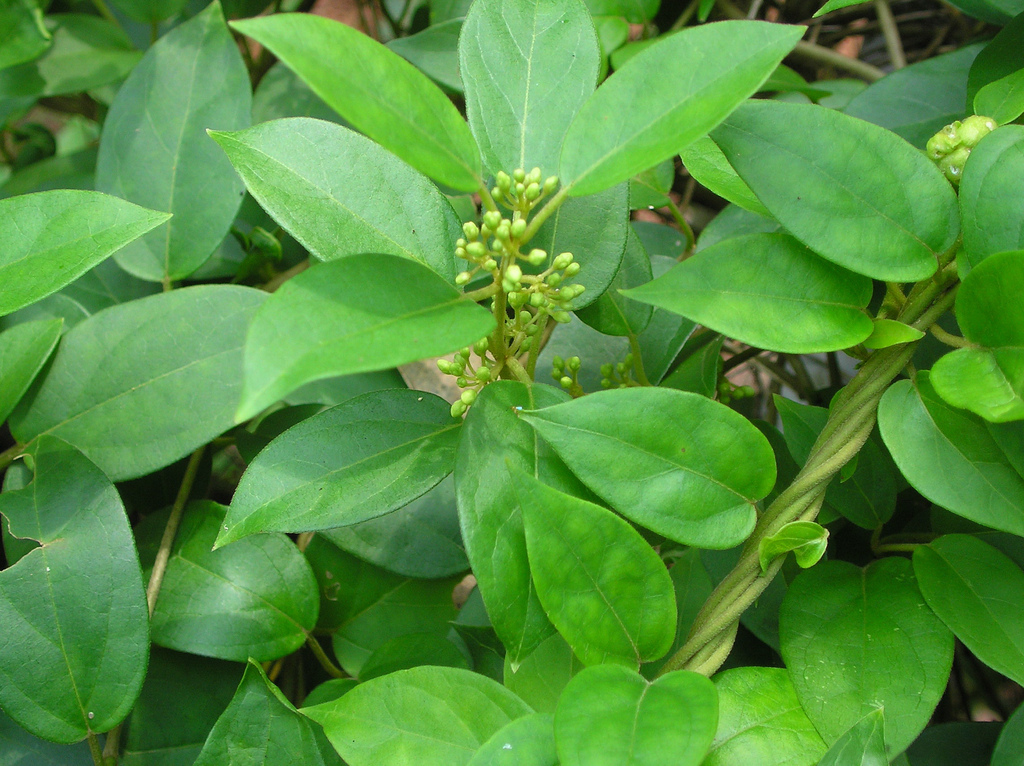

Gudmar is a woody vine long noted in Ayurveda for a single striking property, that chewing its fresh leaf briefly takes away the tongue's ability to taste sweetness. In the classical texts the plant sits among the bitter and astringent herbs linked to the body's handling of heaviness and sweet taste.
- Botanical name
- Gymnema sylvestre
- Family
- Apocynaceae (formerly Asclepiadaceae)
- Sanskrit
- मेषशृङ्गी
- Part used
- Leaf (primary); root in some classical preparations
- Taste (rasa)
- Bitter, astringent (tikta, kashaya)
- Quality (guna)
- Light, dry (laghu, ruksha)
- Energy (virya)
- Warming (ushna)
- After digestion (vipaka)
- Pungent (katu)
- Action (karma)
- Traditionally grouped with herbs that reduce heaviness and support digestive fire (medohara, deepana, pachana)
- Best known for
- the leaf that dulls the taste of sweetness
What is Gudmar?
Gudmar is a slender, woody climbing plant native to the forests of India and neighbouring regions. In botany it is known as Gymnema sylvestre, and it belongs to the family Apocynaceae. Older Ayurvedic and botanical works place it in the Asclepiadaceae, the milkweed family, which has since been merged into Apocynaceae, so both names appear across the literature and refer to the same plant.
The part most used is the leaf. The root also enters a few classical preparations, though the leaf is the primary and undisputed part.
The plant carries a cluster of vivid names. In Sanskrit it is Meshashringi, which points to the shape of its curved seed pods, likened to a ram’s horn, and this is echoed in the English “Ram’s horn plant”. Its second and most telling Sanskrit name is Madhunashini, “the destroyer of sweetness”. The common Hindi name Gudmar carries the same sense, from words meaning sugar and to destroy. All of these names circle back to one observation the tradition made long ago, described in the next section.
What Ayurveda uses it for
Gudmar is best known in the classical tradition through its name Madhunashini, the destroyer of sweetness. This comes from a long-observed effect, that chewing the fresh leaf temporarily dulls the tongue’s perception of sweet taste. For a short while after, sugar and honey seem to lose their sweetness. This simple demonstration is the thread that runs through the plant’s whole classical identity.
In Ayurveda the leaf is grouped among the Tikta (bitter) and Kashaya (astringent) plants. These are traditionally associated with the Prameha and Medas categories, the classical groupings concerned with the body’s handling of sweet taste and with heaviness. The plant appears in the Guduchyadi group of the nighantus, the classical dictionaries of medicinal plants, and it was also recorded in the classical toxicology literature.
Within the traditional framework the leaf is described as Medohara, meaning it is placed with herbs said to reduce excess Kapha and bodily heaviness, and as Pramehahara, relating to that same metabolic and urinary group. It is further noted as Deepana and Pachana, terms for supporting the digestive fire. These are descriptions of classical categories and neutral educational points, not statements of medical effect.
Its qualities, in plain words
Ayurveda describes each plant through a short set of qualities, and for Gudmar these line up neatly with what the tongue reports.
Its rasa, or taste, is Tikta and Kashaya, bitter and astringent. Bitter is the clean, sharp taste of dark greens; astringent is the dry, puckering sensation of strong tea or an unripe fruit. Together they are the opposite of the soft, coating quality of sweetness, which fits a plant whose fame is turning sweetness off.
Its guna, or nature, is Laghu and Ruksha, light and dry. Think of something that leaves no heavy or oily feeling behind, more like a dry leaf than a rich broth.
Its virya, the energy it carries, is Ushna, warming. In classical terms this is the quality that gently stokes rather than cools.
Its vipaka, the taste it settles into after digestion, is Katu, pungent, keeping the same dry and warming direction rather than turning sweet.
Taken together, this bitter, astringent, light, dry and warming profile is the classical basis for the plant being understood as Kapha and Vata reducing, that is, tending to lighten heaviness and dryness in the body’s traditional model. A small number of sources give a different, cooling reading, but this runs against the well-attested consensus above, so it is noted only in passing.
How it is taken
In the classical tradition the dried leaf is most often used as a powder, or churna. The leaf also enters decoctions, the kashaya or kwatha, in which plant material is simmered in water and the strained liquid taken.
The oldest and simplest use is direct: chewing the fresh leaf, which is the classical demonstration of its sweet-suppressing property and the source of its name. In the modern world, standardised leaf extracts are common in supplement products.
The researched sources for this entry do not attach Gudmar to any single titled classical multi-herb formulation as a named ingredient, so none is listed here. Where a specific preparation matters, that is a matter for a qualified practitioner rather than a general guide.
Good to know
The tradition tends to favour steady, measured use of bitter and astringent herbs rather than large one-off amounts, and the sweet-dulling effect of the fresh leaf is by nature brief and passes on its own.
Because the leaf is traditionally associated with the body’s handling of sweet taste and sugar, anyone taking medication that affects blood sugar, and anyone who is pregnant, breastfeeding or managing a health condition, should speak to a qualified practitioner before using it.
This entry describes the classical Ayurvedic understanding of the herb. It is not medical advice, and anyone with a health condition should speak to a qualified practitioner.
Frequently asked
Why is it called the destroyer of sweetness? The Sanskrit name Madhunashini and the Hindi name Gudmar both mean, in effect, “sugar destroyer”. They come from the plant’s long-observed property that chewing the fresh leaf briefly takes away the tongue’s ability to taste sweetness, so that sugar afterwards seems to have no flavour.
Which part of the plant is used? The leaf is the main part, used as a powder or in decoctions, or chewed fresh. The root appears in a few classical preparations as well, but the leaf is the primary and best-attested part.
What does Ayurveda say its qualities are? Classical texts describe it as bitter and astringent in taste, light and dry in nature, warming in energy and pungent after digestion. On this basis the tradition understands it as reducing Kapha and Vata, that is, lightening heaviness and calming in the classical sense.
Meshashringi, also called Madhunashini, is listed among the Guduchyadi group of herbs, bitter and astringent in taste, light and dry, warming in effect and pungent after digestion.
After the Bhavaprakasha Nighantu, Guduchyadi Varga
The plant is counted among the Guduchyadi herbs and described by its bitter and astringent character.
After the Dhanvantari Nighantu, Guduchyadi Varga
Frequently asked questions
What is Gudmar used for?
Gudmar, Gymnema sylvestre, is the herb whose leaf is traditionally chewed to blunt the perception of sweet taste, earning it the name that means destroyer of sweetness. Ayurveda groups it with herbs that reduce heaviness and support digestion (medohara, deepana, pachana). It is a bitter, astringent leaf long linked with sugar cravings and Kapha.
Why does Gudmar stop you tasting sweetness?
Chewing a fresh Gudmar leaf temporarily dulls the tongue's ability to register sweet taste, so sugar afterwards seems flat and less tempting. This striking effect gave the herb its Sanskrit names Meshashringi and Madhunashini, the destroyer of sweetness. The tradition draws on this quality within its wider grouping among the medohara, heaviness reducing, herbs.
How do you take Gudmar?
Gudmar is used as the fresh or dried leaf, chewed, or as a powder or decoction, its intensely bitter taste being part of its character. It is usually taken as a course rather than casually. Because it is linked with blood sugar and metabolism, anyone managing those should use it only with a practitioner and their doctor.
Is Gudmar safe for people managing blood sugar?
Gudmar is closely associated with metabolism and sweetness in Ayurveda, so anyone managing blood sugar or taking related medicines should use it only under medical supervision, since combined effects need watching. It is a traditional metabolic herb, not a substitute for prescribed treatment. Speak with your doctor and a qualified Ayurvedic practitioner before starting it.
Which dosha does Gudmar reduce?
Gudmar chiefly reduces Kapha, and with it the heaviness (medas) the tradition links to Kapha's qualities. Its bitter and astringent taste (tikta, kashaya) is drying and lightening, classed among the medohara herbs. Being cooling and drying, it suits Kapha states more than dry, depleted Vata ones. A practitioner matches it to your constitution.
References
- Bhavaprakasha Nighantu, Guduchyadi Varga
- Dhanvantari Nighantu, Guduchyadi Varga
- Kaiyadeva Nighantu, Oushadhi Varga
- Raja Nighantu, Prabhadradi Varga
- Kashyapa Samhita (Meshashringi cited in a classical toxicology paste)