Materia Medica · Dravyaguna
Kasamarda (Coffee Senna)
Senna occidentalis · Fabaceae
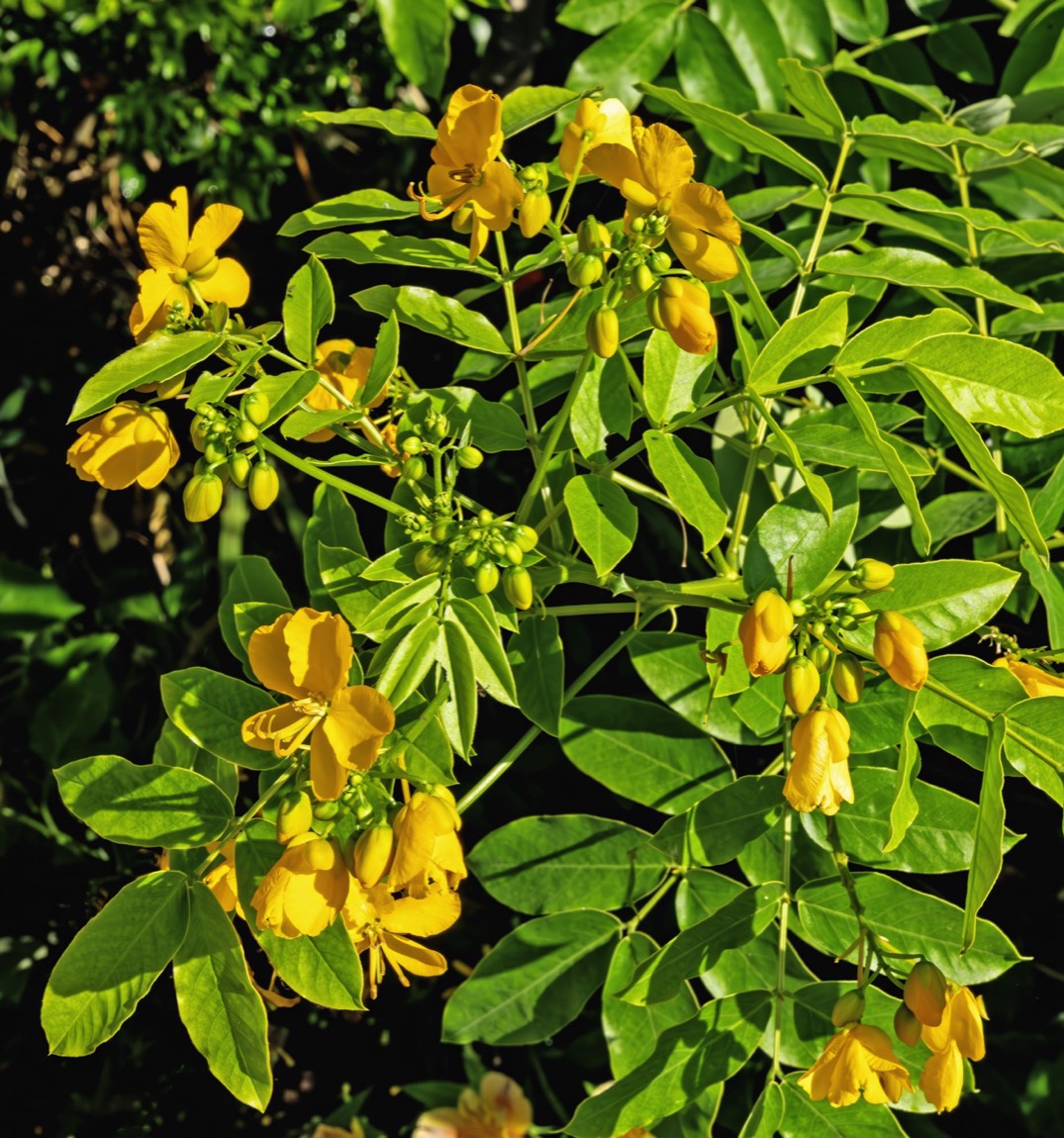
_Senna_occidentalis_-_Habit_-_Les_Martels%2C_Giroussens_Tarn.jpg)
Kasamarda is a bitter, pungent herb of the legume family whose Sanskrit name means the destroyer of cough. Ayurveda reaches for its leaf, root and seed to settle a troubled chest, and the tradition links it too with the breath, the skin and the liver in the classical sense.
- Botanical name
- Senna occidentalis
- Family
- Fabaceae
- Sanskrit
- कासमर्द
- Part used
- Leaf, root and seed
- Taste (rasa)
- Pungent and bitter (katu, tikta)
- Quality (guna)
- Light and dry (laghu, ruksha)
- Energy (virya)
- Warming (ushna)
- After digestion (vipaka)
- Pungent (katu)
- Action (karma)
- Settles cough, clears Kapha (kasahara, kaphaghna)
- Effect on dosha
- Pacifies Kapha and Vata
- Best known for
- The classical herb whose very name marks it as the destroyer of cough
What is Kasamarda?
Kasamarda is a herb of the legume family, Senna occidentalis, long known in the older botanical literature by its synonym Cassia occidentalis. It is a fast-growing annual, sometimes short-lived and half-woody at the base, that springs up along roadsides, field margins and waste ground across India and much of the warm world. It carries divided, feathery leaves of several paired leaflets, bright yellow flowers, and slender curved pods that hold a row of hard, flattened seeds. The whole plant has a rank, slightly unpleasant smell when the leaves are bruised, a plain clue to the bitterness the tradition works with.
The Sanskrit name is the heart of the matter. Kasamarda is built from Kasa, meaning cough, and marda, meaning one that crushes or destroys, so the word means something close to “the destroyer of Kasa.” It is one of those Ayurvedic names that carries its own teaching, for a herb called the destroyer of cough is named for the very work the tradition set it to do. That single word marks its foremost classical use more plainly than any list could. The plant answers to other Sanskrit names too, among them Kasari, “the enemy of cough,” and Arimarda, both of which circle back to the same idea from a slightly different angle.
In common speech the plant is widely called Kasondi across the Indian subcontinent. In English it goes by coffee senna and Negro coffee, names that point to a curious secondary use: the roasted seed has long been ground and brewed as a substitute for coffee. That use is noted here only as a point of plain fact, and it comes with its own caution, since the tradition treats the seed with care and uses it in modest measure. The parts Ayurveda draws on are three, the leaf, the root and the seed, each with its own place in the classical preparations.
What Ayurveda uses it for
Above all else, Kasamarda is the herb of Kasa, of cough, and its name settles the matter. In Ayurvedic terms much of its work bears on Kapha, the principle of structure, moisture and heaviness. When Kapha gathers and thickens in the chest and the breathing passages, the classical texts describe a sense of congestion, load and obstruction, and a chest that will not clear. Being pungent, bitter, warming and drying by nature, Kasamarda is the herb the tradition reaches for to lighten that burden and to quiet the cough that goes with it. It is counted a kasahara herb, one that settles cough, and this is the action its very name records.
Within that role the dravyaguna texts describe the plant, chiefly its leaf but also its root and seed, as traditionally indicated across a familiar set of conditions, each named here in its classical Sanskrit term with a plain gloss:
- Kasa: cough, the seat of its reputation and the work its name marks, the herb’s foremost and defining use.
- Shwasa: laboured or difficult breathing, where its warm, drying and Kapha-clearing nature is called upon alongside its action on cough.
- Kushtha: the broad classical category of skin disorders, for which its bitter, cleansing quality is described, an action the tradition calls kushthaghna.
- Krimi: the classical category of worms and small organisms of the gut, for which the herb is counted krimighna, worm-dispelling.
- Yakrit-roga: disorders of the yakrit, the liver in the classical sense, a seat the tradition links with this bitter herb.
- Jwara: fever, where its warming, bitter nature is set to work in the classical manner.
- Vrana: wounds, where the leaf is described in external application for cleansing and settling.
These are the traditional textual indications recorded in the classical literature. They set out how Ayurveda has long understood the plant and are given for reference and study, not as statements of medical effect or as advice to treat any condition. Anyone with a health matter should speak to a qualified practitioner rather than act on a classical list.
Read together, the indications trace a consistent character. The chest and the breath sit at the centre, exactly where the name points. Around them gather the uses that follow from a bitter, drying, warming herb: the skin, which the tradition cleanses with bitterness; the gut and its worms, dispelled by a pungent and warming action; the yakrit in its classical sense, a seat the older texts associate with bitter plants; and fever and wounds, both long treated in the same idiom. Kasamarda is not a nourishing or building herb. It belongs firmly to the clearing side of Ayurveda, and every one of its classical uses turns on that clearing, drying nature.
Its qualities, in plain words
Ayurveda describes each herb by a short list of qualities, and for Kasamarda they fit its work almost like a key to a lock.
Its taste is pungent, with a strong bitter note (katu, tikta), and both of these are the tastes of clearing rather than of nourishment. Pungency in Ayurveda scatters and moves; bitterness dries and cleanses. Together they describe a herb that opens and clears rather than one that feeds or grounds. Its quality is light and dry (laghu, ruksha), which stands directly opposite to the heavy, moist, sticky nature of Kapha, so the herb helps thin and shift what Kapha has thickened in the chest. Its potency is warming (ushna), a warmth the tradition sees as breaking up cold, damp congestion and stirring a sluggish digestion. And after digestion it finishes pungent (katu vipaka), a sign that it goes on clearing and drying rather than turning sweet and building at the end.
Put these together and the picture is plain: a pungent, bitter, light, dry and warming herb, the very opposite in every quality of the heavy, cold, moist state that gathers as cough and congestion. That is why the tradition sets it so firmly against Kapha. Because its lightness, warmth and mobility also move a stuck, cold quality, the texts describe it as settling Vata as well, so it is understood to pacify both Kapha and Vata. Its warmth and dryness mean it is not the herb for a constitution already running hot and dry, and the classical writers fit it to the person and the season accordingly.
How it is taken
Kasamarda is prepared in several classical ways, and the part chosen depends on the use. The most common is the leaf. Fresh, its expressed juice, swarasa, is taken in small measure, often with honey, which the tradition pairs with pungent and bitter herbs to soothe the throat and carry the herb into the chest. The dried leaf is boiled into a decoction, kashayam, and taken warm, and it is ground into a powder, churna, for internal use. For skin complaints and wounds the leaf is also applied outwardly as a paste, in the lepa fashion the texts describe, so that its bitter, cleansing quality works at the surface.
The root has its own place, chiefly in decoctions where a stronger, more warming action is wanted, and it appears in the classical mixtures aimed at fever, worms and the yakrit in its classical sense. The seed is used more sparingly and with greater care. It is the seed that, roasted and ground, has been brewed as a coffee substitute, which is how the plant earned its English names of coffee senna and Negro coffee. When the seed is taken as part of a preparation the tradition uses it in modest amount and with attention, not freely, and this restraint is itself part of the classical instruction. Honey, warm water and other simple vehicles are the usual companions, chosen to suit the pungent, bitter, warming nature of the herb.
Good to know
Kasamarda is one of the clearing, drying herbs, matched by the tradition to the heavy, cold, congested state it is made for rather than to a state of dryness or heat. Because it is pungent, bitter, light and dry by nature, it is used with more thought where dryness or heat already runs high, and it belongs to the clearing rather than the nourishing side of Ayurveda. Of its three parts the seed is the one to note: it is used with care and in modest measure, a point the classical writers observe and one worth keeping in mind precisely because the same seed has elsewhere been roasted into a common drink. The leaf and the root carry most of the herb’s classical work, and the seed is the part the tradition treats most cautiously. Like all classical herbs, Kasamarda is fitted to the person, their constitution and the season, and is used within a considered preparation rather than on its own.
This entry describes the classical Ayurvedic understanding of the herb. It is not medical advice, and anyone with a health condition should speak to a qualified practitioner.
Frequently asked
What does the name Kasamarda mean? It is built from two Sanskrit words, Kasa, meaning cough, and marda, meaning one that crushes or destroys, so the name means “the destroyer of cough.” It is one of those Ayurvedic names that carries its own teaching, because the herb is named for the very work the tradition set it to do, settling a troubled chest. The related names Kasari and Arimarda, both meaning something like “the enemy of cough,” make the same point.
Which parts of the plant are used? Three: the leaf, the root and the seed. The leaf is the principal part, used fresh for its juice, dried for decoctions and powders, and applied outwardly as a paste. The root is used chiefly in decoctions for a stronger action, and the seed is used more sparingly and with care.
Is Kasamarda the same as Senna occidentalis and Cassia occidentalis? Yes. Senna occidentalis is the accepted botanical name, and Cassia occidentalis is an older synonym for the same plant that is still widely seen. Both refer to the herb Ayurveda knows as Kasamarda and common speech calls Kasondi.
Why is the seed treated with more care than the leaf? Because the tradition uses the seed sparingly and in modest amount, unlike the leaf, which carries most of the herb’s ordinary work. This is worth noting because the roasted seed has elsewhere been ground and brewed as a coffee substitute, which is where the English names coffee senna and Negro coffee come from. The classical writers treat the seed with attention and restraint, and that caution is part of the instruction.
Kasamarda is the destroyer of Kasa; pungent and bitter, warming and drying, it clears the chest and quiets the breath.
After the Bhavaprakasha Nighantu, on the herbs that settle cough
The name itself is the medicine's teaching, for a herb called the destroyer of cough is named for the very work it does.
Classical tradition, on the naming of the plant
Frequently asked questions
What is Kasamarda used for?
Kasamarda, the bitter, pungent legume Senna occidentalis, is the classical Ayurvedic herb for cough, the breath and the liver. Its very name means the destroyer of Kasa, or cough. The texts class its action as kasahara and kaphaghna, settling cough and clearing Kapha, and it pacifies Kapha and Vata. It is used traditionally under a practitioner's guidance.
Why is Kasamarda called the destroyer of cough?
The name Kasamarda joins Kasa, meaning cough, with marda, meaning destroyer or crusher, so the name itself marks it as the herb for cough. This reflects its classical role: bitter and pungent, it settles cough and clears the Kapha behind chest congestion, its action classed as kasahara and kaphaghna. The name is a direct clue to its traditional use.
Is Kasamarda and coffee senna the same plant?
Yes. Kasamarda is the Sanskrit name for Senna occidentalis, also written Cassia occidentalis, the legume known in English as coffee senna and in some regions as Kasondi. Ayurveda classes it as a bitter, pungent herb that settles cough and Kapha. The English name comes from the coffee-like seeds, but its Ayurvedic value is for the breath and cough.
Which dosha does Kasamarda pacify?
Kasamarda pacifies Kapha and Vata. Its bitter and pungent rasa, together with its kaphaghna action, clears the heavy, damp Kapha behind chest congestion, while it also settles the Vata that unsettles the breath and cough. This Kapha-Vata direction is why the texts place it firmly among the herbs for Kasa and the chest.
How is Kasamarda used for cough?
In the classical tradition Kasamarda is used for cough as a decoction or juice of the plant, or built into formulas directed at the chest, drawing on its kasahara, cough-settling, and kaphaghna, Kapha-clearing, action. The right form and dose depend on the person, so it should be used under a qualified practitioner, and a doctor seen for a persistent cough.
References
- Bhavaprakasha Nighantu, entry on Kasamarda among the herbs that settle cough (the Kasahara group).
- Charaka Samhita, Sutrasthana, on the substances that ease the breath and quiet the chest.
- Sushruta Samhita, among the Kapha-clearing and worm-dispelling (Krimighna) substances.
- Raja Nighantu, listing the Sanskrit synonyms of the plant, including Kasari and Arimarda.
- Ashtanga Hridayam, on the pungent and bitter herbs used for Kapha and the skin.