Materia Medica · Dravyaguna
Musali
Chlorophytum borivilianum · Asparagaceae
.jpg)
Musali is the tuberous root of a small plant of the dry Indian countryside, known in commerce as white musli. Purified and powdered, the root is one of Ayurveda's classic nourishing tonics, valued for building strength and for its place among the reproductive-vitality herbs.
- Botanical name
- Chlorophytum borivilianum
- Family
- Asparagaceae
- Sanskrit
- मुसली
- Part used
- Tuberous roots
- Taste (rasa)
- Sweet (madhura)
- Quality (guna)
- Heavy and unctuous (guru, snigdha)
- Energy (virya)
- Cooling (sheeta)
- After digestion (vipaka)
- Sweet (madhura)
- Action (karma)
- A reproductive tonic that strengthens, rejuvenates and nourishes (vrishya, balya, rasayana, brimhana)
- Effect on dosha
- Settles Vata and Pitta, may increase Kapha (vata-pittahara, kaphavardhaka)
- Best known for
- A nourishing root tonic for strength and reproductive vitality
What is Musali?
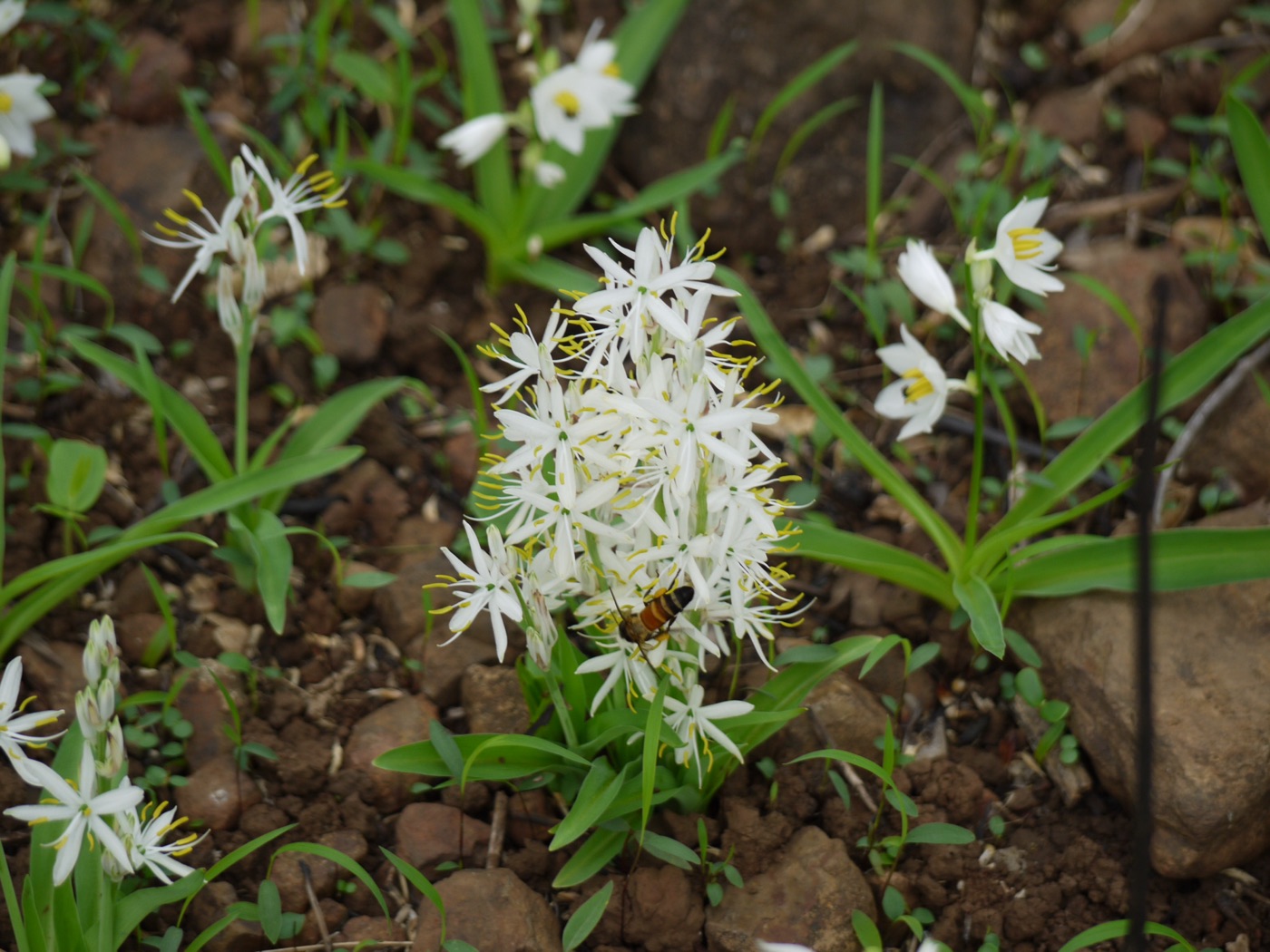
Musali is the tuberous root of a small plant, Chlorophytum borivilianum, that grows in the dry country of India. Above ground the plant is modest: a low tuft of long, narrow leaves and slender stalks of small white flowers. What Ayurveda values lies beneath the soil, in a cluster of finger-like white roots that are dug up, cleaned and dried.
The Sanskrit name is मुसली, and the plant of this entry is specifically Shweta Musali, the white musli, named for the pale colour of those roots. In the markets of India the same root is sold as Safed Musli or Dholi musli, and in English it is usually called white musli. A word of care for the reader is worth adding here, because two different plants have long shared the name. A separate black musli, Krishna Musali, is Curculigo orchioides, an unrelated plant with darker roots and its own classical description. This entry is the white musli, Chlorophytum borivilianum, and not that black musli.
What Ayurveda uses it for
In the classical texts Musali belongs chiefly to Vajikarana, the branch of Ayurveda concerned with vigour and reproductive vitality, and it is counted among the Rasayana or rejuvenating herbs and the Balya group that builds strength. Its sweet, heavy and unctuous nature was understood to nourish the tissues, an action the tradition calls brimhana, and to settle the dry, restless quality of Vata while cooling the heat of Pitta.
Within that role the dravyaguna texts describe the root as traditionally indicated in a familiar set of conditions, each named here in its classical Sanskrit term with a plain gloss:
- Klaibya and Shukra-daurbalya: weakness of reproductive vitality, the root’s classical home in Vajikarana.
- Daurbalya and Karshya: debility and thinness, where its building, nourishing quality is called upon.
- Stanya-kshaya: a low flow of breast milk, for which the sweet, nourishing root is described.
- Vata-vikara: the broad class of Vata-related complaints, given its Vata-settling nature.
- Rasayana: its wider use as a general tonic for strength and restoration over time.
These are the traditional textual indications recorded in the classical literature. They set out how Ayurveda has long understood the herb and are given for reference and study, not as statements of medical effect or as advice to treat any condition.
Set within Vajikarana, the tradition frames Musali as one of the nourishing, strength-giving roots taken to support vitality and steadiness of the body over a course of time, in keeping with the measured and reserved manner of the classical texts.
Its qualities, in plain words
Ayurveda describes every herb by a short list of qualities, and for Musali they line up neatly behind its reputation as a builder.
Its taste is sweet, and in Ayurveda a sweet taste is the taste of nourishment. It is heavy and unctuous, so rather than lightening or drying the body it feeds and grounds it, the way a rich, oily food does. It is cooling, which is why the texts turn to it where there is heat or irritation alongside weakness, the mark of aggravated Pitta. And it finishes sweet after digestion, a sign that it builds tissue rather than wearing it down. Put together, these qualities describe a heavy, cool, nourishing root, which settles the dry, mobile quality of Vata and cools Pitta. Because that same heaviness and sweetness can be a little building for Kapha, the sources note that Musali may increase Kapha, and it is used with that in mind.
How it is taken
The usual form is the root powder, or churna. The white roots are dug up, cleaned, dried and ground, and Ayurveda favours pairing the powder with milk, the vehicle the tradition chooses to carry a sweet, nourishing action into the body. Taken this way, as a warm, sweet tonic with milk, the root leans fully toward its strengthening, building side.
From that powder the classical writers made a range of nourishing preparations. Musali appears by name in the Vajikarana and Rasayana formulations, and in the sweet medicated confections the tradition calls paka, rich tonic pastes cooked with milk, ghee and sugar in which the root sits alongside other building herbs. As with the other nourishing tonics, it was taken as a course over time rather than as a single dose.
Good to know
Musali is one of the slow, building herbs, taken as a course over time rather than as a single dose, and it belongs to the nourishing rather than the clearing side of Ayurveda. One point of care is worth repeating: two different plants share the name musli, and this entry is the white musli, Chlorophytum borivilianum (Shweta Musali), which is not the black musli, Curculigo orchioides (Krishna Musali). The two are distinct plants with their own classical descriptions, and the tradition keeps them apart.
This entry describes the classical Ayurvedic understanding of the herb. It is not medical advice, and anyone with a health condition should speak to a qualified practitioner.
Frequently asked
Is white musli the same as black musli? No. White musli, Shweta Musali, is Chlorophytum borivilianum, the plant of this entry. Black musli, Krishna Musali, is a different plant, Curculigo orchioides, with darker roots and its own place in the classical texts. They share a name but are not the same herb.
Which part of the plant is used? The tuberous roots. Musali is named for its cluster of pale, finger-like roots, and it is these, dug up, dried and ground to powder, that the classical preparations call for.
Why is it taken with milk? Because Musali is a sweet, heavy, nourishing root, and milk is the vehicle Ayurveda favours for carrying such a building action into the body. Taken with milk, the root leans fully toward its strengthening side.
Musali is sweet, heavy and cooling; it gives strength, nourishes the tissues and acts as a reproductive tonic.
After the Bhavaprakasha Nighantu, on the strengthening herbs
The root is unctuous and building, settling the dry, mobile quality of Vata and cooling the heat of Pitta.
After the classical Nighantu tradition on Shweta Musali
Frequently asked questions
What is Musali used for?
Musali, or Safed Musli, from Chlorophytum borivilianum, is a slender white-rooted plant whose tuberous roots Ayurveda values as a sweet, cooling, strengthening tonic. The texts class it as vrishya, balya, rasayana and brimhana, so it is a classic Vajikarana and Rasayana herb, traditionally used for strength, nourishment and reproductive vitality in a depleted body.
How do you take Musali?
Musali root is usually taken as a powder, and the classical anupana is warm milk, sometimes with a little ghee or sugar, which suits its sweet, nourishing, building nature. As a Rasayana and Vajikarana herb it is taken as a steady course rather than a single dose. The amount is best set by a qualified Ayurvedic practitioner.
Which dosha does Musali balance?
Musali settles Vata and Pitta and may increase Kapha, in keeping with its sweet taste and its heavy, oily, cooling, nourishing nature. It suits dry, depleted, Vata-and-Pitta states well. Because it is building and can raise Kapha, it is used more sparingly where Kapha is already high or the digestion is sluggish.
What is the difference between Safed Musli and Musali?
They are the same herb. Safed Musli, or white Musli, is the common name, Shweta Musali is the Sanskrit, and Musali is simply the short form, all pointing to Chlorophytum borivilianum. The name white refers to the pale tuberous roots that Ayurveda values as a sweet, cooling, strengthening Vajikarana and Rasayana tonic.
Is Musali a Rasayana?
Yes. Ayurveda classes Musali as both a Rasayana, a rejuvenating tonic, and a Vajikarana, a reproductive tonic, valuing its sweet, cooling, nourishing roots for building strength and vitality. As a Rasayana it is meant to be taken as a steady, nourishing course over time, usually with milk, rather than as a quick remedy, ideally under practitioner guidance.
References
- Bhavaprakasha Nighantu, Guduchyadi Varga, entry on Musali with its synonyms and properties.
- Raja Nighantu, listing the Sanskrit synonyms and qualities of Musali.
- Dhanwantari Nighantu, among the strengthening and rejuvenating (Rasayana) herbs.
- Bhavaprakasha, Chikitsa section, in the Vajikarana (reproductive-vitality) preparations.
- Later Ayurvedic Nighantu literature, distinguishing Shweta Musali (white) from Krishna Musali (black).