Materia Medica · Dravyaguna
Ela
Elettaria cardamomum · Zingiberaceae (the ginger family)
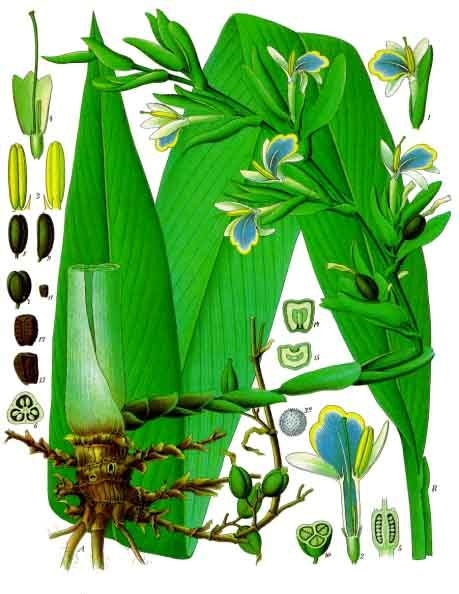

Ela is the small green cardamom, one of the best loved aromatic spices in classical Ayurveda. Its fragrant seeds have long been added to food and to medicated preparations for their pleasant scent and their traditional role in supporting comfortable digestion.
- Botanical name
- Elettaria cardamomum
- Family
- Zingiberaceae (the ginger family)
- Sanskrit
- एला
- Part used
- Dried ripe fruit and seed
- Taste (rasa)
- Pungent and sweet (katu, madhura)
- Quality (guna)
- Light and dry (laghu, ruksha)
- Energy (virya)
- Cooling (shita)
- After digestion (vipaka)
- Pungent (katu)
- Action (karma)
- Kindles digestion, carminative and aromatic (deepana)
- Best known for
- a fragrant spice traditionally used to support digestion and freshen the breath
What is Ela?
Ela is the small green cardamom, the dried ripe fruit of a tall leafy plant in the ginger family. Older botanical writing sometimes uses the family name Scitamineae, but the plant sits comfortably beside ginger and turmeric as a close relative. The part that matters most is the little capsule, or pod, and the tiny dark seeds packed inside it. It is the seed that carries the sweet, warm, faintly citrus fragrance that everyone recognises. An aromatic oil is also distilled from these seeds.
The Sanskrit name Ela is joined by many affectionate classical names. It is called Sukshmaila and Kshudraila, both meaning the small or fine cardamom, to set it apart from a larger relative. Other names include Truti, Upakunchika, Bhringaparnika, Dravidi and Triputa. In Hindi it is Choti elaichi, the little cardamom. Across these names one idea keeps returning, that this is the small, fine, especially fragrant cardamom, prized for its scent above its size.
What Ayurveda uses it for
In classical Ayurveda, Ela is a well loved aromatic substance, or dravya, traditionally used to support digestion and to bring comfort after meals. It has long been chewed or added to food to freshen the mouth and breath, working as a fragrant carminative that classical texts group among the aromatic spices.
Ela belongs to a small, celebrated set of aromatics known as the Trijata and Chaturjata, the group of three or four fragrant spices. Alongside cinnamon bark, cinnamon leaf and nagakesara, cardamom is added to many classical formulations to lend a pleasant aroma and to play a supportive part in digestion. The old texts also describe it in their own descriptive language as Deepana, meaning it kindles the digestive fire, and they place it among substances that support easy breathing and a comfortable throat. It is further described in traditional sources as Vishaghna, an antitoxic quality, and Varnya, supportive of a healthy complexion. These are the classical descriptive categories used by the texts, offered here in neutral, educational terms and not as medical indications.
Its qualities, in plain words
Ayurveda reads every substance through a short list of qualities, and Ela has a clear profile. Its taste, or rasa, is chiefly pungent and sweet, katu and madhura, which is why the spice feels both warming and pleasant on the tongue. Its qualities, or guna, are light and dry, laghu and ruksha, so it sits easily and does not feel heavy.
The heating or cooling nature of a substance is called virya, and here the classical picture is not perfectly uniform. Many dravyaguna texts teach the small cardamom itself as cooling, shita. Yet the Bhavaprakasha Nighantu places Ela in the aromatic Karpuradi chapter and within the warming Chaturjata group, so some sources frame it as more warming. We note both honestly rather than force a single answer. The post-digestive effect, or vipaka, is most often given as pungent, katu, though a minority of texts give it as sweet. In terms of the doshas, Ela is most commonly described as balancing for Kapha and Vata, with some texts instead emphasising Kapha and Pitta or Pitta and Vata. Sources differ on the exact pairing, but there is broad agreement that it is traditionally regarded as helpful for Kapha.
How it is taken
Ela is used whole or ground into a fine powder, called churna. In classical practice it appears in a family of aromatic preparations built around it, most famously Eladi churna and Eladi gutika, a small pressed pill from the Eladi group, and Eladi kwatha, a decoction. As one of the Trijata and Chaturjata spices, it is folded into many larger compounds simply for its aroma and its supportive digestive role.
Beyond formal preparations, Ela lives happily in the kitchen, scenting food and drink, and it serves as an aromatic within medicated recipes. The essential oil distilled from the seed is used in a similar fragrant way. No dosing is given here, because the amount and the form should be guided by a qualified practitioner rather than fixed by a general article.
Good to know
As an everyday spice, cardamom is most often met in ordinary food amounts, where it is a gentle and familiar aromatic. In classical formulations it is usually taken with meals or as part of a considered preparation, and any therapeutic course is best planned and timed with a practitioner who can consider the whole person. This entry describes the classical Ayurvedic understanding of the herb. It is not medical advice, and anyone with a health condition, who is pregnant or breastfeeding, or who is taking medicines should speak to a qualified practitioner before using it in therapeutic amounts.
Frequently asked
Is Ela the same as the green cardamom in my kitchen? Yes. Ela is the small green cardamom, also called true or small cardamom and Choti elaichi. Ayurveda keeps it distinct from a larger cardamom, and the classical texts call this small one Sukshmaila to mark the difference.
Which part is actually used? The dried ripe fruit, the little pod, and above all the aromatic seeds inside it. The seed is the main fragrant part, and an essential oil is also distilled from it.
Why does Ela appear in so many recipes? Because it is one of the Trijata and Chaturjata aromatic spices. Classical texts add it to many formulations for its pleasant scent and its traditional supportive role in digestion, so it turns up across a wide range of preparations.
Ela is placed at the head of the Eladi group of aromatic and digestion-supporting substances.
After the Sushruta Samhita, Sutrasthana 38
Ela is listed among the groups of substances that support easy breathing and settle discomfort of the body.
After the Charaka Samhita, Sutrasthana 4
Ela is treated as the small cardamom within the chapter on aromatic substances, kept distinct from the larger cardamom.
After the Bhavaprakasha Nighantu, Karpuradi varga
Frequently asked questions
What is Ela (cardamom) used for in Ayurveda?
Ela, small green cardamom, Elettaria cardamomum, is a classical aromatic traditionally used to support digestion and freshen the breath. The texts class it as deepana, kindling the digestive fire, and value it as a carminative, mukhavaishadya spice. It is a common addition to food and formulations to ease the belly and sweeten the mouth.
Is cardamom good for digestion?
Yes, Ayurveda classes Ela as deepana, so it is traditionally used to kindle a weak Agni and to settle the stomach, easing bloating, nausea and a heavy feeling after food. Its warm, aromatic pungent and sweet nature moves stuck digestion gently. It is a mild, everyday spice, well suited to most constitutions in moderate amounts.
Which dosha does cardamom balance?
With its pungent and sweet rasa and light, aromatic quality, Ela is broadly balancing and is often said to settle all three doshas in moderation, being especially helpful for Kapha and Vata in the digestion. Its gentle warmth kindles Agni without strongly aggravating Pitta, which is why it suits so many dishes and preparations.
How do you use cardamom the Ayurvedic way?
Ela is added to cooked food, warm milk, teas and sweets, and appears in many formulations as an aromatic and carminative. A little in warm milk is a classic way to aid digestion and calm the belly. The pods or seeds are used lightly, since a small amount carries its fragrance and digestive action.
Does cardamom freshen breath?
Yes, freshening the mouth is one of Ela's best-known traditional uses. Ayurveda values it as a mukhavaishadya, mouth-cleansing, aromatic, and chewing a little cardamom after meals is a long-standing custom to sweeten the breath. Its fragrance and mild pungency clear the heaviness and odour that can linger after food.
References
- Charaka Samhita, Sutrasthana 4 (Shadvirechanashatashritiya)
- Sushruta Samhita, Sutrasthana 38 (Dravyasangrahaniya)
- Ashtanga Hridayam (Vagbhata), Sutrasthana
- Bhavaprakasha Nighantu, Karpuradi varga