Materia Medica · Dravyaguna
Karkatashringi
Pistacia integerrima · Anacardiaceae
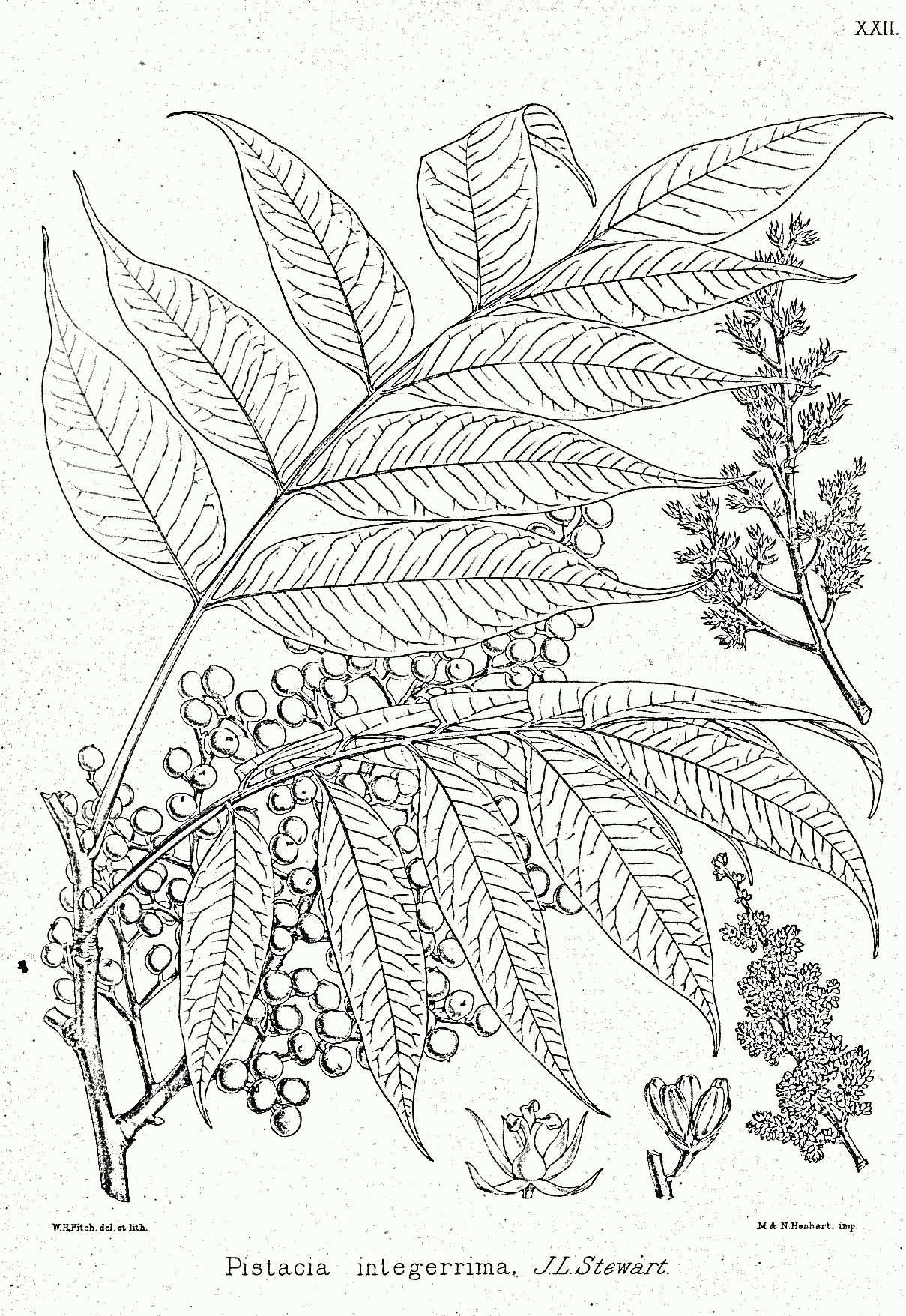

Karkatashringi is not a leaf or a root but a curious horn-shaped gall that insects raise on a Himalayan tree. Warming and binding, it is one of Ayurveda's classic remedies for the cough and the breath, and a name the old texts reach for again and again in the care of children.
- Botanical name
- Pistacia integerrima
- Family
- Anacardiaceae
- Sanskrit
- कर्कटशृङ्गी
- Part used
- The galls (horn-shaped growths raised on the tree)
- Taste (rasa)
- Bitter, astringent and sweet (tikta, kashaya, madhura)
- Quality (guna)
- Light and dry (laghu, ruksha)
- Energy (virya)
- Warming (ushna)
- After digestion (vipaka)
- Pungent after digestion (katu)
- Action (karma)
- Binds and settles the cough, supports the breath (grahi, kasahara)
- Effect on dosha
- Settles Kapha and Vata
- Best known for
- A settling remedy for the cough and the breath, long favoured for children
What is Karkatashringi?
Karkatashringi is one of the more unusual entries in the Ayurvedic pharmacy, because the part used is neither a leaf nor a root nor a seed. It is a gall: a hollow, horn-shaped growth that certain insects raise on the branches of Pistacia integerrima, a tree of the cashew and mango family that grows in the Himalayan foothills. The tree is also written Pistacia chinensis subsp. integerrima. When the insect settles on a young shoot, the tree responds by forming the swollen, curving structure around it, and it is this dried gall, not any ordinary part of the plant, that the tradition collects and uses.
The name records exactly what the gall looks like. Karkata means crab and shringi means horn, so the word describes a horn shaped like a crab’s claw, which is precisely the impression the curving, pointed gall gives. English keeps the same picture in the common name “crab’s claw”. The gall is also widely known as Kakadashringi. It is worth being clear on this point at the outset, because a reader who expects a herb in the usual sense may be surprised to learn that Karkatashringi is a growth formed on the tree rather than a piece of the tree itself.
What Ayurveda uses it for
In classical terms Karkatashringi is above all a kasahara substance, one that settles the cough, and it is counted among the remedies that support the breath. Its warming, binding nature was understood to dry and settle the cold, heavy quality the texts call Kapha and to steady the cold, mobile quality called Vata, which is the pairing the sources tie most closely to a troublesome cough. The tradition gives it a particular and well-remembered place in the care of children, where a gentle, binding cough remedy was valued.
Within that role the dravyaguna texts describe the gall as traditionally indicated in a clear set of conditions, each named here in its classical Sanskrit term with a plain gloss:
- Kasa: cough, the foremost use of the gall and the setting in which it is most often named, and one especially valued in children.
- Shwasa: laboured or difficult breathing, where its supporting action on the breath is called upon.
- Chardi: nausea and vomiting, settled by its binding, warming quality.
- Hikka: hiccough, grouped with the disorders of the upward-moving breath.
- Jwara: fever, in which the gall is one of the substances the texts describe.
- Atisara: diarrhoea and loose motions, eased by its grahi or binding action.
- Aruchi: loss of taste and appetite.
These are the traditional textual indications recorded in the classical literature. They set out how Ayurveda has long understood the herb and are given for reference and study, not as statements of medical effect or as advice to treat any condition.
Its qualities, in plain words
Ayurveda describes every substance by a short list of qualities, and for Karkatashringi they line up neatly behind its reputation as a settling remedy for the cough.
Its taste is bitter and astringent, with a sweet note behind them, and the astringent taste in particular is the one the tradition ties to binding and drawing together rather than to loosening. It is warming, which is why it suits the cold, damp quality of Kapha and the cold, mobile quality of Vata, the two that the texts connect with a stubborn cough. It is light and dry, so it does not weigh the body down or add to congestion. And it finishes pungent after digestion, keeping its warming, drying character through to the end. Its action the tradition calls grahi, binding, which is the quality behind its use both for the cough and for a loose, unsettled belly. Put together, that is a warm, light, binding substance, and it is that binding warmth, settling the breath and steadying the belly, that the sources return to most.
How it is taken
The usual form is the dried gall reduced to a fine powder, a churna. Because the gall is warming and binding by nature, the classical writers most often paired the powder with honey, and for a young child a very small quantity of the powder given with honey is the household picture the tradition preserves. Warm water and other gentle vehicles are also described.
From that powder the classical texts built a number of compound preparations for the cough and the breath. Karkatashringi gives its name to Karkatashringi Churna, and the gall is a named component of many classical formulations directed at the cough and laboured breathing, a good number of them intended for children. As a warm, binding cough remedy it kept close company with honey, dried ginger and the other warming digestive and respiratory substances that Ayurveda favours in the same setting.
Good to know
Karkatashringi sits among the settling, binding remedies of the Ayurvedic pharmacy rather than the slow nourishing tonics, and it is most associated with the care of the cough and the breath, taken as a short course rather than over long stretches of time. One point is worth keeping in view: because it is grahi, binding, and ushna, warming, the classical writers treat it as a substance that dries and settles, well suited to a loose, cold, congested picture and used with more care where the tendency is already to dryness or heat.
This entry describes the classical Ayurvedic understanding of the herb. It is not medical advice, and anyone with a health condition should speak to a qualified practitioner.
Frequently asked
Why is it called crab’s claw? Because the part used is a curving, horn-shaped gall that resembles the claw of a crab. The Sanskrit name Karkatashringi, from karkata (crab) and shringi (horn), records exactly this shape, and the English name “crab’s claw” keeps the same picture.
Which part of the plant is used? Not a leaf, root or seed, but the gall: a hollow, horn-shaped growth that insects raise on the branches of the tree Pistacia integerrima. It is this dried gall, and not any ordinary part of the tree, that Ayurveda collects and powders.
Why is it so often mentioned for children? The tradition especially values Karkatashringi as a gentle, binding remedy for the cough, and the classical literature records its use in the care of children among its foremost applications. This is set down here as a point of classical usage, given for reference and study rather than as advice to treat any condition.
Karkatashringi is warming and binding; it settles the cough and the laboured breath and steadies the belly.
After the Bhavaprakasha Nighantu, on the cough-settling substances
Among the remedies for the cough, the gall is especially suited to children.
Paraphrasing the classical usage recorded in the dravyaguna literature
Frequently asked questions
What is Karkatashringi used for?
Karkatashringi is the hollow, horn-shaped gall of a Himalayan tree (Pistacia integerrima), valued in Ayurveda as a warming, binding remedy that settles the cough and supports the breath, especially in children. The texts class its action as grahi and kasahara, and it settles Kapha and Vata. Its taste is bitter, astringent and sweet (tikta, kashaya, madhura).
Is Karkatashringi good for cough in children?
Ayurveda has long favoured Karkatashringi for the cough and the breath in children, valuing its gentle, binding and settling nature. Classed as kasahara, it is a traditional choice where cough and Kapha unsettle the chest. This reflects its classical reputation rather than a claim to treat any diagnosed condition, and a child's cough should also be seen by a doctor.
What part of the plant is Karkatashringi?
Karkatashringi is not a root or leaf but a gall: a hollow, horn or crab-claw shaped growth that forms on the twigs of Pistacia integerrima, often triggered by insects. Its curved shape gives it the name, which relates to a crab's horn. This gall is the part gathered and used in the classical preparations.
How do you take Karkatashringi?
It is usually taken as a fine powder, often with honey or another suitable anupana, and it appears in classical cough and chest formulations. For children the powder is given in a small, measured amount. Because dose depends on age and constitution, it is best confirmed with a qualified practitioner, particularly when giving it to a child.
Which dosha does Karkatashringi balance?
The texts describe Karkatashringi as settling both Kapha and Vata. Its warming, binding (grahi) nature counters cold, loose, Kapha-Vata patterns in the chest and helps settle the cough. Being warming, it is less suited to strongly heated Pitta states, so Ayurveda directs it chiefly at cold, Kapha-Vata coughs.
References
- Charaka Samhita, Chikitsasthana, in the treatment of Kasa (cough) and Shwasa (laboured breathing).
- Sushruta Samhita, among the substances used for the cough and disorders of the breath.
- Bhavaprakasha Nighantu, entry on Karkatashringi with its synonyms and properties.
- Ashtanga Hridayam, on the remedies for Kasa and the care of children (Balaroga).
- Raja Nighantu, listing the Sanskrit synonyms of the drug.