Materia Medica · Dravyaguna
Masha
Vigna mungo · Fabaceae
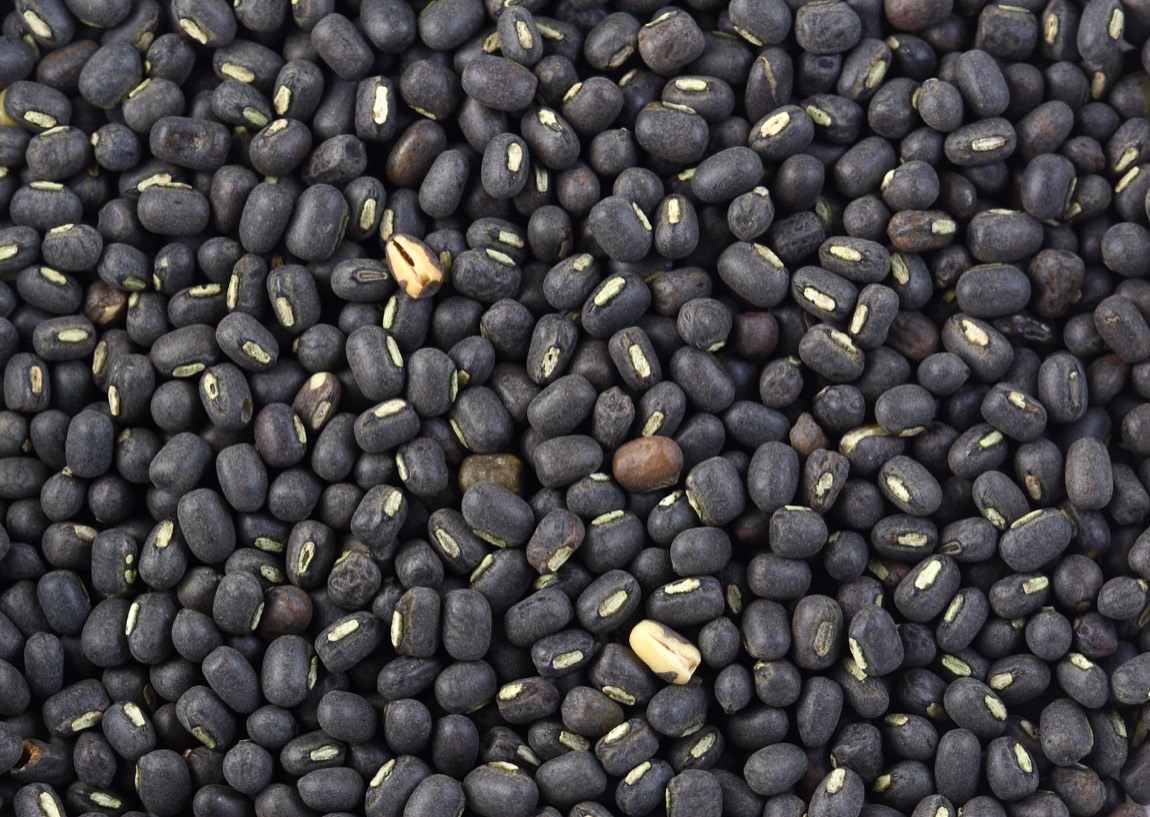

Masha is the black gram, a small dark pulse that Ayurveda counts as the foremost of the beans for building the body. Heavy, warming and richly nourishing, it settles the Vata dosha and is the base of the classical Masha medicated oils.
- Botanical name
- Vigna mungo
- Family
- Fabaceae
- Sanskrit
- माष
- Part used
- Seed
- Taste (rasa)
- Sweet (madhura)
- Quality (guna)
- Heavy and unctuous (guru, snigdha)
- Energy (virya)
- Warming (ushna)
- After digestion (vipaka)
- Sweet (madhura)
- Action (karma)
- Strengthens and nourishes, restores, settles Vata and provides unctuousness (balya, brimhana, vrishya, vatahara, snehana)
- Effect on dosha
- Pacifies Vata; increases Kapha and Pitta (vatahara, kapha-pitta-vardhana)
- Best known for
- The foremost pulse for building and strengthening the body
What is Masha?
Masha is the black gram, the seed of Vigna mungo, a small bushy plant of the legume family grown across India as one of its oldest and most valued pulses. The plant itself is unremarkable: low, hairy stems, small yellow flowers, and slender pods that hold a row of little seeds. It is those seeds, dark and dense, that Ayurveda has long regarded as food and as medicine at once.
The seed is small and mostly black on the outside, pale within, and in the kitchen it is best known split and skinned as the familiar urad dal. In the classical texts the word Masha stands for this pulse throughout, and the tradition sets it apart with a plain, high claim: among all the beans, Masha is the foremost for building the body. In English it is called black gram, and across India it is known by names such as Urad and Urad dal in the north, Uzhunnu in Kerala, and Minumulu in the Telugu country.
What Ayurveda uses it for
In the classical literature Masha is grouped among the Shami-dhanya, the pulses, and within that group it stands first as the great nourisher. Its role is that of a Balya and Brimhana food, one that strengthens and builds the tissues, and a Vrishya, a restorative that supports reproductive vitality. Because it is so heavy, warm and unctuous, the texts hold it as the chief pulse for settling the dry, mobile quality of Vata, and it is folded into the Vata-nourishing diet as a matter of course. It is also named as Stanya, supporting the flow of breast milk, and as Snehana, providing the body with unctuousness.
Within that role the dravyaguna texts describe the pulse as traditionally indicated in a familiar set of conditions, each named here in its classical Sanskrit term with a plain gloss:
- Vata-vikara: complaints of the Vata dosha, its foremost domain, where its heavy, warm, unctuous nature settles the dry and mobile quality directly.
- Daurbalya and Karshya: debility and thinness, where its building, nourishing quality is called on as a strengthening food.
- Shukra-daurbalya: weakness of reproductive vitality, where it serves as a Vrishya restorative.
- Ardita and Pakshaghata: the classical facial and one-sided weaknesses, where Masha and Masha oil are applied externally as much as taken as food.
- Stanya-kshaya: low breast milk, where the pulse is counted among the foods that support its flow.
These are the traditional textual indications recorded in the classical literature. They set out how Ayurveda has long understood the pulse and are given for reference and study, not as statements of medical effect or as advice to treat any condition.
Its qualities, in plain words
Ayurveda describes every food and herb by a short list of qualities, and for Masha they line up plainly behind its reputation as the great builder among the pulses.
Its taste is sweet, and in Ayurveda a sweet taste is the taste of nourishment. It is heavy and unctuous, so rather than lightening or drying the body it feeds and grounds it, the way a rich, oily food does, and this is the quality the texts return to again and again. It is warming, which is why it suits the cold, mobile nature of Vata. And it finishes sweet after digestion, a sign that it builds tissue rather than wearing it down. Put together, these qualities describe a heavy, warm, deeply nourishing pulse. That is why the tradition settles so firmly on its Vata-pacifying action, while noting in the same breath that the very heaviness and unctuousness that feed Vata will increase Kapha and Pitta.
How it is taken
Masha is first of all a food, and the simplest classical way to take it is as the cooked pulse, often split and skinned, prepared as a soup or a dal that is heavy, warming and grounding by design. As part of the Vata-nourishing diet it is eaten to build the body over time rather than in a single sitting.
Beyond the plate, the pulse is the base of a group of medicated oils named for it. The best known is Masha (Mashabaladi) Taila, an oil in which Masha is cooked with Bala and other strengthening herbs and then used in external application and massage, above all for the Vata weaknesses of the body. In this form the nourishing, Vata-settling quality of the pulse is carried into the tissues through the oil rather than through the digestion.
Good to know
Masha is one of the heaviest of the pulses, and the tradition is candid that this is both its strength and its limit. Its weight and unctuousness are exactly what make it such a fine builder for a depleted, Vata-disturbed body, and exactly why it is best suited to a strong digestion and taken with more care where Kapha or Pitta is already high. It belongs firmly to the nourishing, building side of Ayurveda rather than the clearing side.
This entry describes the classical Ayurvedic understanding of the herb. It is not medical advice, and anyone with a health condition should speak to a qualified practitioner.
Frequently asked
Why does Ayurveda call Masha the foremost of the pulses? Because among all the beans the tradition holds it as the best for building the body. Its sweet taste, heavy and unctuous quality and warming nature make it a strong nourisher and a settler of Vata, which is why the classical texts place it first among the Shami-dhanya.
Which part of the plant is used? The seed, the small dark pulse itself, most often split and skinned as urad dal. It is the seed that is eaten as food and cooked into the Masha medicated oils.
Why is it said to suit a strong digestion best? Because it is heavy and unctuous by nature. Those qualities are what make it so nourishing, but they also ask more of the digestion, so the tradition suits it best to a strong one and notes that it increases Kapha and Pitta.
Among the pulses Masha is the foremost; it is sweet, heavy and warming, nourishing and strengthening, a restorative that settles the Vata dosha.
After the Bhavaprakasha Nighantu, on the pulses
Masha builds the body, gives strength and unctuousness, and supports the flow of breast milk.
After the Charaka Samhita, Sutrasthana, among the grains and pulses
Frequently asked questions
What is Masha (black gram) used for in Ayurveda?
Masha, black gram or Vigna mungo, is regarded by Ayurveda as the first among the beans for nourishment. Sweet in taste, it is valued for building the body, settling Vata and giving unctuousness. The texts class its action as balya, brimhana, vrishya, vatahara and snehana, so it is used to strengthen, restore and ground a dry, depleted body.
Which Dosha does Masha suit?
Masha pacifies Vata, thanks to its sweet, heavy, unctuous nature, but it increases Kapha and Pitta. So it suits those needing grounding and building, especially dry Vata types, while those with strong Kapha, sluggish digestion or high Pitta take it in moderation. This is why Ayurveda pairs it with warming, digestive spices when it is eaten.
Is black gram good for strength and building the body?
Yes, the tradition places Masha foremost among pulses for nourishment, classing it as balya and brimhana, strengthening and body-building, and vrishya. Its sweet, heavy, unctuous quality is held to rebuild depleted tissue and steady Vata. It features in nourishing, strengthening preparations and dishes, taken as wholesome food and with spices to keep it digestible.
Why is Masha considered hard to digest?
Because Masha is heavy, unctuous and building by nature, the very qualities that make it nourishing also make it slow to digest and prone to increasing Kapha if eaten in excess or with weak Agni. Ayurveda answers this by cooking it well and combining it with warming, digestive spices such as ginger, so its strength is gained without heaviness.
Who should limit black gram in their diet?
Those with strong Kapha, a tendency to heaviness or sluggish digestion, and those with high Pitta, should take Masha in moderation, since it increases both Kapha and Pitta. It is richest for dry Vata types who need building. If digestion is weak, keep portions modest, cook it thoroughly and add warming spices.
References
- Charaka Samhita, Sutrasthana, chapter 27 (Annapana-vidhi), among the Shami-dhanya (the pulses), describing Masha as the foremost of the beans for building strength.
- Sushruta Samhita, Sutrasthana, among the pulses (Shami-dhanya), on the heavy, nourishing and Vata-settling nature of Masha.
- Bhavaprakasha Nighantu, Dhanya Varga (the section on grains and pulses), entry on Masha with its qualities and actions.
- Ashtanga Hridaya, Sutrasthana, on the food articles (Annaswarupa-vijnaniya), placing Masha among the strengthening pulses.
- Raja Nighantu, listing the Sanskrit synonyms of Masha among the pulses.